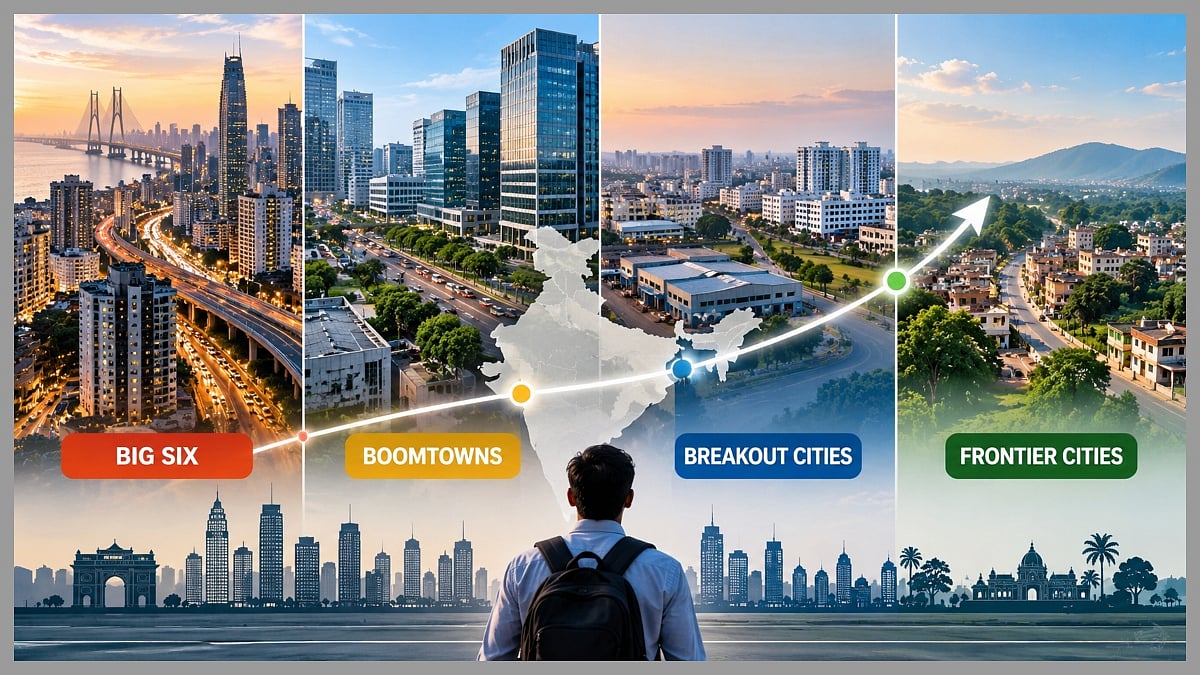
Mumbai: India’s urban economy is spreading beyond its largest metros, though Delhi, Mumbai, Bengaluru, Hyderabad, Kolkata and Chennai continue to dominate. The PRICE-Tata Sons report, “The Many Urban Indias”, divides 100 cities into four groups: Big Six, Boomtowns, Breakout cities and Frontier cities.
The Big Six contain only 7.6 percent of India’s population but contribute 18.1 percent of national income and 30.3 percent of savings. They also represent 46 percent of consumption across the cities studied.
Their average household earns Rs 23.2 lakh annually, spends Rs 13.5 lakh and saves Rs 9.7 lakh. Bengaluru leads in household income and savings, while Delhi benefits from its enormous population and consumer base. Chennai records the highest consumption-to-income ratio and heavier household debt.
Boomtowns widen consumption map
The 19 Boomtowns include Pune, Ahmedabad, Surat, Lucknow, Coimbatore, Jaipur and Indore. Nearly 51 percent of their households are now middle-income, compared with about one-fourth a decade ago.
Together, these cities account for 5.1 percent of India’s population, 8.5 percent of income and 8.3 percent of consumption. Thiruvananthapuram, Vadodara and Surat even report higher household spending than the Big Six average.

Breakout cities build specialised strengths
The 25 Breakout cities include Tiruppur, Ludhiana, Rajkot, Varanasi and Moradabad. About 67 percent of their residents are of working age, supporting employment and consumption.
These centres are expanding through textiles, auto components, tourism, healthcare, education and sports goods. However, household income varies sharply, from Rs 19 lakh in Amritsar to Rs 7.9 lakh in Moradabad.
Frontier cities bridge the divide
The 50 Frontier cities have nearly 10 million households. Their average annual household income is Rs 12 lakh, expenditure Rs 9 lakh and savings below Rs 3 lakh.

Chandigarh stands out with income of Rs 28.3 lakh, while Amravati averages Rs 6.3 lakh. Their profiles underline why businesses and policymakers need city-specific strategies rather than one approach for all urban markets.
Together, the four tiers show that India’s next urban growth phase will emerge from cities with vastly different incomes, industries and consumer needs.

