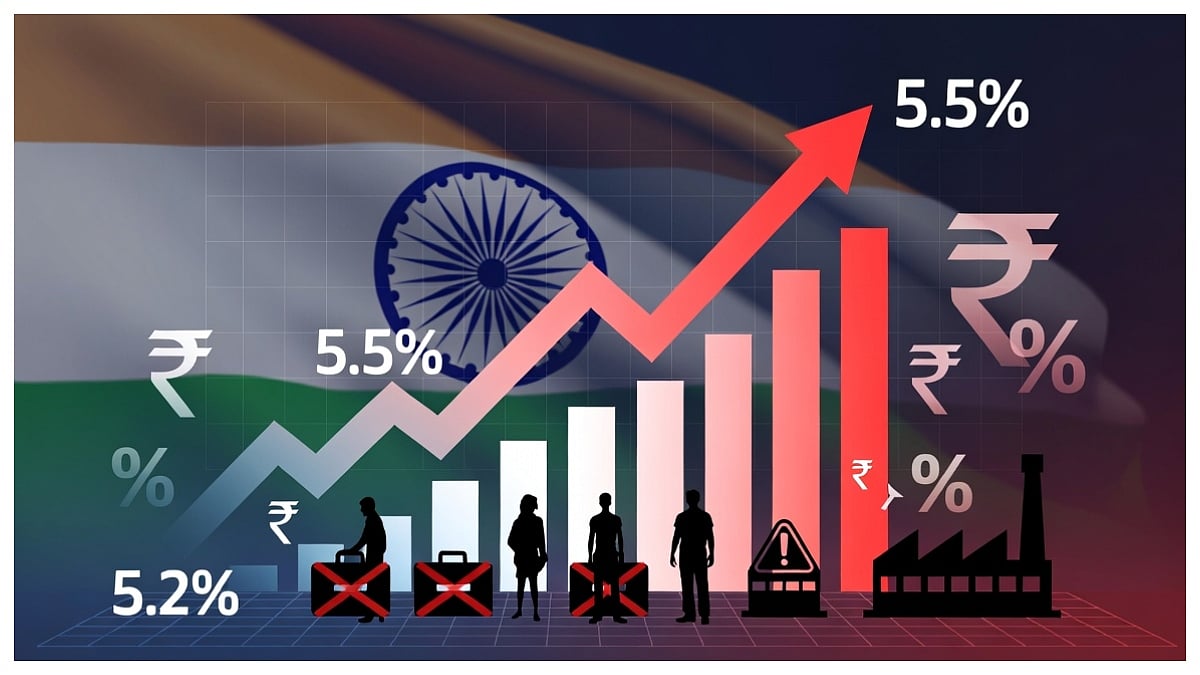
New Delhi: India's unemployment rate increased to 5.5 percent in May from 5.2 percent in April, according to official data released by the government on Monday.
The rise of 30 basis points indicates that a larger share of people in the labour force was unable to find jobs during the month.
The latest figure was also slightly higher than market expectations. A Reuters survey had projected the unemployment rate at 5.3 percent for May.

Labour Market Shows Weakness
The data suggests that labour market conditions softened during the month.
Both the Labour Force Participation Rate (LFPR) and the Worker Population Ratio (WPR) recorded declines in May.
LFPR measures the share of people who are either working or actively looking for work, while WPR reflects the proportion of the population that is employed.
A fall in both indicators points to weaker activity in the job market.
Employment Opportunities Decline
According to the data, employment opportunities contracted faster than the decline in labour force participation.
As a result, the proportion of unemployed people within the labour force increased.
This pushed the unemployment rate higher even though fewer people were participating in the labour market.
Economists generally view a simultaneous decline in LFPR and WPR, along with a rise in unemployment, as a sign of softer labour demand.
What the Numbers Mean?
The increase does not indicate a sharp deterioration in employment conditions, but it suggests that job creation slowed during May.
The data will be closely watched by policymakers and businesses, as employment remains a key indicator of economic health.

Future labour market trends will depend on economic growth, investment activity and hiring across sectors.
For now, the latest figures show that India's labour market lost some momentum in May, with unemployment rising to 5.5 percent from 5.2 percent in April.

