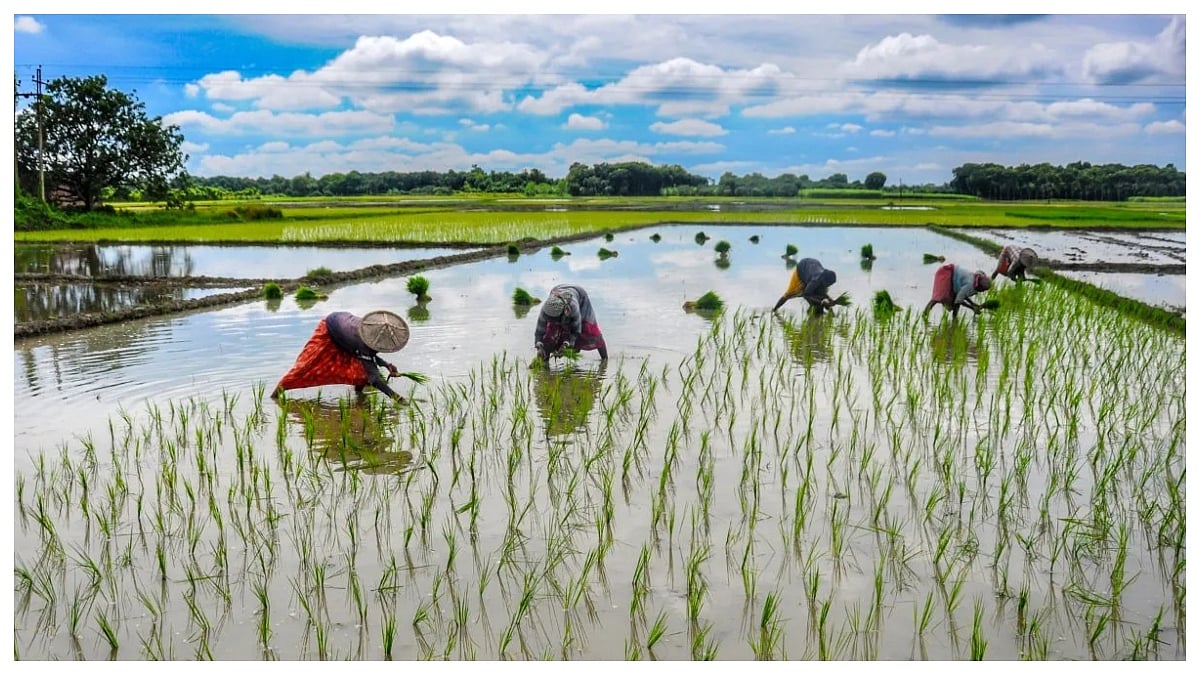
India’s economy has undergone a structural shift that has reduced its dependence on monsoon rainfall, with improved irrigation coverage and changing agricultural patterns shielding farm output and rural demand from severe weather-related disruptions, according to brokerage firm Bernstein.
The brokerage said the widely held belief that nearly 60% of Indian agriculture remains dependent on monsoon rains no longer fully reflects current conditions.
It noted that the country’s relationship with rainfall has changed significantly due to improvements in irrigation infrastructure and diversification of farming cycles.
“Monsoons aren't impacting India the way they used to, and the changing dynamics warrant a reset in how we perceive rainfall and its effects,” Bernstein said in a report.

Earlier, weak monsoons often resulted in lower agricultural production, reduced rural incomes and slower economic growth.
For example, a sharp rainfall deficit in 2002, when monsoon rains fell to 81% of the long-period average, led to a significant decline in foodgrain output and rural disposable income.
However, this connection has weakened in recent years. India recorded growth in foodgrain production even during below-normal monsoon years such as 2018-19 and 2023-24, Bernstein said.
A key factor behind this change is the expansion of irrigation. Nearly 60% of India’s cultivated land is now irrigated, compared with around 42% in the early 2000s. In major agricultural states, irrigation coverage has increased to around 67% from 54% in 2009, supported by tubewells and canal networks.
The composition of crop production has also changed. Kharif crops, which depend heavily on monsoon rainfall, accounted for nearly 60% of foodgrain output until the 1990s. Their share has declined to around 47% in 2025-26, while Rabi crops and summer cultivation between February and May have gained importance.
Bernstein said weaker rainfall may still impact specific agricultural segments, particularly crops such as pulses and vegetables, but it is unlikely to create widespread food inflation or sharply weaken rural consumption.
The brokerage noted that strong wheat production of around 121 million tonnes and better irrigation in states such as Punjab, Haryana and Uttar Pradesh will help cushion the impact of delayed rainfall.
However, it warned that declining rainfall could create long-term challenges through groundwater depletion and rising electricity demand due to increased reliance on electric irrigation systems. Lower reservoir levels may also affect energy-intensive industries such as data centres and semiconductor manufacturing.

