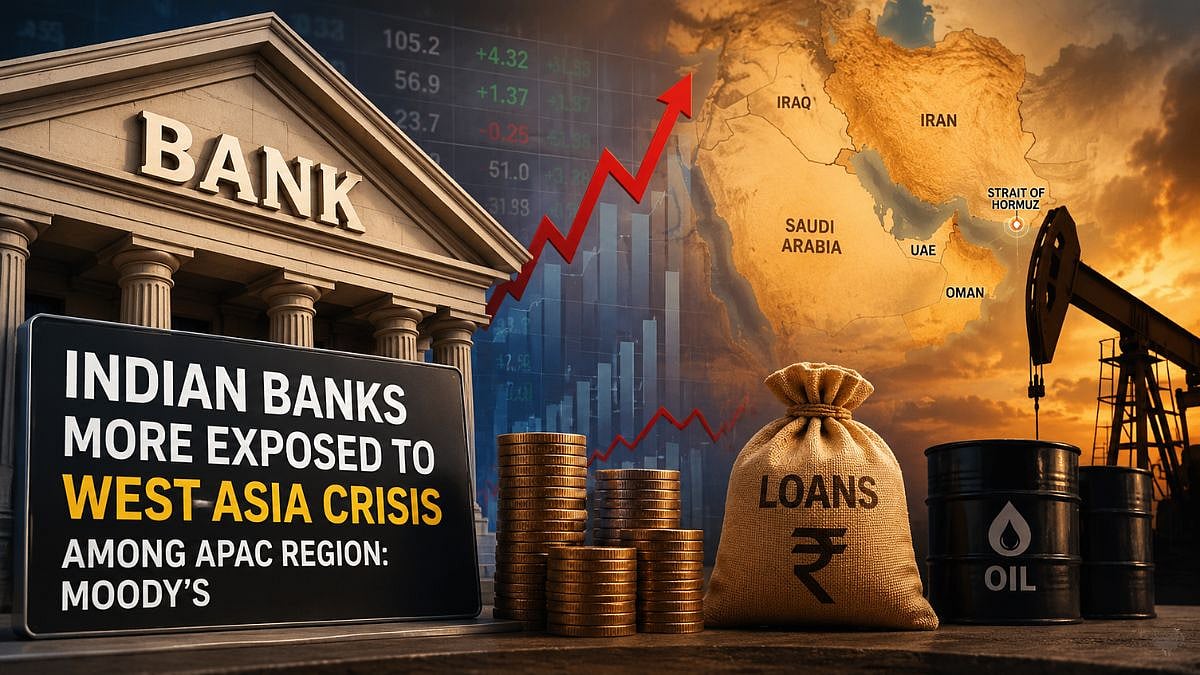
New Delhi, May 27: Moody's Ratings on Wednesday said Indian banks are among the more exposed in the Asia-Pacific region, given the economy's high dependence on energy imports from West Asia and the consequent pressure on inflation, interest rates and borrower cash flows.
Moody's said higher fuel costs will strain consumers' budgets and raise debt-servicing burdens for households and SMEs, translating into increased, though gradual, credit stress in these loan portfolios.
"Indian banks are among the more exposed in the region, given the economy's high dependence on energy imports from the Middle East and the consequent pressure on inflation, interest rates and borrower cash flows," the US-based agency said in a report.
High energy dependence raises risks
It said sustained high energy prices due to the prolonged West Asia conflict will impact Asia-Pacific (APAC) banks' credit profiles via their loan portfolios and financial channels.
"Our new central scenario reflects a sustained Strait of Hormuz disruption through the third quarter of 2026, with oil prices averaging USD 90-110 per barrel during much of the year," Moody's said, adding that it expects financial conditions to remain relatively tight across energy-importing economies.
Lower economic growth, higher rates and inflation in some markets, and local currency pressures will negatively impact APAC banks' loan quality and profitability, it noted.
India's non-bank lenders face particular pressure, given their large exposure to unsecured retail loans, where asset quality deterioration is expected, Moody's said.
Banks have strong buffers despite challenges
Also, Indian banks' sizeable agriculture exposure should see only modest deterioration, as adequate fertiliser stockpiles limit import cost shocks, though higher diesel prices will still pressure farm cash flows.
Also Watch:
On the positive side, Indian banks enter this period with good capital and provisioning buffers, positioning them well to absorb credit losses without threatening solvency, Moody's said.
"The central bank in India faces pressure to raise rates to contain inflation and currency weakness, which will raise banks' funding costs and amplify risks to credit quality," the agency added.
(Disclaimer: Except for the headline, this article has not been edited by FPJ's editorial team and is auto-generated from an agency feed.)

