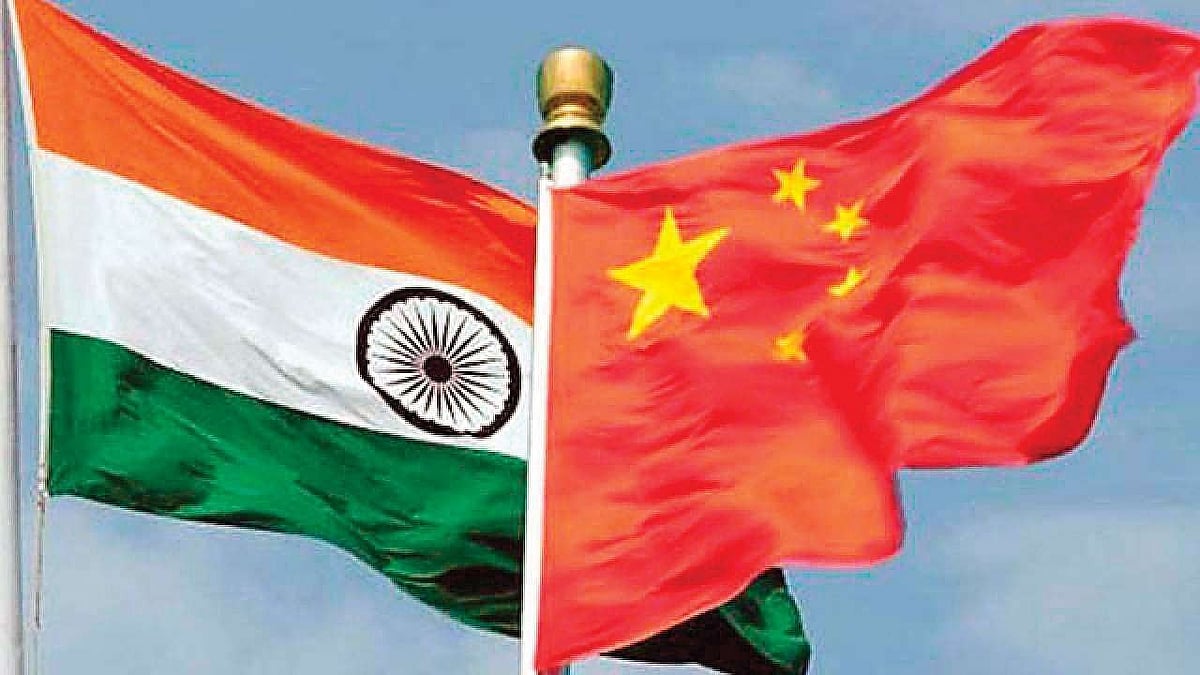
India could overtake China in terms of its share of global GDP measured in purchasing power parity (PPP) by around 2060, according to a report by the Press Trust of India citing the World Inequality Lab.
The World Inequality Lab study, titled Global Justice Report: A Plan for Equality and Prosperity With Planetary Boundaries, said China's contribution to the global economy is expected to stabilise and eventually decline in the second half of the 21st century, largely due to demographic changes.
According to the study, China currently accounts for roughly 20 percent of global GDP in PPP terms, making its economy about one-third larger than that of the United States on this measure. The report's projections suggest China's share could become nearly twice that of the US by 2035.
However, China's population is shrinking rapidly as a share of the global population. The report noted that China's share has fallen from 23 percent in 1945 to around 17 percent in 2025 and could decline to below 8 percent by 2100.

As a result, researchers expect China's share of world GDP to level off and gradually decrease, allowing India to overtake it around 2060.
The report also argued that China is unlikely to achieve the level of economic dominance previously enjoyed by the United States during the mid-20th century or by Europe in the early 1900s. At their peaks, both accounted for around 35-45 percent of global output, far higher than China's projected share.
Researchers said the global economy is therefore likely to become increasingly multipolar, with economic power distributed across several major countries rather than concentrated in a single dominant economy.

The study also highlighted differences between India and China. While India has higher levels of inequality, it has recorded lower productivity growth than China. The report suggested that China's larger and more targeted investments in human capital have contributed to its stronger productivity performance.
Purchasing power parity is a method used to compare economic output by adjusting for differences in the cost of goods and services across countries. It reflects how much a country's currency can actually buy in its domestic economy.
Separately, the latest World Economic Outlook estimates India's economy will reach about USD 4.15 trillion in 2026, up from USD 3.92 trillion in 2025. By comparison, the US economy is projected at USD 32.38 trillion in 2026, while China's GDP is expected to reach USD 20.85 trillion.
