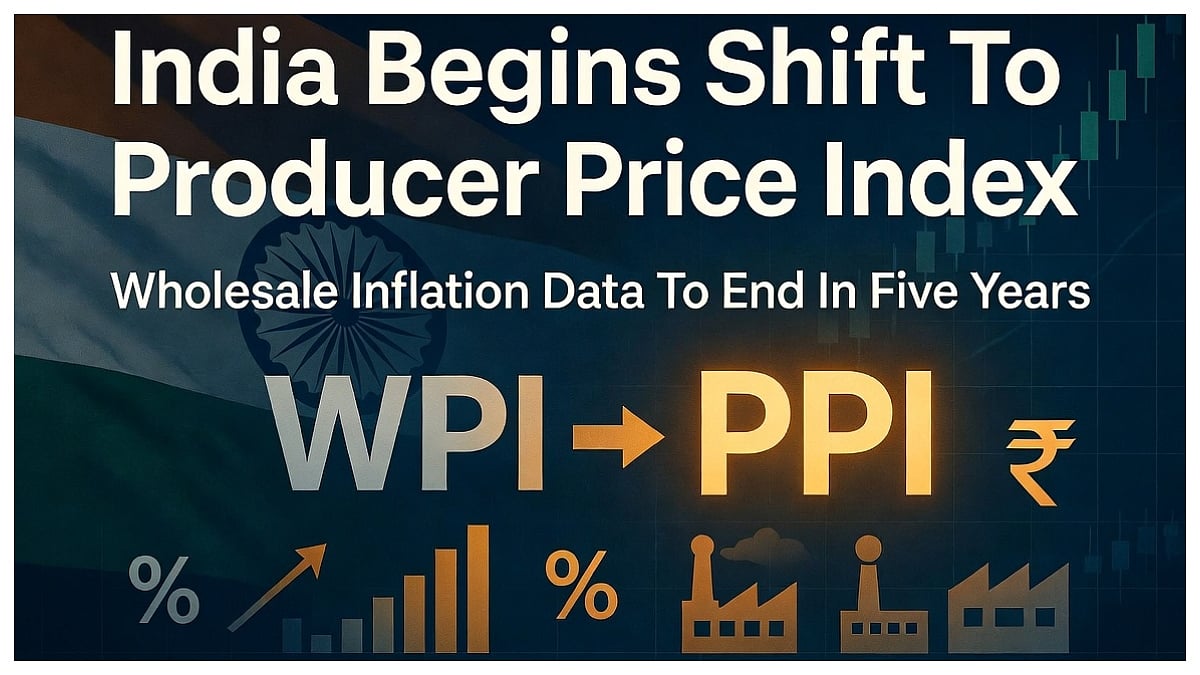
New Delhi: The government on Monday released Producer Price Index (PPI) data for goods and services for the first time, marking a major change in how price movements in the economy will be measured.
The Commerce and Industry Ministry said the new index will gradually replace the Wholesale Price Index (WPI), and WPI data will be discontinued over the next five years.
The move is in line with global practices followed by advanced economies and recommendations made by the International Monetary Fund (IMF).

Why PPI Is Important?
According to the ministry, PPI provides a clearer picture of price changes faced by producers.
Unlike WPI, which mainly tracks wholesale prices, PPI measures both the prices producers receive for their products and the prices they pay for inputs used in production.
This helps policymakers understand how rising costs of raw materials and other inputs affect the final prices of goods and services.
Latest PPI Numbers
The all-India output PPI for all commodities stood at 109.6 in May 2026, compared with 108.6 in April 2026.
The output PPI inflation rate rose to 9.4 percent in May 2026 from 8.1 percent in April 2026.
The government also released the trial input PPI for the manufacturing sector. It stood at 104.9 in May 2026 and is currently being published on an experimental basis to gather feedback and improve data quality.
New Base Year and Wider Coverage
The revised base year for both WPI and PPI is 2022-23.
The new series covers 957 items across different sectors of the economy.
For goods, manufactured products carry the highest weight of 69.93 percent, followed by agriculture, forestry and fishing at 22.16 percent, electricity at 4.49 percent, and mining and quarrying at 3.42 percent.

Services Included in First Phase
The first phase of Service PPI covers seven sectors: banking, securities transactions, insurance, pension fund management, railways, air passenger services and telecom.
The ministry said more services will be added in the next phase using data collected from surveys and the Goods and Services Tax Network (GSTN).
Roadmap for Transition
The shift follows recommendations made by a working group led by former NITI Aayog member Ramesh Chand.
The group said PPI offers a more accurate measure of producer-level inflation and will improve GDP calculations and estimates of real economic growth. The government believes the transition will bring India's inflation measurement system closer to global standards.

