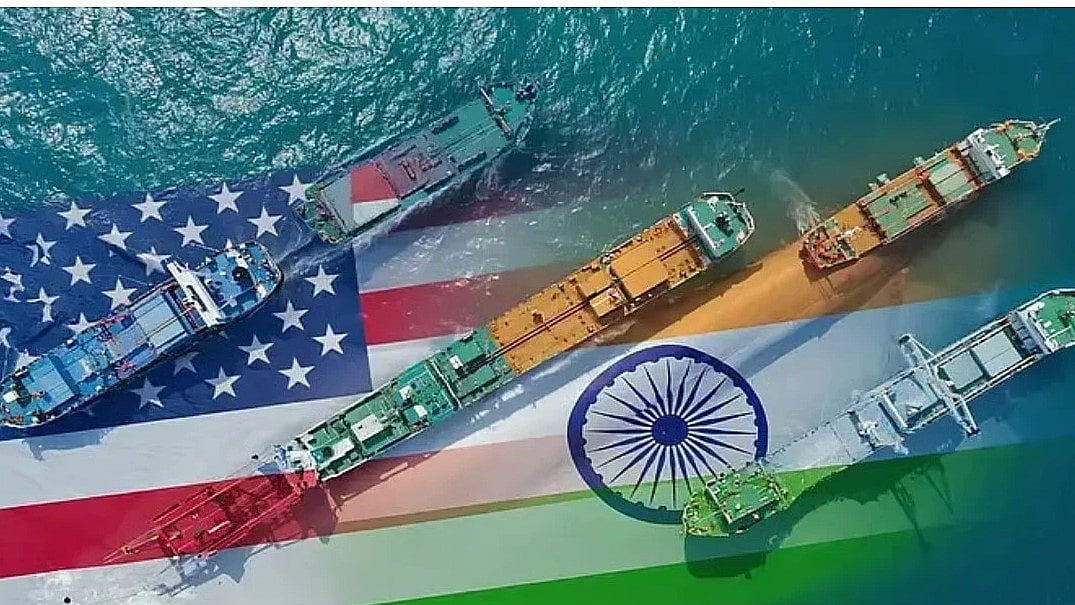
The Global Trade Research Initiative (GTRI) has raised concerns over the United States’ decision to impose a 10% Section 301 tariff on Indian exports linked to forced labour concerns, questioning the basis of the measure.
According to ANI, GTRI said in its report that the tariff lacks a strong factual foundation and argued that the US has not provided evidence showing that India imports goods produced using forced labour.
“The 10% U.S. tariff on Indian exports under the forced-labour investigation lacks a credible factual basis,” the think tank said, adding that Washington has not demonstrated the existence of a forced labour-related trade issue involving India.
GTRI highlighted that India had already amended its Foreign Trade Policy in June 2026 to prohibit imports of goods produced through forced or compulsory labour.
According to the report, this policy move helped reduce the proposed tariff rate on Indian exports from the initially suggested 12.5% to 10%.
However, the think tank noted that the new duty will continue to impact a significant portion of India’s exports to the US.
Around 70% of Indian shipments to the American market, including engineering goods, textiles, garments, chemicals, machinery, plastics, leather products, gems and jewellery, and furniture, will face the additional 10% Section 301 tariff along with existing Most Favoured Nation (MFN) duties.
GTRI argued that the tariff appears less like a response to a proven forced labour issue and more like an attempt to maintain the Trump administration’s tariff framework after the expiry of temporary Section 122 tariffs.
The report also noted that approximately 8% of India’s exports, including products covered under Section 232 such as steel, aluminium, copper products and auto components, will continue to face existing tariffs ranging between 25% and 50%, along with MFN duties.
Products exempt from additional measures will continue to attract only normal MFN tariffs.
GTRI further pointed out that India has not received the textile and apparel tariff-rate quota (TRQ) benefits extended to countries such as Bangladesh, Cambodia, Indonesia and Malaysia for exports using US-origin cotton and fibre.
The development comes amid ongoing trade negotiations between India and the US, with tariff policies emerging as a key issue affecting bilateral economic relations.

