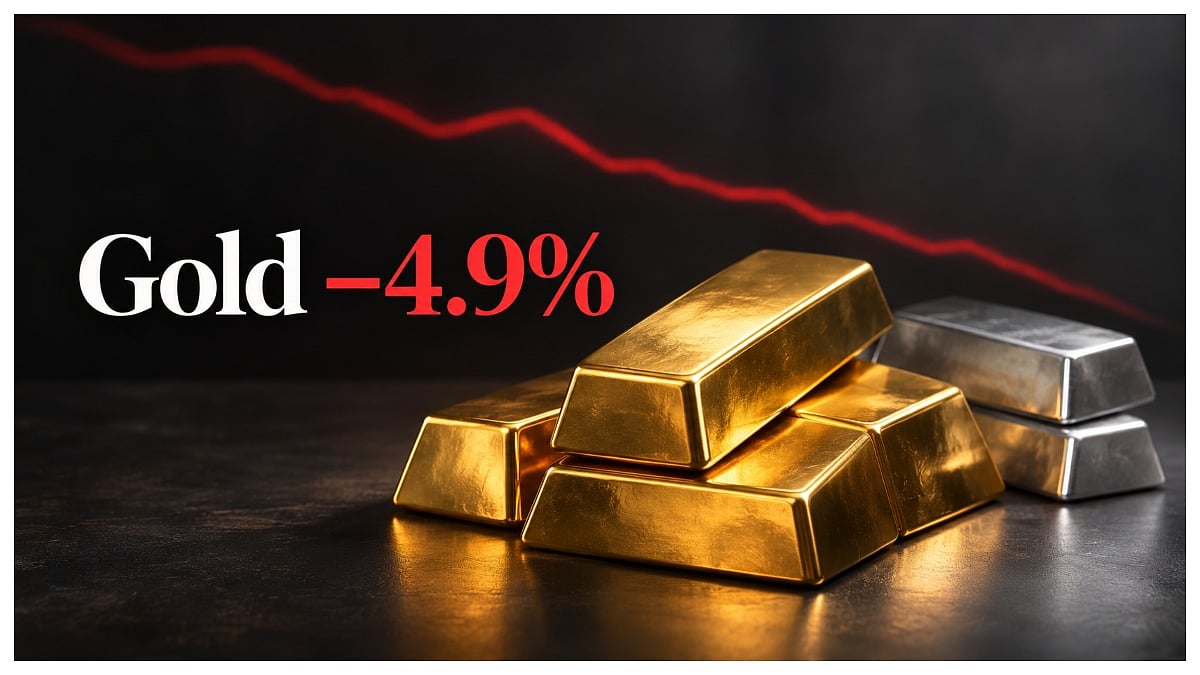
Mumbai: Gold was on course for its steepest weekly decline since late March, with prices down 4.9 percent for the week. The metal fluctuated on Friday after touching a 13-month low in the previous trading session, as expectations of higher US interest rates weighed on demand.
Gold And Silver On COMEX
COMEX gold stood at USD 3,893.50 per ounce, up from USD 3,869.70 in the previous session. Silver was quoted at USD 48.690 per ounce, compared with USD 48.395 in the preceding session.
Friday’s recovery in gold prices offered some relief after the previous session’s slide. The metal was still on track for its biggest weekly loss since late March.
US Rate Expectations Shift
Traders have started pricing in further US interest rate increases in 2027. Bloomberg reported that on Tuesday, traders began to assign a small chance to a 50-basis-point increase in December after US inflation figures exceeded forecasts for three consecutive months.
Federal Reserve Governor Christopher Waller said he would support a 50-basis-point increase if inflation rose further. Other Fed officials, including New York Fed President John Williams, Chicago Fed President Austan Goolsbee and Boston Fed President Susan Collins, also backed further steps to contain inflation.
What Markets Expect In December?
Reuters reported that traders were pricing in a 91.4 percent chance of a 25-basis-point rate increase in December. The probability of a larger, 50-basis-point move stood at 8.6 percent, down from 13.8 percent before the release of the US Producer Price Index.
A quarter-point increase remained the most likely outcome in market pricing, with traders assigning much lower odds to a half-point move. One basis point is equivalent to one-hundredth of a percentage point.
Stronger Dollar Weighs On Gold
Shifting expectations for US interest rates helped lift the dollar and push US bond yields higher, adding to the pressure on gold.

Gold pays no interest, so higher bond yields increase the opportunity cost of holding it. A stronger dollar also makes gold more expensive for buyers using other currencies.
Together, those moves weighed on bullion as traders assessed how much further the Fed might raise rates to bring inflation under control.
Level up your brain the fun way. Play daily games and quizzes on FPJ Smart!

