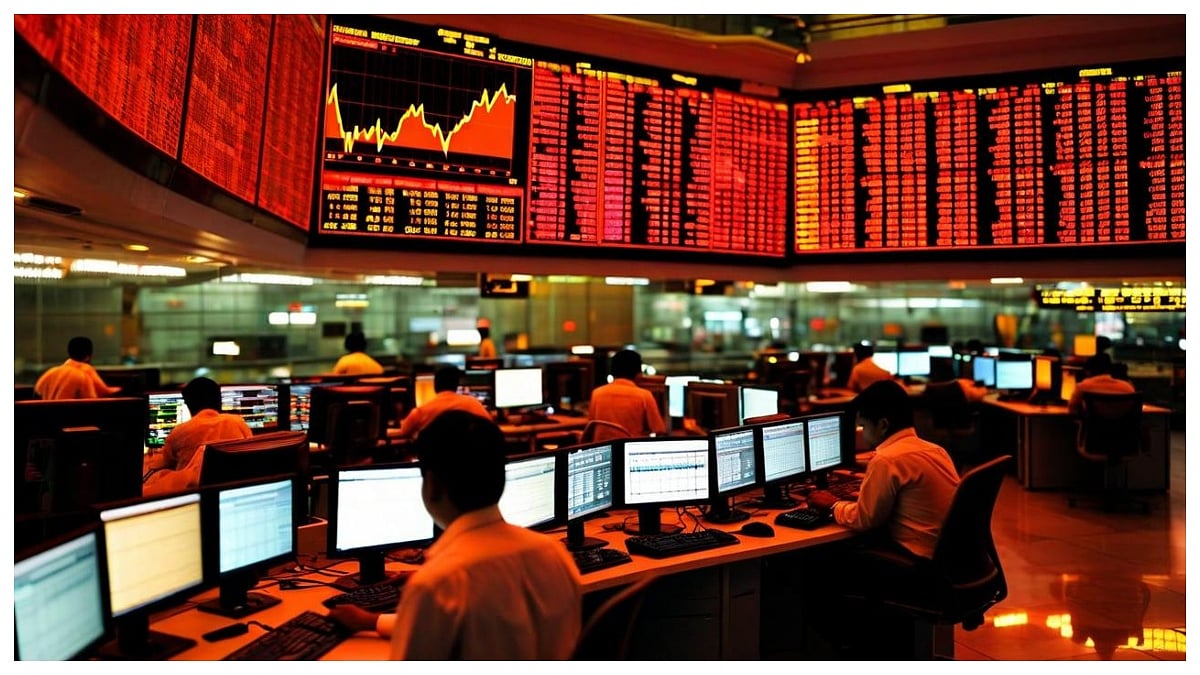
Global equity markets maintained a muted show on Friday as the United States-Israel-Iran war showed no sign of ending and President Donald Trump distanced himself from Israel’s South Pars attacks.
From the US to Japan and Hong Kong, equity indices showed marginal gains or losses, in contrast to Thursday’s steep declines.
Dow Futures and S&P Futures were marginally higher by 0.19 percent and 0.11 percent, respectively, according to Bloomberg TV as of 1:30 ET on March 20.

The muted run came after the Dow Jones and S&P 500 slipped in Thursday’s trade, ending lower by 0.44 percent (203 points) and 0.27 percent (18 points), respectively, while the Nasdaq declined almost 0.28 percent, or 61 points, to close at around 22,090.
Asian markets followed their American peers, with Japan’s Nikkei declining over 1,888 points or 3.38 percent, while South Korea’s Kospi managed a marginal rise of 0.15 percent, according to Bloomberg TV as of 1:30 ET. Hong Kong’s Hang Seng also shed over 176 points or 0.69 percent.
On the domestic front, India’s Sensex and Nifty rebounded from Thursday’s mayhem, when the indices had plunged over 3.26 percent, their steepest fall in nearly two years.
On Friday, while the former was up by 1.15 percent, or 840 points, the latter was trading at a gain of close to 1.17 percent, or 270 points.
Comparative stability in the markets came as the war in West Asia showed no signs of respite. There were signs of divergence on the US-Israel side.
While Israel attacked the Iranian side of the South Pars gas field, Trump claimed he had not been informed before the incident. The claim was later dismissed by three Israeli officials in an interview with The New York Times.
Iran’s South Pars gas field is part of the world’s largest natural gas reservoir. The attack may further disrupt global energy supply.
The strikes came a day after Qatar’s Ras Laffan natural gas refinery was damaged due to attacks from the Iranian side.
This diminished hopes of the energy crisis easing, and investors feared rising inflation.
