When Indian investors think about investing overseas, the choices have traditionally been limited. They could invest through domestic mutual funds with international exposure, provided regulatory limits allowed fresh inflows, or directly buy foreign stocks under the Liberalised Remittance Scheme (LRS), a route that many retail investors found cumbersome.
Now, a new avenue is beginning to take shape.
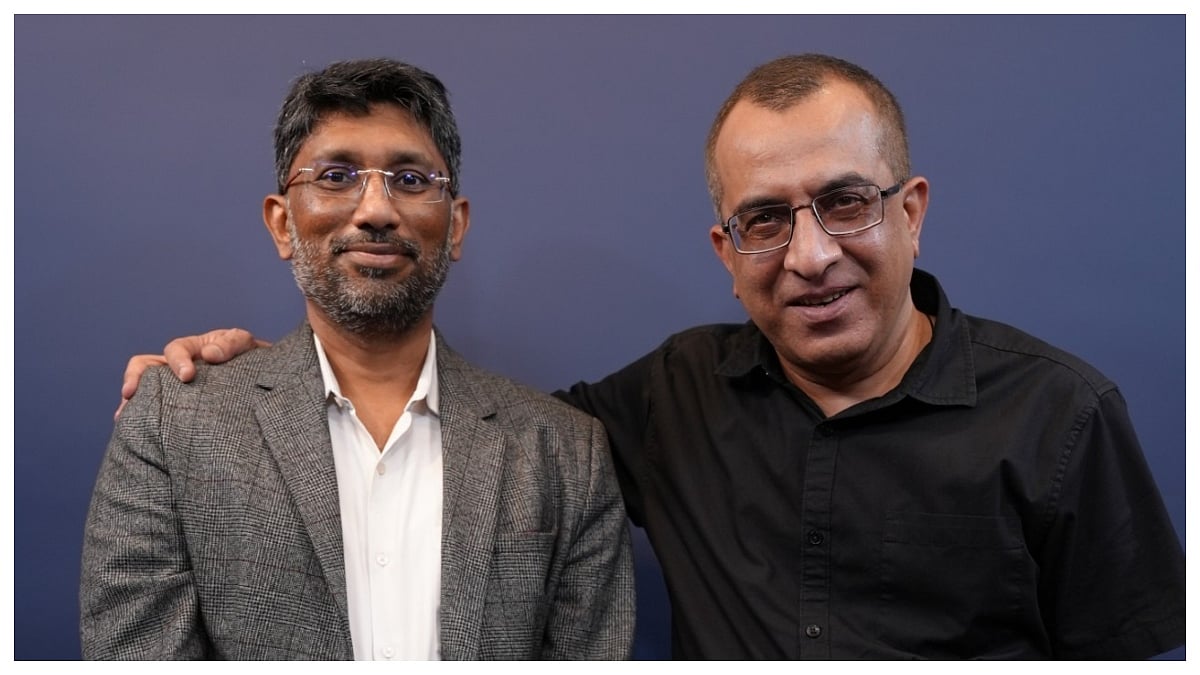
In a recent episode of Simple Hai!, host Vivek Law spoke with Mahmood Basha, Head - Retail & International Business at Baroda BNP Paribas Asset Management, about how GIFT City is evolving into a platform that could make global investing simpler and more accessible for Indian investors.
While the discussion covered international diversification, market cycles and investor behaviour, one message stood out: as India's economy becomes more integrated with the world, Indian investors may also need to think beyond domestic markets.
Why Looking Beyond India Matters?
India remains one of the fastest-growing major economies in the world, and domestic equities continue to offer compelling long-term opportunities. But Indian companies account for only a small share of the world's listed market capitalisation.
According to Basha, limiting a portfolio to one country means potentially missing out on industries and businesses driving global growth.
From artificial intelligence and semiconductor manufacturing to several of the world's largest technology companies, many global leaders are listed outside India. International investing allows investors to participate in these growth stories while reducing concentration risk.

Every economy, he pointed out, goes through different business cycles. Diversifying across countries and sectors can therefore help create a more balanced portfolio over the long term.
GIFT City Opens A New Route
One of the biggest challenges for Indian investors has been access.
Domestic mutual funds investing overseas continue to operate under industry-wide overseas investment limits, restricting the ability of fund houses to accept unlimited inflows into international schemes.
GIFT City offers an alternative framework.
Investment products launched through GIFT City are regulated by the International Financial Services Centres Authority (IFSCA) and allow Indian investors to invest overseas using the Liberalised Remittance Scheme.
Unlike direct stock investing, these products are professionally managed, enabling investors to gain exposure to global markets without having to research and monitor individual overseas companies themselves.
Basha believes that as the ecosystem matures, investing through GIFT City will become increasingly seamless, much like investing in domestic mutual funds today.
More Than Just Higher Returns
Global investing is often viewed purely as a strategy to generate better returns. Basha believes there is another equally important reason.
As Indian incomes rise, more families are spending on overseas education, international travel, healthcare abroad and even purchasing property outside India. These financial goals are denominated in foreign currencies.

Owning international assets, therefore, can serve as a natural hedge against currency depreciation while helping investors prepare for future global expenses.
Rather than treating overseas investing as a tactical opportunity, he argues it should be viewed as part of long-term financial planning.
Mutual Funds May Be The Better Starting Point
For investors exploring international markets for the first time, Basha recommends professionally managed investment products over direct stock selection.
Choosing overseas companies requires understanding unfamiliar markets, industries, regulations and economic conditions. Professional fund managers, on the other hand, continuously evaluate companies, sectors and portfolio allocations on behalf of investors.
For most retail investors, this reduces complexity while providing diversified exposure across global markets.
Indian Investors Are Becoming More Mature
Reflecting on nearly three decades in the investment industry, Basha noted that Indian investor behaviour has changed significantly.
Earlier, household savings were concentrated in fixed deposits, gold and real estate. Today, financial assets and particularly mutual funds have become an increasingly important part of wealth creation.
He also believes investors have become more resilient during market corrections.
Experienced investors increasingly understand that volatility is a normal part of investing. Rather than exiting markets during periods of uncertainty, many continue their systematic investments, recognising that long-term wealth is built by staying invested through market cycles.
While newer investors may still react emotionally to corrections, Basha sees this as part of the learning curve every market goes through.
Trust Is Still The Most Valuable Asset
Towards the end of the conversation, the discussion shifted from markets to personal values.
Basha credited his family for teaching him that integrity is non-negotiable in financial services.
Managing someone else's money, he said, is built on trust. Once earned, that trust should never be compromised.
Alongside integrity, he believes hard work and a willingness to share knowledge have shaped his three-decade journey in the investment industry.
India's Investing Story Is Becoming Global
For years, global diversification remained more of an aspiration than a practical option for many Indian investors.
GIFT City is beginning to change that.
While the ecosystem is still evolving, it represents an important step towards giving Indian investors access to international opportunities through regulated, professionally managed investment products.
As India's wealth grows and financial aspirations become increasingly global, investing beyond domestic markets may no longer be a niche strategy, it could become an essential part of building long-term wealth.

