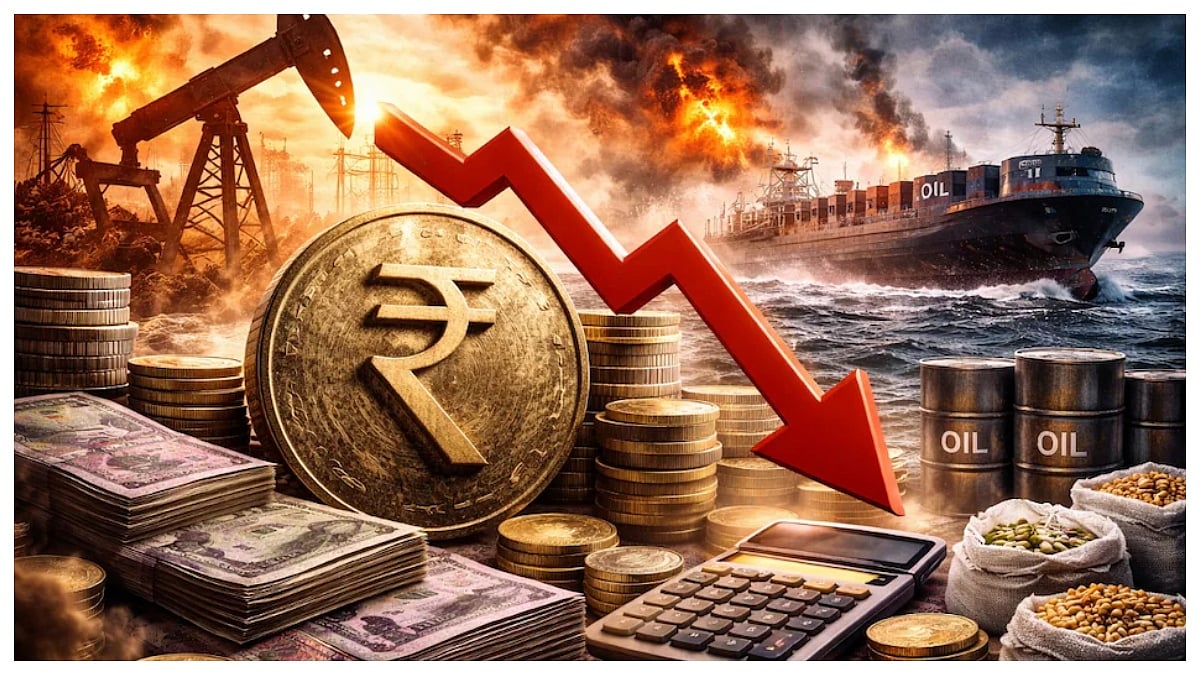
New Delhi [India]: A new financial report from Emkay Wealth Management warns that the escalating Middle East conflict is creating significant economic pressure on India through rising energy costs and market volatility. The report highlights that the conflict involves a "whole web of countries" and its impact may be more severe than many expect.
The primary concern for the Indian economy is the sharp increase in fuel costs. According to the report, "Brent has moved up from a range of US$ 65-US$ 70 per barrel to US$ 110 per barrel since the war broke out." This surge is linked to major infrastructure failures in the region. "Iran's oil infrastructure has been damaged. The Strait of Hormuz is closed. LNG supply from Qatar is closed. Natural gas price has surged by 50%," the report added.
"The likely loss of LNG output for 2026 could range from 3.30 million tonnes over a fortnight to about 11.20 million tonnes if the war continues for a month or more," the report added. These disruptions have a direct effect on India's national growth. The report states that "A 10% rise in oil prices may dent the GDP growth by approximately 0.25%." While the economy is "structurally tuned to grow at 7.00%," the report warns that "any grave negative development especially an exogenous factor may pull down the GDP to around 6.50%."
The conflict is also affecting the value of the local currency and investment markets. The report notes that "The Rupee weakens especially in times of conflicts and war," which makes imports like electronics and jewellery more expensive. This leads to a situation where "higher crude prices and higher import costs would trigger inflationary pressures," resulting in "higher market yields and higher cost of funds."
Despite these challenges, the report suggests the economy remains resilient. It points out that "even such a fall would not change things drastically as the economy has gone through such situations earlier also and has displayed a high level of resilience." For investors, the report suggests that because a "corrective downward movement has happened," it may make "immense sense to add to the existing investments in a phased manner."
The report also said that the Middle East conflict, in its impact, may be different depending on the time frame for which it is going to persist. If it is for a very short span, like three or four weeks, its impact may be transitory. However, if it is going to be another one or two months or more, then the adverse impact will be more severe.
Disclaimer: This story is from the syndicated feed. Nothing has been changed except the headline.
