Gold has long been India's preferred store of wealth. It is bought during festivals, gifted at weddings and passed down through generations. But while Indian households continue to accumulate the precious metal, much of it remains locked away in lockers, generating little economic value.
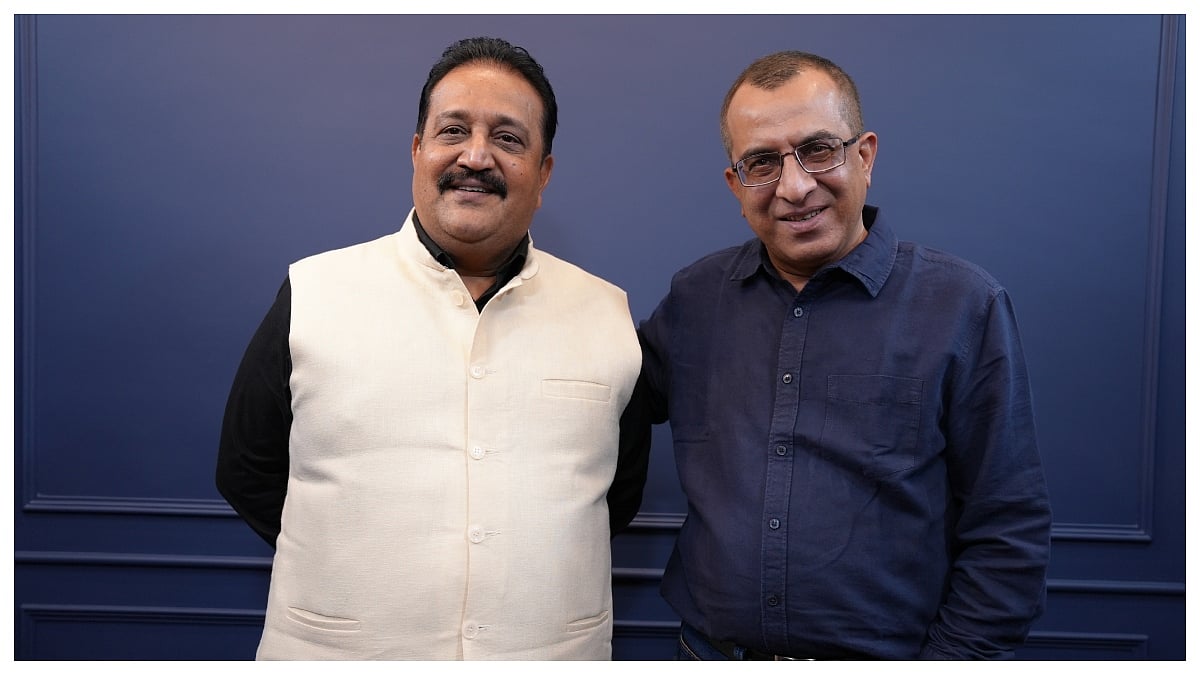
According to Mahendra Luniya, Founder Chairman, Vighnaharta Gold Ltd., this vast stockpile of household gold represents one of India's biggest untapped economic opportunities. Speaking on the Simple Hai! podcast hosted by veteran business journalist Vivek Law, Luniya argued that digitising gold ownership and bringing idle gold into the formal financial system could unlock liquidity, reduce import dependence and reshape how Indians invest in the precious metal.
Gold Goes Digital
Luniya compared the evolution of gold ownership to the transformation witnessed in equity markets and payments over the last two decades.
"Shares moved from paper certificates to demat accounts. Cash moved from wallets to UPI. Gold is now following the same path," he said.
With prices touching around ₹1.5 lakh per 10 grams, purchasing physical gold has become increasingly expensive for many households. Digital platforms, however, allow investors to start with significantly smaller amounts.
"You can now buy gold for as little as ₹150," Luniya said, adding that digital ownership makes regular investing possible, much like a systematic investment plan (SIP). Instead of waiting to accumulate enough money to buy jewellery or coins, investors can gradually build their gold holdings over time.
From Investment to Jewellery
While digital gold is often viewed as a substitute for physical ownership, Luniya believes it actually complements traditional buying habits.

He explained that investors can accumulate gold digitally over several years and eventually convert those holdings into jewellery whenever required, particularly for weddings or family occasions.
A key innovation enabling this transition is the Electronic Gold Receipt (EGR), an exchange-traded instrument backed by physical gold stored in regulated vaults. According to Luniya, EGRs could eventually allow investors to transfer gold directly from their demat account to a jeweller, paying only the making charges or any additional quantity required.
"This makes gold accumulation far more efficient while still allowing families to eventually own physical jewellery," he said.
Trust Through Standardisation
Luniya also highlighted the impact of mandatory hallmarking in improving consumer confidence.
Earlier, buyers often had little certainty about the purity of jewellery, with many discovering years later that ornaments sold as 22-carat gold were of lower quality. Today, BIS hallmarking and digital verification have standardised quality, making transactions significantly more transparent.
He believes this increased trust provides the foundation for wider adoption of digital gold ownership.
Unlocking a Sleeping Asset
According to Luniya, India's privately held gold is effectively a "sleeping asset."
While households continue buying gold every year, the country also imports hundreds of tonnes annually, placing pressure on foreign exchange reserves.
"If even a small portion of the gold already lying in Indian homes becomes financially productive, it can release enormous liquidity into the economy," he said.
That liquidity, he argued, could support businesses, improve access to credit and reduce dependence on fresh imports.
Rather than encouraging people to stop buying gold, Luniya advocates changing how it is accumulated and utilised.
Lessons From History
During the discussion, Luniya referred to historical examples to underline gold's strategic importance.
He cited the United States' gold policies during the Great Depression and India's decision to pledge gold reserves during the 1991 balance-of-payments crisis as examples of how gold has served as a critical financial asset during periods of economic stress.
His broader point was that gold should not merely remain locked away but should be capable of supporting economic activity whenever required.
Why Gold Remains Relevant?
The conversation also touched upon the resurgence of gold globally.
Luniya noted that central banks across the world have increased their gold purchases amid geopolitical tensions, rising sovereign debt and efforts to diversify reserves beyond the US dollar.
Against this backdrop, he believes India's own household gold reserves can play a far greater role in strengthening the country's financial resilience.
Among the various investment avenues available today—including Gold ETFs, digital gold and other market-linked products—he identified Electronic Gold Receipts as one of the most promising developments because they combine the security of physical gold with the convenience of electronic ownership.
The Road Ahead
Luniya believes younger investors are already leading the shift towards digital assets.
Unlike previous generations, who primarily associated gold with jewellery, today's investors are increasingly comfortable owning financial assets electronically while retaining the flexibility to convert them into physical form whenever required.
For him, the future of gold lies not in replacing tradition but in modernising it.
Families will continue buying jewellery for emotional and cultural reasons, but the process of saving and investing in gold is likely to become increasingly digital. If that transition gathers pace, Luniya believes India's vast household gold reserves could evolve from being a passive store of wealth into a productive financial asset—one that benefits not only individual investors but the broader economy as well.

