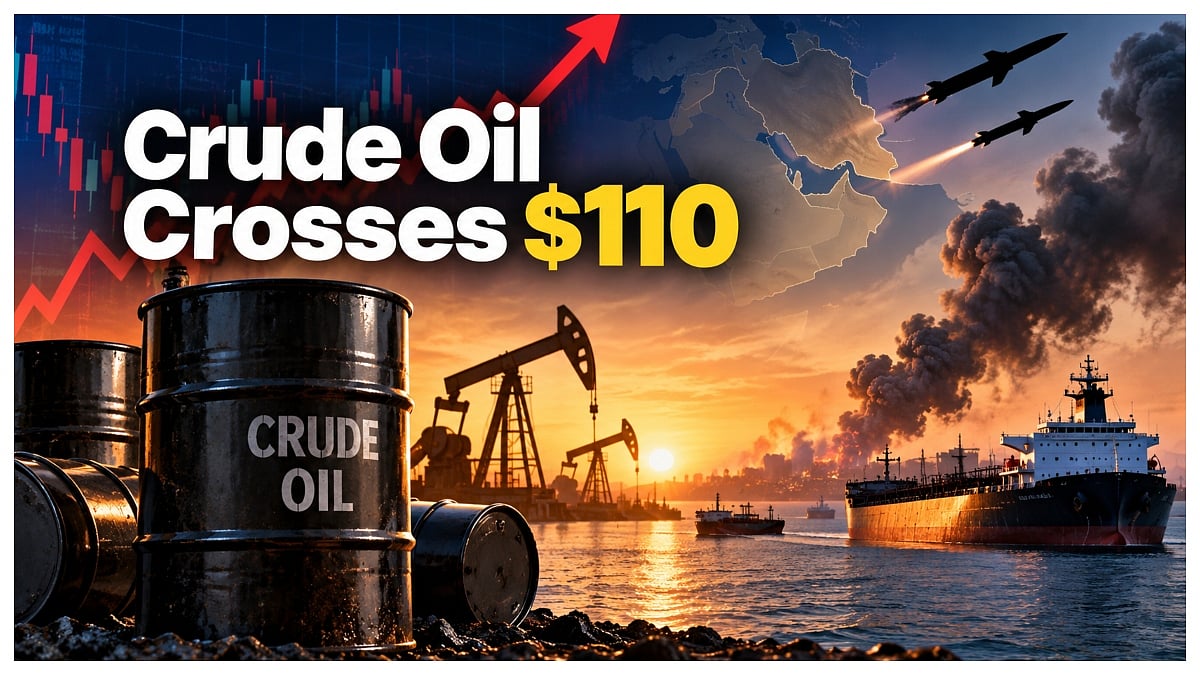
New Delhi: Global crude oil prices climbed sharply on Thursday, October 22, as escalating tensions in West Asia and fresh Houthi attacks in Saudi Arabia raised concerns over energy supplies and shipping routes.
Brent crude futures rose USD 1.29, or 1.2 percent, to USD 110.11 per barrel during morning trading. US West Texas Intermediate (WTI) crude gained 97 cents, or 1 percent, to USD 98.12 per barrel.
Houthi Attacks Raise Supply Fears
Iran-backed Houthi rebels reportedly targeted several locations in Saudi Arabia on Wednesday, intensifying concerns about regional security.
An attack on a civilian airport in Dammam reportedly killed one person and injured eight others. A separate drone attack on a Saudi oilfield left two people dead.
Following these developments, the United States decided to withdraw family members of certain diplomatic personnel from some missions in Saudi Arabia.
Reports of explosions in southern Iran's Sirik region added to uncertainty, although their cause remained unconfirmed.
Oil Tanker Routes Face Growing Threats
Maritime security concerns have intensified as attacks on commercial vessels continue across the region.
According to Kpler data, at least 18 attacks on ships were reported over the past two weeks.

Analysts warned that threats extending beyond the Strait of Hormuz into the Gulf of Oman could disrupt crude loading operations and ship-to-ship oil transfers.
US Crude Inventories Decline
US Energy Information Administration data showed crude inventories fell by 3.06 million barrels last week to 412.5 million barrels.
The decline was significantly higher than analysts' expectations of 820,000 barrels, providing additional support to oil prices.
However, distillate inventories increased by 1.68 million barrels to 104.3 million barrels, offering some relief over fuel availability.
What Could Happen Next?
The US administration is considering releasing supplies through loans from its emergency heating oil reserves to ease diesel prices.

Meanwhile, potential US-mediated peace talks between Russia and Ukraine could help reduce geopolitical uncertainty.
However, continued attacks on energy infrastructure and shipping routes could keep crude prices elevated, increasing inflation risks and pressure on global financial markets.

