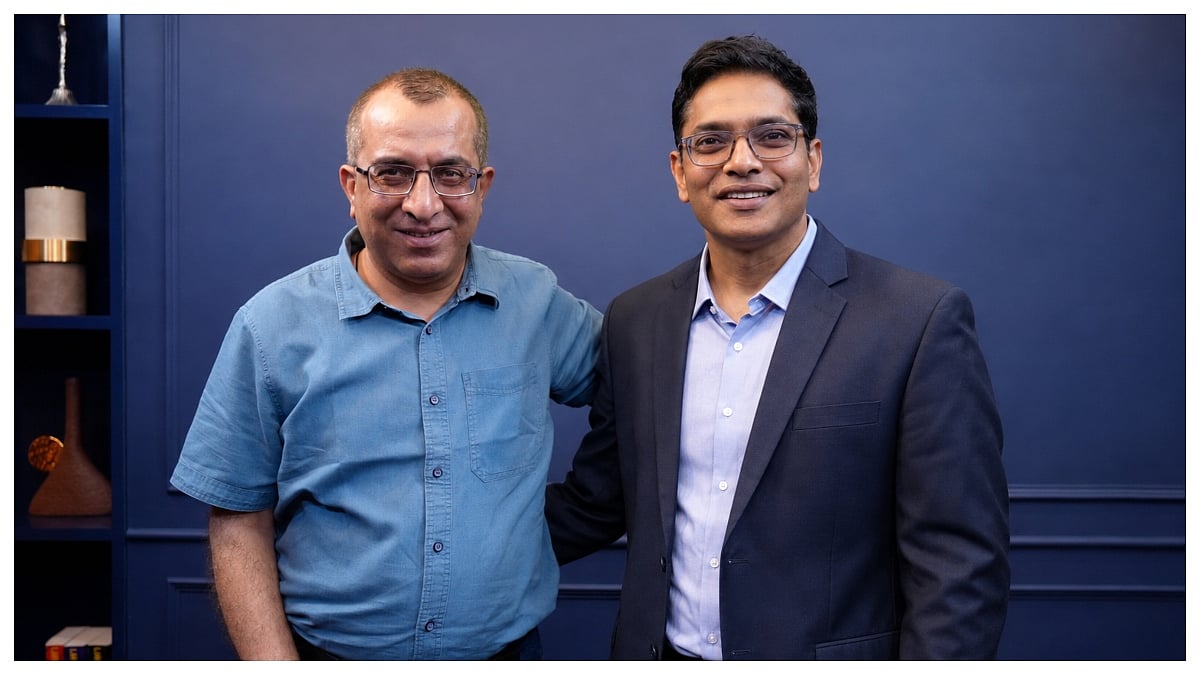
In this week's conversation with Vivek Law on Simple Hai!, Amit Pathak, Business Head of Personal Loans at Kotak Mahindra Bank, discussed the rapid evolution of India's personal lending market and how consumer attitudes towards debt have changed over the past two decades. Drawing from more than 23 years in banking across retail lending, SME finance and consumer credit, Pathak argued that debt itself is not the problem. The real challenge lies in borrowing without discipline or a clear purpose.
From Engineering to Banking
Law began by asking about Pathak's unconventional career journey. A chemical engineer by training, Pathak started his professional career with Reliance Industries before moving into banking and finance.
According to Pathak, the transition was driven less by compensation and more by a desire to learn something new. Although he came from a family with strong financial roots, with his mother working at the Reserve Bank of India and his father teaching finance and accounts, he initially stayed away from the sector. Over time, however, he developed a deeper interest in financial services and eventually moved into banking, where he has spent more than two decades building lending businesses.
Why Debt Is No Longer Viewed the Same Way?
The discussion then shifted to changing consumer attitudes towards borrowing. Pathak noted that younger generations are significantly more comfortable using credit than previous generations. Unlike their parents, who often planned purchases years in advance, today's consumers are more confident about future income and are willing to spread purchases through EMIs.
He argued that debt should not automatically be viewed negatively. As long as borrowers understand their repayment obligations and maintain manageable EMI commitments, credit can serve as a useful financial tool. The rise of digital lending, consumer finance and easy EMI options has simply made borrowing more accessible and convenient.
Tracking Risk in a Growing Credit Market
Law asked how banks monitor risk, particularly as personal lending continues to grow rapidly.
Pathak explained that lenders closely monitor repayment behaviour and loan-stacking trends. Banks track whether customers are paying EMIs on time and whether borrowers are simultaneously taking loans from multiple institutions.
Credit bureau data has become a critical part of risk assessment. By analysing repayment histories and borrowing patterns, banks can determine whether customers remain within their repayment capacity or are becoming financially stretched.
According to Pathak, the industry's ability to monitor customer behaviour has improved significantly in recent years. Better data availability has strengthened underwriting standards and provided banks with greater confidence in identifying both healthy and potentially risky borrowers.
The Expanding Use Cases for Personal Loans
A major theme of the conversation was how personal loans are increasingly being used beyond emergency situations.
Pathak explained that personal loans historically emerged as a solution for immediate financial needs. However, today's borrowers are using them for a much wider range of purposes.
He cited examples of customers funding higher education, home improvements and professional development programmes through personal loans. In one instance, a financially well-off customer chose to finance an expensive doctoral programme through a loan rather than liquidating long-term investments.
According to Pathak, this reflects a broader shift among middle-income and affluent consumers who increasingly view spending on education, skills and productivity-enhancing assets as investments in themselves.
Productive Borrowing Versus Debt Traps
Throughout the discussion, Pathak repeatedly distinguished between productive borrowing and unhealthy debt.
He argued that loans used for self-improvement, education, home upgrades or meaningful life experiences can create long-term value. However, borrowing to fund routine expenses is often an early warning sign of financial stress.
Law raised the example of financing smartphones through EMIs. Pathak acknowledged that consumer purchases financed through credit have become common, particularly when borrowers are confident about future cash flows.
However, he stressed that daily living expenses should never depend on borrowed money. If recurring household needs are being funded through loans, borrowers may already be entering a debt trap.
Why Flexibility Matters?
The conversation also explored alternatives to traditional personal loans.
Pathak highlighted overdraft facilities as an underutilised financial tool for individuals with short-term funding needs. Unlike standard loans, overdrafts charge interest only on the amount utilised and only for the duration of usage.

For borrowers expecting future cash inflows such as bonuses or business receipts, overdrafts can provide flexibility without locking them into long-term interest obligations. He compared the facility to having a financial safety net available for emergencies while paying only when it is actually used.
AI's Growing Role in Lending
Law also asked about artificial intelligence and its impact on banking.
Pathak said AI has already become an important tool in consumer lending. Banks are increasingly using machine learning models and behavioural analytics to assess customer repayment patterns and identify early warning signals.
According to him, predictive models have become substantially more accurate as AI capabilities improve. By analysing spending behaviour, investment activity and borrowing patterns, banks can better understand customer intent and make more informed lending decisions.
The result is stronger underwriting and improved portfolio quality across the lending ecosystem.
Understanding Regional Borrowing Behaviour
One of the more interesting aspects of the discussion focused on regional differences in borrowing patterns.
Pathak observed that similar financial events often lead to very different spending choices across India. Wedding-related borrowing, for example, may be directed largely towards jewellery purchases in some parts of the country, while elsewhere it may fund broader consumption-related expenses.
These regional preferences, combined with cultural and economic differences, influence how banks assess demand and structure lending products across geographies.
Financial Discipline Above All
Towards the end of the conversation, Law asked Pathak about the most important lesson he learned from his parents.
His answer was straightforward: financial discipline.
Pathak said discipline remains the foundation of both borrowing and wealth creation. Whether it is saving, investing or taking a loan, long-term success depends on maintaining financial discipline consistently over time.
He concluded that there is nothing inherently wrong with borrowing. What matters is understanding why the money is being borrowed, ensuring repayment capacity exists and using credit in a way that improves one's financial future rather than compromising it.
