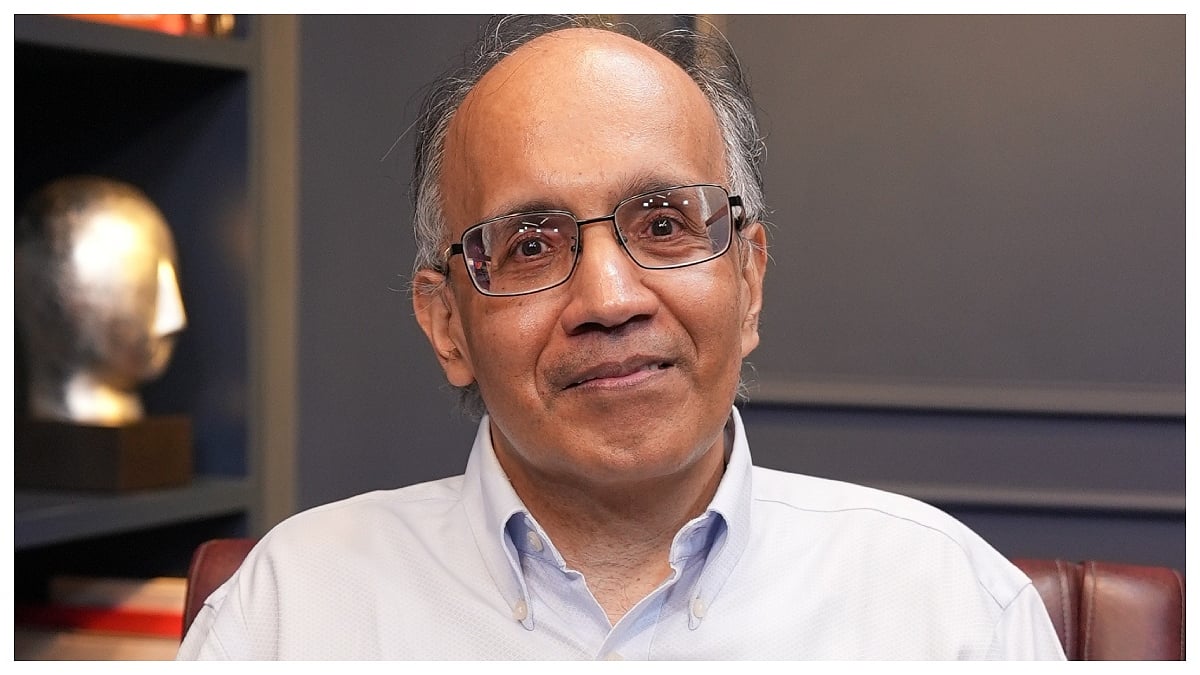
Artificial intelligence is moving from buzzword to business tool, and its impact is already visible across industries, jobs and consumer behaviour. In this interview with The Free Press Journal, Rajesh Jain, MD and Founder of Netcore Cloud, explains why AI is bigger than the internet revolution, how brands can use digital twins and agents, why India must invest more in education, and why professionals should spend time every day learning AI. Speaking with Manoj Yadav, Business Editor (Digital), he says the biggest opportunity lies not in fearing disruption, but in solving real problems with AI.
You saw the internet era up close and are now closely tracking AI. Is this another dotcom-style shift or something bigger?
It is much bigger. The internet changed communication, access and services. AI will reshape every person, every business and every industry. We are still only a few years into this phase, so the bigger changes are yet to come.
What makes AI more powerful than the internet in your view?
The internet connected the world. AI can think, analyse, generate and act. It will not just improve existing systems, it will create entirely new ways of working. The second and third-order effects will be the most transformative.
You built India World in the 1990s and later Netcore Cloud. What still keeps you driven?
Big problems. Entrepreneurs are energised by problems worth solving. In the 1990s, the challenge was connecting Indians worldwide with information. Today, the problem I want to solve is how brands build better relationships with customers without wasting money.
You often use the term “AdWaste”. What exactly do you mean?
Brands often end up paying again to reacquire customers who already know them. A customer engages, becomes inactive, and then the brand spends on ads to bring that same customer back. That is waste. In many cases, brands are renting their own customers instead of owning the relationship.
And you believe AI can fix that?
Yes. AI can help brands communicate far more intelligently. Instead of generic campaigns, they can move towards one-to-one messaging, where the right person gets the right message at the right time through the right channel.
You have predicted that brands may soon create digital twins of customers. What does that mean?
It means building a customer replica based on behaviour, intent and interaction history. That digital twin can help the brand understand what kind of message, offer or experience is most relevant for that person at that moment.
Is that where agentic AI comes in?
Exactly. Agents can analyse data, create segments, generate content, measure performance and recommend next actions. Today, humans cannot manage this level of customisation for millions of users. Agents make that possible.

So marketing is moving away from one-size-fits-all communication?
It has to. Right now, most communication is broad and generic. AI allows brands to become far more precise. It can take into account time, weather, buying history, preferences and context. That level of relevance can dramatically improve engagement.
But will AI agents take away the human element of choice, search and discovery?
No. AI will remove friction, not remove human experience. People still want real experiences, emotion, discovery and decision-making. AI will help filter noise and improve relevance, but the final choice and emotional response will remain human.
You have also spoken about shrinking attention spans. Is that now the new normal?
Attention is hard to win because most incoming messages are irrelevant. The answer is not to accept low attention spans as destiny, but to make communication more meaningful. If a message is timely, personalised and useful, people will pay attention.
That level of personalisation also raises privacy concerns. How should brands handle that?
It has to be a clear value exchange. Customers will share information if they see real benefit in return. Better service, more relevant communication and smoother experiences can justify that. Without value, it feels intrusive.
For someone still confused by the terminology, how would you explain generative AI and agentic AI simply?
Generative AI creates and analyses content. It can write, summarise, compare and generate images or charts. Agentic AI goes a step further. It can do tasks on your behalf, monitor information, make decisions within a scope and take action.
In practical work terms, what changes with agentic AI?
A lot of repetitive knowledge work gets automated. For example, an agent can review reports, identify patterns, compare trends and suggest what matters most. That frees up humans to focus on judgment, strategy and higher-level thinking.
Does that mean jobs are at risk?
Tasks are at risk. Roles will change. Routine, repetitive and lower-level work will increasingly be automated. But new work will emerge. Humans will still be needed for judgment, creativity, relationships and decision-making. The real challenge is adaptation.
You strongly suggest that people should spend time every day learning AI. Why?
Because this is no longer optional. AI is affecting white-collar work directly. People should not wait for companies to train them. Spend time using the tools, experimenting and understanding what they can do. That is an investment in your own future.
You have even advised people to pay for AI tools instead of relying only on free versions?
Absolutely. The difference between free and paid versions can be substantial. It is one of the best professional investments you can make today. A few thousand rupees a month can significantly improve your learning and productivity.
Where do you think most people are underusing AI right now?
They use it only for basic writing help, such as fixing grammar, drafting emails or summarising text. That is too narrow. AI can help you think, code, analyse, experiment, simulate and build. People need to move from assistance to problem-solving.
You have made a bold case that CMOs must evolve into Chief Profit Officers. Why?
Because the old model of chasing clicks and growth at any cost is no longer enough. Marketing has to own profitability as well. If CMOs can reduce waste, improve retention and directly affect margins, they become central to business strategy.
Is that why so few CMOs become CEOs?
That is one reason. Many CMOs have historically not been seen as profitability leaders. If they change that and use AI to drive smarter growth, they will become much stronger candidates for the top role.
Netcore is also talking about outcome-based pricing. How is that different from the normal software model?
Most software is priced on inputs such as users, licences or volume. But businesses care about outcomes. Did revenue rise? Did retention improve? Did waste fall? Outcome-based pricing means software providers share responsibility for results, not just activity.
What does that mean for the broader SaaS industry?
It means software firms will need to move closer to business performance. They will need more skin in the game. Those that can help deliver measurable business outcomes will become more valuable partners.
Coming to India, has the country missed the AI bus?
No, but the opportunity depends heavily on education. India may not dominate every foundational layer, but it can do very well in applications, use-cases and innovation built on top of AI. That is where the real opportunity lies.
What does India need most right now to benefit from AI?
Better education, more curiosity and more experimentation. We need people who can ask questions, learn across disciplines and use AI confidently. India must improve education quality and make AI part of mainstream learning early.
You seem to believe that asking questions is becoming more important than having ready answers?
Very much so. AI can generate answers, but the quality of answers depends on the quality of questions. People who ask better questions will get better outcomes. That skill will become more valuable in this era.
You have maintained a disciplined writing habit for years. Why continue that in the AI era?
Because writing sharpens thinking. It forces clarity. AI now helps me refine ideas, connect thoughts and draw on past writing, but the discipline of thinking still matters. AI is enhancing the process, not replacing it.
Has AI changed the way you write?
Yes. It helps me think faster and explore ideas more deeply. Since it can work with my previous writing, it acts like a collaborator with strong memory. But I still write because it improves my understanding.
If we speak again at the end of 2026, what change do you expect to be most visible?
We will likely see AI agents becoming much more common in business workflows. In marketing, I expect more focus on profitability, better customer intelligence and more precise engagement. The shift may still feel early, but it will be more visible.
What is the right mindset for professionals facing this shift?
Do not obsess only over disruption. Focus on opportunity. Ask what problem you can solve, what friction you can remove and what new value you can create. AI is a tool for builders and problem-solvers.
What is your final message to readers trying to make sense of AI?
Use it. Learn it. Experiment with it. Do not treat AI as a distant trend. Treat it as part of your working life. The biggest gains will go to those who engage with it actively and apply it to real problems.

