By Tushar Khakhar
India has never been an easy market. And that’s precisely why it has always been one of the most honest.
With its mix of languages, religions, regions, habits, humour and contradictions — regional, seasonal and everything in between — India is a cultural lab like no other. It is a place where audiences rarely allow brands to fake their way through creativity. You either understand the culture, or you’re politely ignored. Sometimes, brutally so.
For global companies, India often becomes a proving ground. Diversity is one thing, but the complexity of behaviour and the immediacy of response make this one of the most exciting markets in the world. If an idea survives here, it has already passed through layers of culture, emotion, and contradiction. Acceptance — or rejection — is instant.
Beneath India’s visible diversity lie shared emotional and behavioural cues. Brands that identify and respect these cues build familiarity. Relatable humour, meme-led conversations, cricket debates, Bollywood gossip, and everyday quirks — these are not trends; they are cultural connectors.
Brands that recognise this stop trying to stand out and start trying to belong. When a brand becomes part of routine conversation — when it feels natural to mention without thinking — it earns a place in the audience’s colloquial world. That is when cultural connection moves from awareness to acceptance.
The most loved Indian brands today don’t try to sound clever; they try to sound familiar. They speak the way people speak. They joke the way people joke. They understand that audiences don’t want to be impressed — they want to feel seen.
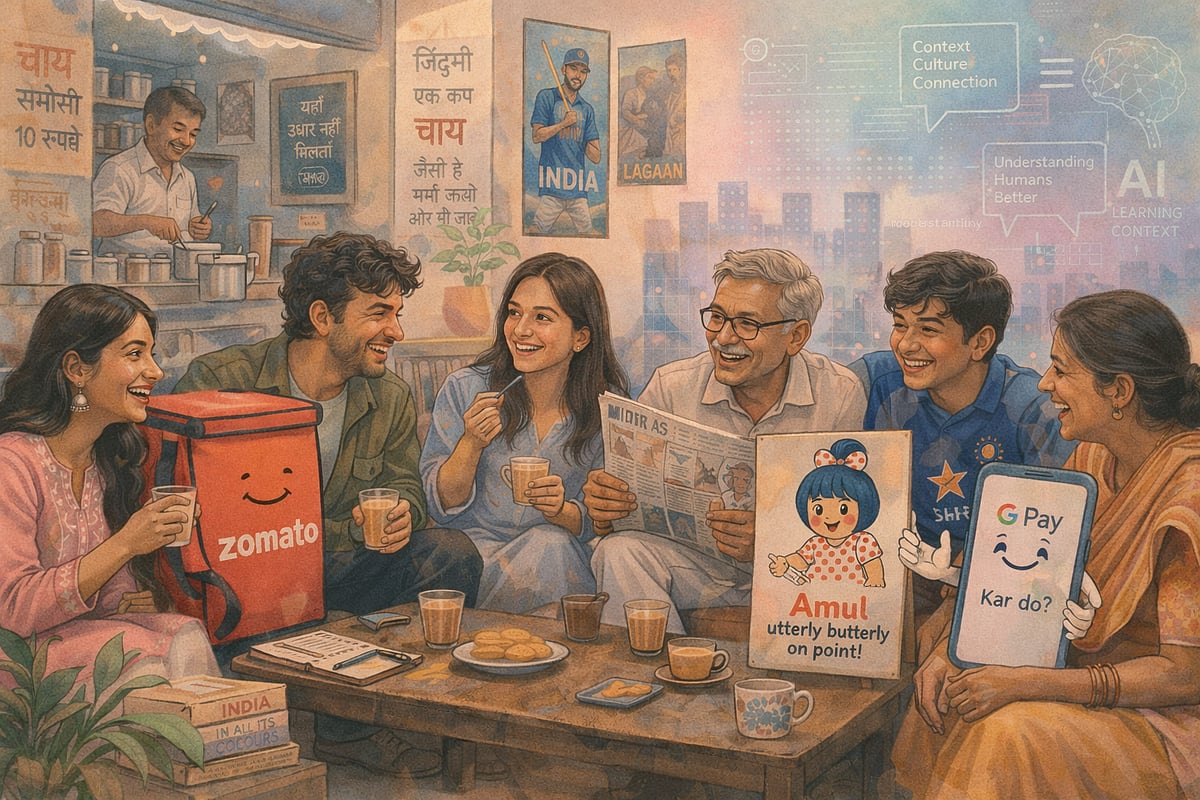
Take Zomato. Its communication doesn’t feel like marketing because it doesn’t behave like marketing. It behaves like a person — one that understands internet culture, timing, and restraint. The brand rarely explains itself, yet its perception is crystal clear: witty, self-aware, and culturally plugged in.
Or Amul, which has mastered the art of participating in national conversations without shouting for attention. It simply responds to moments. Over decades, that consistency has made it less of a brand and more of a cultural commentator.
Then there’s Paper Boat, which didn’t just sell drinks — it sold memories. Nostalgia, when done honestly, feels grounding. The brand understood that emotion travels faster than information.
Even in utility-led categories, culture plays a defining role. When Google Pay’s compulsive cashback bait evolved into a cultural hook, “GPay kar do” became a phrase people used regardless of which payment app they were actually using. That’s when a brand stops being a product and starts becoming a language.
What began with Dunzo, and was later amplified by Zepto and Blinkit, showed how relatable humour, bag copy, and everyday references could transform logistics into personality. These brands didn’t just deliver products; they delivered presence.
As AI begins to standardise creativity and automate execution, cultural intuition may become the last real advantage brands have. Because algorithms can generate content, but they still struggle to understand context. And in a market like India, the brands that win won’t be the ones that try hardest to be noticed — but the ones that feel like they’ve always belonged.
(The author is the First Executive at AGENCY09)

