Bhopal (Madhya Pradesh): In Art, man reveals himself and not his objects
– Rabindranath Tagore
The history of the iconography of Shiva in Madhya Pradesh is over 10,000 years old. It means people of the state have been worshipping Shiva since time immemorial.
The word iconography, as Jitendra Nath Banerjea discusses in The Development of Hindu Iconography, has been derived from the Greek word eikon, which means “a figure representing a deity, or a saint, in painting, mosaic, and culture, which is in some way or other associated with the rituals and connected with the worship of particular divinities.”
A student of history finds the close parallel of the Greek word 'eikon' in the Sanskrit word 'vigraha', which indicates representation of deities.
The iconography of Shiva has witnessed changes from the days of the Indus Valley Civilisation until the reign of the Gupta Empire and the diverse mediaeval and early modern styles.
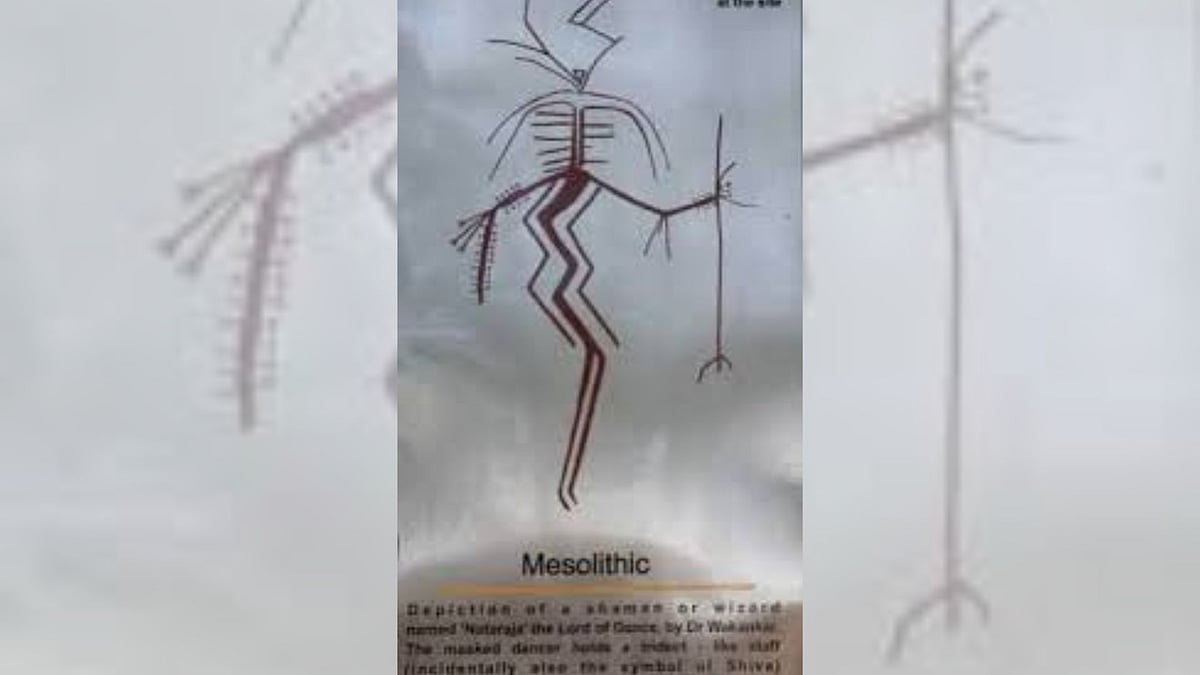
A close look at the paintings of the Bhimbetka rock shelters suggests Shiva-like figurines holding tridents, the symbol of the lord.
Ergo, the iconography of Shiva in MP developed from the days of the linga worship to the elegant forms during the Gupta period. They became more sophisticated during the rule of the Chandela and Paramar dynasties.
The idols of Shiva found in Udayagiri represent the interpretative forms of the lord. The crescent moon, added to the head of the idol of Shiva, is a puzzle. Does it indicate the mortal world consists of the half-truth, which is Maya?
Because of the crescent moon on the Lord’s head, He is called Chandrashekhara, which symbolises His mastery over the cycle of birth, death, and time.
With the crescent moon over his head, the Lord is calm. The system of worshipping Lingam (aniconic) as the primary symbol of divine energy was prevalent in the prehistoric era. One-faced Shiva Linga (Ekmukha), belonging to the 5th century BCE, was found in the Satna region.
During the Gupta period, there was a major shift in the form of making Shiva idols. The shift was from the abstract shapes towards the anthropomorphic forms. Though the quiet Udaygiri caves, a few kilometres away from Vidisha, display the early Gupta-era lingas, there are other manifestations, which are like humans with spiritual aspects.
According to the Shorter Oxford English Dictionary, volume 1, 'anthropomorphic form' means the attribution of human physical shape, characteristics, or emotions to non-human entities. The word has been derived from Greek – Anthropos (human) and Morphe (shape).
The artistic manifestation of the idol of Shiva reached its pinnacle during the Chandela period. The Matangeshwar temple in Khajuraho has a huge Shiva Linga, which highlights the importance of the Linga cult of the Shaivites, but the surrounding temples depict the Lord in vivacious postures.
The idols of Shiva found in MP depict the Lord’s cosmic form with Jata (locks), a crescent moon on the head, holding a trident in one hand and a Kamandal (oblong water pot) in another. He is the source of creation and destruction. The snake around his neck embodies the Lord’s control over ego, fear, death, and supreme knowledge of the universe.
During the Gupta period, there was a blend of Shaivism and Vaishnavism in the idols of Shiva. Harihara Shiva, as mentioned by scholars like NP Joshi, shows the blend of Shiva and Vishnu.
The influence of tribal art can also be found in the idols of Shiva in the Kukarramath temple, also known as the Rinmuketshwar Temple in the Dindori district, MP, which belongs to the Kalachuri period.
The influence of the local tribe is visible in the sculptures of the temple. The ancient idols of Lord Shiva abound in MP. But the huge Shiva Linga at the Bhojeshwar temple, a few kilometres off Bhopal city, built by the Parmar dynasty in the 10th century CE, is a masterpiece which bedazzles a viewer. Here, the past blends with the present. The viewer is immersed in the puzzle of the past and present.
