Bhopal (Madhya Pradesh):
In wind, which off the River Shipra brims
with smell of morning lotuses, is caught
the long, sad calling of the cranes, at which
the coaxing lovers skilfully exhort again
their pleasure out of tired limbs – Meghaduta, Kalidas (translated from Sanskrit by Colin John Holcombe
A school of dark clouds is hovering over Bhopal, carrying the message of love, bringing respite from the summer heat and its dullness. The outside world appears green and throws you into your inner world of spiritual joy. Classical poetry called this the season of merriment.
Kalidas wrote The Voyage of Monsoon Clouds, carrying a lonely person’s message to his love across India. He painted the journey of clouds through his classical work, Meghaduta, and without talking about it, the mirth of the monsoon may remain unfelt.
Love and landscapes are at the core of the poem, which also sketches the routes of the cloud messenger on the way to the Himalayas. The voyage of the cloud also includes its passage over what we call the Western Ghats, and the poem consists of the image of that region.
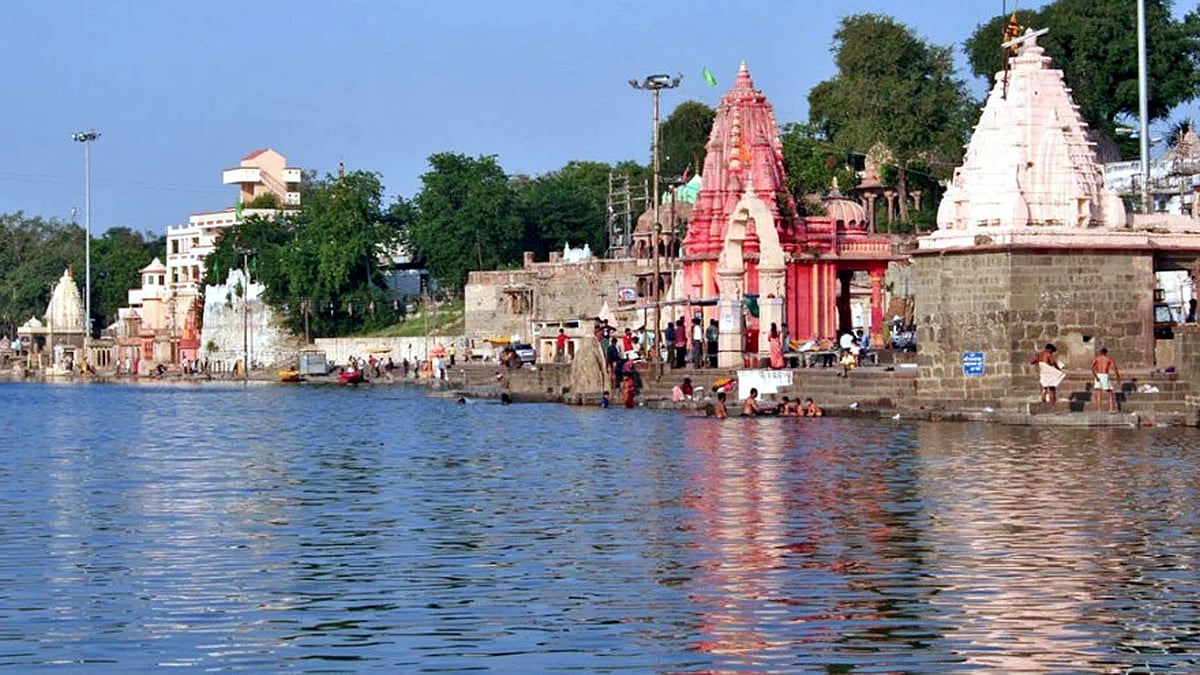
The song of clouds, as Meghaduta can also be called, rhymes with the ripples of the Shipra River, which luxuriously rolls through the heart of Ujjain, washing the feet of Mahakal. The poet falls in love with the river and compares her flow with the trembling of the eyebrow of an elegant maiden and her murmurs with the melodious tinkling of her bangles and the jingling of her anklets.
The poet tells the cloud to linger over the Shipra and embrace her murmuring water. There will be crying swans, too, to welcome the monsoon. Kalidas portrays the river as longing for the cloud to wet her with raindrops, and then Yaksha, the protagonist of the poem, advises the cloud to stay on her banks and consume her pure water. The sensory portrayal of the river indicates what he felt about her.
Lovelorn Kalidas strikes an emotive chord with his Shipra and limns her as a maiden who expresses her sentiments through the cries of chakravaaka, ruddy sheldrake birds.
His love for the river does not stop. Kalidasa says the gentle breeze from the Shipra River wafts the fragrance of lotuses blooming in her bosom, stoking the flames of passion in separated lovers. He says the pure breeze, ‘Shipravatah Pavitram', which emerges from the river, keeps the city pollution-free and likens her water to a devoted lover craving for attention.
Nearly 2,000 years ago, Kalidas described various flowers, like Ketaki, Kadamba, Kamal, Kuruvaka, and Kakubha, when our favourite garden flowers were yet to see the light of the day. These flowers long for the cloud.
If someone follows the path of Kalidas’s Meghaduta, the adventurer may encounter many things that are still the same as mentioned by the poet, although the forests that the poet talked of may have lost their depth because of human habitation and rampant mining.
Yaksha advises the cloud to stay over Ujjain, an ancient republic, which was subsumed into a kingdom during the days of Kalidasa.
But when people visit the city today, they cannot find the traces of those elements Kalidas depicted, but the Shipra River remains the same, waiting for the cloud to embrace her.
He compares the lightning across the dark body of the rain cloud with Krishna, who has a peacock feather stuck in his hair. The dark clouds still gather over the Mahakal temple to listen to the bells and the chanting of the Vedic hymns.
Those who have seen the Shipra River are acquainted with her beauty, gentle flow, and divine entity. Kalidas calls the river ‘Shantpravahini’ for her gentle flow and ‘Mokshdayini’ for her pure water. The monsoon cloud still gathers over the Mahakal temple in the evening to mingle its thunder with the sounds of drumbeats during the Sandhya Aarti (evening prayer). Watching the clouds over the Shipra River is a divine experience without which the joy of the monsoon does not reach its intended destination.
Arup Chakraborty