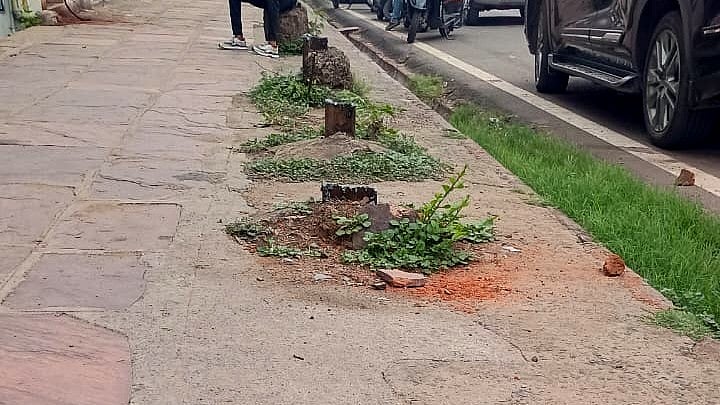
Bhopal (Madhya Pradesh): Heavy rains and waterlogged roads have exposed a hidden danger for commuters across Bhopal, with more than 1,388 metal fragments left behind after electricity poles were cut during shifting works, posing a serious risk to motorists.
According to official data from the Madhya Pradesh Electricity Board (MPEB), only a few hundred of these metal stubs had been removed till May 2026.
The problem has been reported from several busy locations, including New Market, MP Nagar Zone-1, Piplani and Ayodhya Bypass, where sharp metal pieces protrude from road surfaces, frequently puncturing vehicle tyres and increasing the risk of accidents. The danger becomes more severe after rainfall, when waterlogging makes the fragments nearly impossible to spot.
Officials estimated that around 1,800 electricity poles have been shifted across the city over the past decade. While most were removed safely, a significant number of metal remnants remain embedded beneath roads.
Residents have urged the Bhopal Municipal Corporation, the Electricity Department and the Traffic Police to remove the exposed metal fragments, install warning signs and improve traffic management to prevent accidents.
Daily punctures, rising safety concerns
A juice vendor near TT Nagar said vehicle tyres burst or get punctured almost every day, particularly after sunset when visibility is poor. Two-wheelers and four-wheelers often run over the hidden metal pieces, causing inconvenience as well as safety hazards.
Officials of the Madhya Pradesh Electricity Board (MPEB) said electricity poles are shifted whenever roads are widened or infrastructure projects are undertaken. Over successive layers of road construction, many pole foundations become deeply buried, making complete removal difficult. Contractors often cut the poles instead of uprooting them entirely, although norms require the remaining metal portions to be be removed as well.
Official statement
MPEB general manager Pradeep Singh Chauhan said the department takes immediate action through the concerned division whenever complaints regarding such metal fragments are received.