Bhopal (Madhya Pradesh): Once Diwali gets over, the last days of the fall, too, will wane into the winter whose advent has started appearing in the air. The departing autumn has stripped the canopies bare in parks of the state capital. The nights remain cold, and the days warm. The residents have stopped using coolers and air conditioners at night. A golden shower of falling leaves appears on both sides of roads in the city, particularly on the Jail Road and on the way between Polytechnic Square and Neelbad.
As people cross the Square and move towards Neelbad, hillocks and woods come to their view, and because of the fall, the nearby forest seems to be tinged with light grey. A swampland surrounded by hills adds a different hue to the settings. The area becomes more captivating in the gloaming when the setting crimson sun attracts passers-by who stop and take a snap of the pageant of nature. The winged guests have started arriving in the swampland, and on the banks of the Upper Lake, which will soon be abuzz with their trilling.
Every autumn, the forest and hills flaunt their flamboyance. As the darkness descends, the area becomes cold, particularly in this season. Yet this year, a strangeness prevails because of the shortage of rainfall. The grassland looks grey. Canopies in parks have also started greying early. Their grey-brown, smooth trunks carry their youthful crown. In the spring, when the leaves grow, they will provide shade during the summer. But for now, their leaves will drop, revealing their skeletal form.
In European countries, people remain averse to autumn. But in our country, people celebrate the most important festivals in this season, which heralds the winter. The blue sky slowly turns white, and the sun starts mellowing.
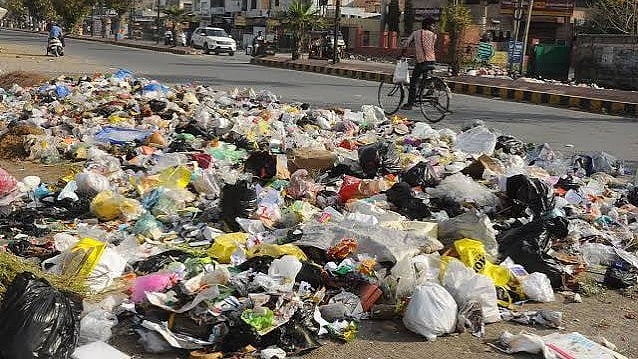
Autumn, a twilight time of change, has always captured the mind s eye of poets and painters. The season also remains the time for fashion. The residents will soon take out their winter couture. Soon after Diwali, the thoroughfares in the state capital will be littered with the remains of firecrackers. The municipal corporation will take at least four days to remove them.
Autumn also remains the season of dust and dryness. The roads in the city have turned grumpy. Ditches on thoroughfares pose dangers. A mixture of dust emerging from the furrows and fume of firecrackers will settle into a miasma of smog, causing illness to residents.
But whatever a few politicians may say in favour bursting crackers during Diwali, it was never part of the celebration in ancient India. The gunpowder-based fireworks arrived in the country in the 15th century. People celebrated the occasion, lighting earthen lamps (Diyas). Public use of firecrackers has begun since the 19th century. Using chemicals, like iron dust, sulphur, charcoal, gold dust, phosphorus, copper dust, mica, mercury, and potassium, remained limited to making medicines. The Rasashastra mentions it.
During the rule of Raja Bhoj, people did not know how to celebrate Diwali with firecrackers. In the Samarangana Sutradhara, Raja Bhoj mentioned the use of fire, heat, and chemicals but to manufacture mechanical devices. His formulas spoke about a limited chemical melange capable of lifting objects into the firmament, creating sudden flashes of light, and giving off loud sounds. Still, the people of Bhopal and its surrounding areas used Diyas (earthen lamps) to celebrate Ram s homecoming.
Anyway, the residents of Bhopal and its rulers have always maintained a musical chord with nature. In the Nawabi era, the rulers, influenced by the Mughals and the British, used firecrackers to celebrate an occasion but in a limited way. The rulers hired professional pyro-technicians (aatishbaaz) to burst crackers on certain occasions.
As the last firecracker explodes, the city will bid farewell to the autumn festival, lingering for Holi, the festival of spring.