Bhopal (Madhya Pradesh): Apada Mein ‘humour’ helps
Bhopalis overcome all odds
Ai Muzaffar, kis liye Bhopal yaad
Aane laga. Kya samajhte the ki Dilli
mein na hoga aasmaan
– Muzaffar Hanfi
The phrase ‘Aapada Mein Avsar' (opportunity in adversity) has been popular since 2020 when the coronavirus was burning through the world, consuming millions of lives. But a resident of Bhopal, or a Bhopali, as is accepted in colloquial demonym, looks at the phrase differently. They say ‘Apada Mein Humour’ or laugh in the time of adversity.
Humour quells your anger and lessens your tension. With this attitude, the Bhopalis survived the gas tragedy with a smile.
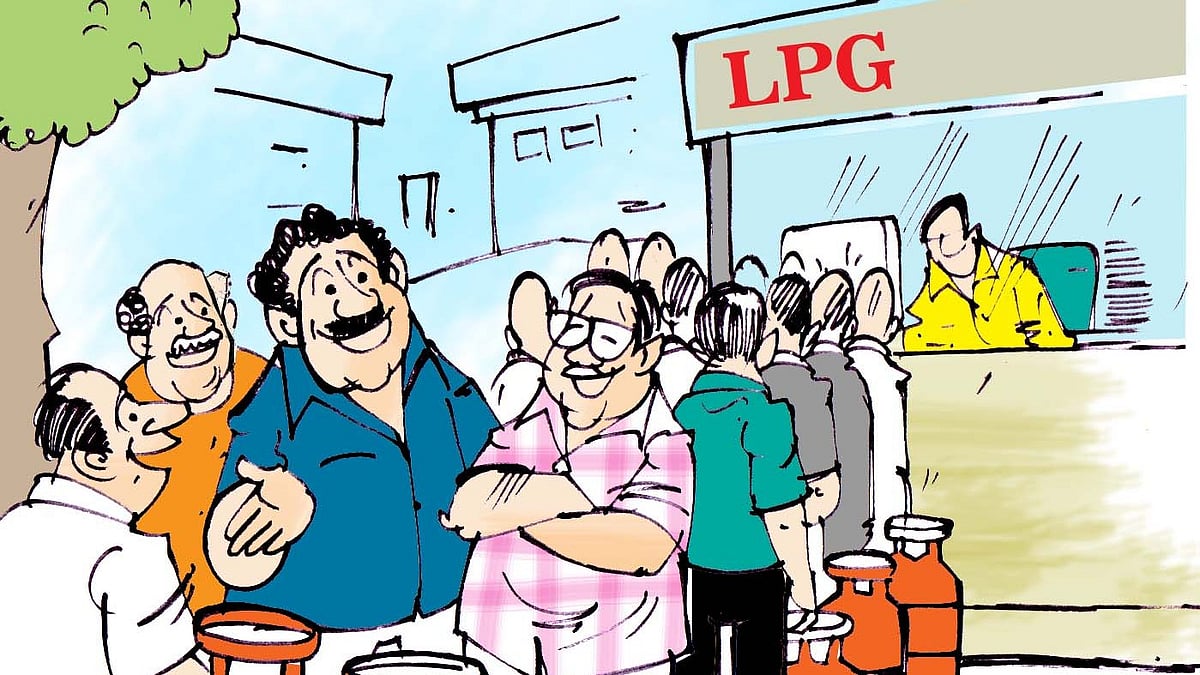
As West Asia is burning because of the war between Israel, the US, and Iran, leading to a shortage of LPG cylinders, petrol, and diesel, Bhopal is also feeling the heat. Many people queue up for a gas cylinder from the morning until the afternoon as their efforts to book an LPG cylinder online fail. Yet they laugh.
This is the Bhopali spirit – indefatigable. This is the reason that Soorma Bhopali is more than a character. He represents the Bhopali attitude towards life: come what may, we are here to chuckle and chortle.
This is the reason why a youth, standing in a queue for an LPG cylinder for hours, had the guts to say: working in a gas agency would have been better than joining a government department; it would have relieved him from the pains of standing in a queue.
Everyone in the queue sniggered, saying the agents supplying LPG cylinders became demi-gods.
Similarly, a youth, perhaps a college student, met his female friend outside an LPG supply station. Both kept their empty cylinders in the row and began to talk, sitting under a tin shed. A man from the queue remarked, 'Apada mein Avsar' (opportunity in adversity). The shortage of LPG cylinders seemed to have had no impact on them.
Another joke has become popular these days in the city. A woman goes to a temple with her daughter. A youth also visited there, perhaps, to meet her daughter on the pretext of worshipping the deity in the temple.
As the woman was busy offering prayers before the deity, her daughter was talking to the youth. Just as she saw her daughter gossiping with him, she flew off the handle and began to rain curses on him.
But no sooner had she come to know he was working in a gas agency than she calmed down, and her tenor and tone changed. She said, “Beta, mere ghar ek cylinder bhejwa dena" (Son, arrange an LPG cylinder for me).
A Bhopali fun is a mélange of Nazaaakat (elegance) and Nafasaat (softness). The people have sharp wit and the matchless ability to remain relaxed in chaos. They simply ask each other, ‘Kya ho riya hae’ (What’s up). It does not matter whether it is about morning tea or about sneering at the humdrum city life.
Once Khushwant Singh wrote, "How rare it is for an Indian to tell a joke about himself in which he is shown in a poor light.” But it is not true of a Bhopali who can poke fun at himself, too.
Fed up with carrying an empty LPG cylinder from home to gas agency, only a Bhopali can say, “I’m living a life of drudgery (Gadhe ki Zingadi Ji Rahein Haen).” And a chacha, as the elderly people are called in Bhopal, standing near him can snap back, 'Beta, kyon padeshan ho riya' (why are you so bothered?); I've been living this life for the past forty years.”
If there is a pothole on a road, the Bhopalis obliquely call it an extension of the Upper Lake (Bada Talab). Similarly, for a leakage in the sewage line, they call it an extension of the Lower Lake (Chhota Talab), as sewage water flows through it.
Bhopalis feel complaining about anything means loss of peace. So, if a restaurant serves runny lentil (Patli Dal), they sneer at it, saying, “A Naya Talab (a new lake) has emerged.”
Even if they comment on anything, they do so with refined sarcasm, making it difficult for an outsider to keep himself breaking out into guffaws of laughter. There are numerous such comments up their sleeves.


