Bhopal (Madhya Pradesh): People convicted of petty offences in Madhya Pradesh may now be assigned community service such as cleaning government hospitals and schools, planting trees and helping manage traffic instead of serving time in jail.
The state government has issued a notification providing for non-custodial punishment for minor offences under the Bharatiya Nagarik Suraksha Sanhita (BNSS) and Bharatiya Nyaya Sanhita (BNS).
The move seeks to give first-time and minor offenders an opportunity to reform through social development and service activities.
Second chance for offenders
Before sentencing, the offender's age, health, educational qualifications, skills and financial status will be assessed. The severity of the offence will determine the duration and difficulty of the assigned work.
Monitoring mechanism
The government has said the process will be transparent and systematic. Court orders will specify working hours, dates and authorised officials or supervisors.
The district probation officer will periodically visit the workplace to monitor compliance. An offender who shirks work or displays negligence will first be warned.
Continued non-compliance may prompt the court to alter the punishment, including imprisonment or extension of the sentence.
Community service tasks
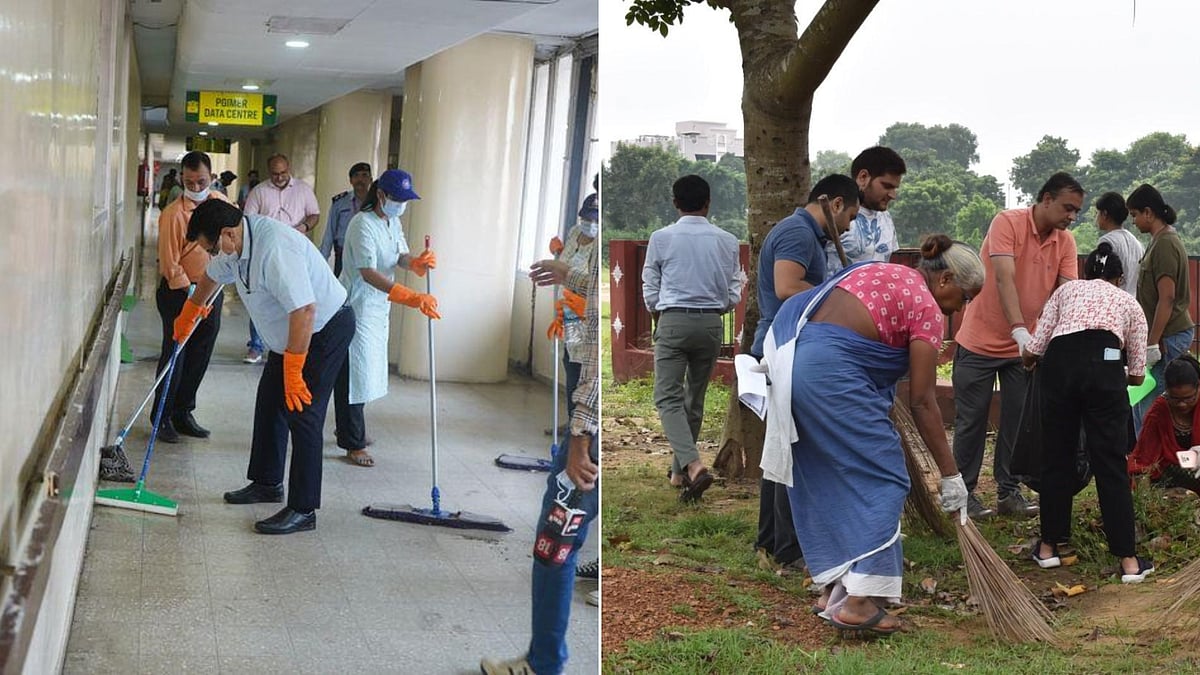
Community service may range from one to 60 days. Offenders may clean wards and OPDs in government hospitals or help transport patients on trolleys.
Other assignments include cleaning government school campuses and playgrounds, arranging library books, cleaning public parks and roadsides with municipalities or panchayats, and serving people in old-age homes and hostels.
Offenders may also plant trees and digitally monitor their locations through the 'Nisarg' app or assist with crowd control and cleanliness at police stations, bus stands and railway stations.
Professionals such as doctors, engineers and skilled artisans may be assigned work using their expertise for social welfare.
'Dushman' showed the way
The 1972 film 'Dushman' highlighted the idea of community punishment through its story of a reckless truck driver who accidentally kills a man.
Instead of conventional punishment, the driver is made to confront his guilt and support the victim's family.
The story explores how empathy, forgiveness and accountability can reform an offender, transforming an adversary into a protector and friend.