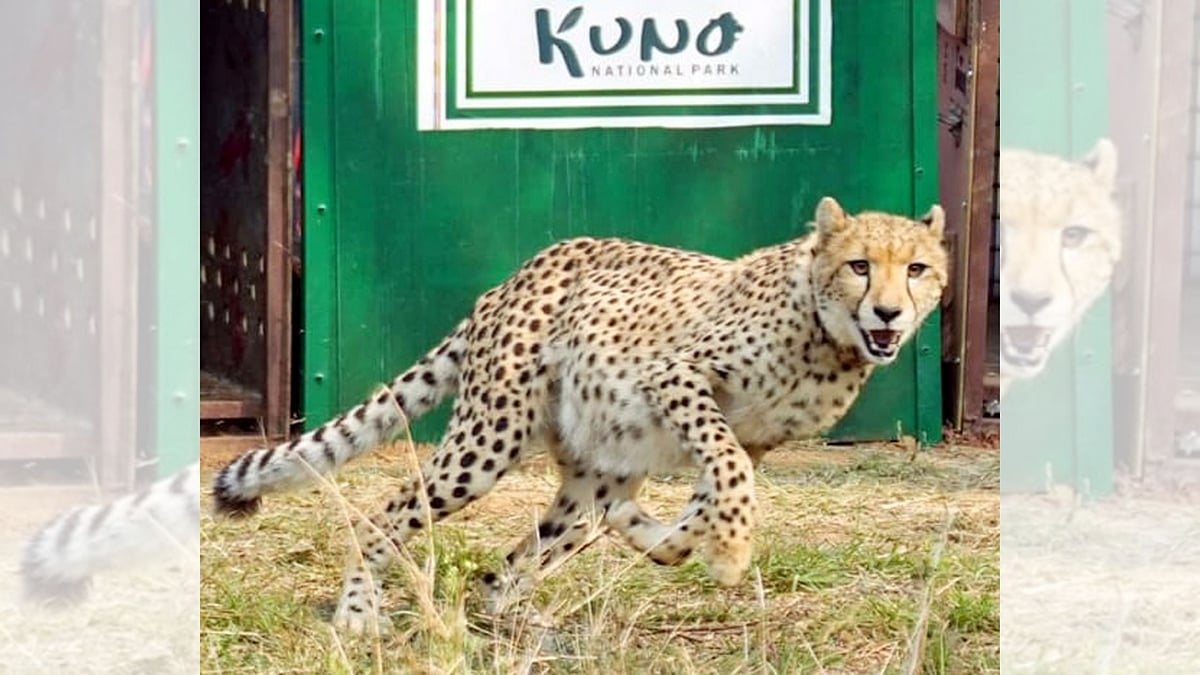
Bhopal (Madhya Pradesh): Cheetahs at Kuno National Park have given birth to 58 cubs in 14 separate litters, of which 40 have survived, registering an overall survival rate of nearly 69%.
However, these figures must be interpreted in the context of the conditions under which most of these births occurred.
Except for one litter, the remaining 13 litters were born within large, enclosed natural forest areas where predation risk is considerably lower, as large predators are absent and wild boar are the main potential predators.
These enclosures also facilitate intensive monitoring and timely veterinary intervention.
Cub survival in the open wild is likely to face greater challenges owing to increased exposure to predators, environmental risks and other threats. Therefore, the survival rate observed so far cannot be directly extrapolated to litters born in the wild.
Kuno National Park issued this in a newsletter on Monday.
It says that at present, Kuno has 12 female cheetahs aged two years and older. During 2026, five of these females have cubs while the remaining seven are potentially eligible for breeding, subject to their individual reproductive status and condition.
This reproductive base is expected to expand. Some females that reproduced during 2025 and 2026 may become available for another breeding cycle. Younger females will progressively enter the reproductive population as they attain breeding age.
Cheetahs are increasingly expressing their natural behaviour in the wild, including hunting, exploring the landscape, establishing territories, forming coalitions and breeding naturally.
Satellite telemetry data corroborated by field monitoring observations indicate that over nearly two years in the wild following an initial phase of extensive landscape exploration, cheetahs are increasingly settling into and establishing home territories within and around Kuno.
Cheetahs actively defend their territories while females exhibit natural patterns of movement, moving into and out of established territories. Indian-born females are now reproducing, with successive generations being born on Indian soil.
Illustration of reproductive potential
The potential for population growth extends beyond 2027. As Indian-born females mature and enter the reproductive population, Kuno could have a substantially larger pool of breeding females during 2028-29, potentially approaching 30, subject to survival, age at maturity and reproductive status.
This would further strengthen the population capacity for natural growth. For instance, if around 15 females give birth in a given year and each litter contributes an average of three surviving cubs under the current management system, the population could gain approximately 45 young cheetahs.