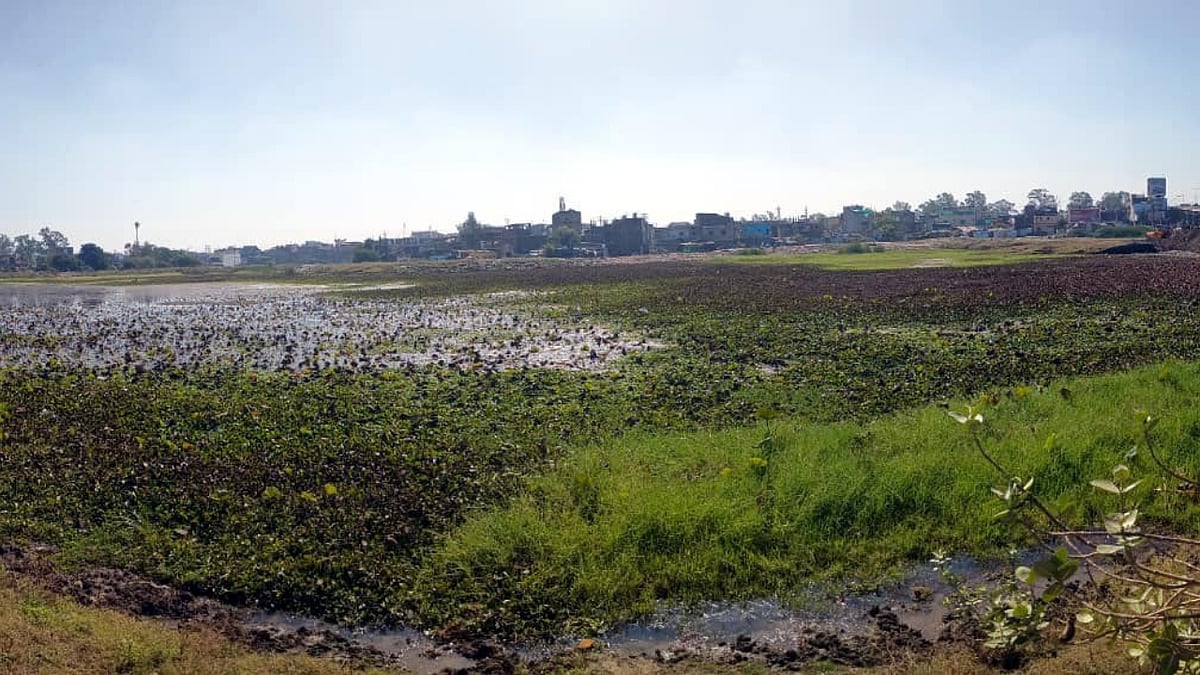
Bhopal( Madhya Pradesh): The Solar Evaporation Ponds (SEPs) linked to the Union Carbide plant, located adjacent to the defunct facility, require scientific remediation in line with CPCB guidelines. These three ponds were originally designed to neutralise and dispose of industrial effluents. While nearly 350 MT of chemical waste from the plant has been incinerated at Pithampur, no concrete steps have been taken to dismantle the SEPs.
These ponds became a major source of contamination due to inadequate lining, which allowed toxic chemicals to leak into the soil and groundwater. The environmental problem that predates the 1984 gas tragedy continues to affect the surrounding areas to this day.
Multiple investigations have confirmed extensive pollution directly linked to the plant’s waste and the SEPs. Built in the 1970s after the use of unlined dumping pits, the ponds have since evolved into one of the most enduring symbols of the plant’s toxic legacy.
Investigations have confirmed the large-scale contamination linked to the plant's waste and the SEPs. The ponds were built in the 1970s to handle plant waste, following an earlier phase when effluents were dumped in unlined pits.
Sudhir Paliwal, a chemical engineer and environmentalist, said, “It should be subjected to proper remediation. SEP sludge should be scientifically disposed of through proper methods to prevent environmental contamination. Key steps include thoroughly drying the sludge, analyzing its composition for contaminants like heavy metals, and then disposing of it via methods such as secured landfill, or other suitable treatment processes that align with regulatory standards.”
Rachna Dhingra of Bhopal Group of Information and Action, said, “ state government has not taken any initiative for remediation of SEPs. The inadequate containment led to the leaching of toxic chemicals into the soil and groundwater, with contamination being reported in the surrounding areas. Reports of contamination were raised as early as 1980, before the 1984 disaster. The SEPs are considered a major ongoing source of contamination, contributing to the large-scale pollution of the site and surrounding water.”
Dr SC Pandey, environmentalist, said, “As per guideline of Central Pollution Control Board, the SEPs should be properly destroyed after disposing dumped UCC chemical waste. Secondly, these sites should be declared as city forest to check residential colonies as already green cover is on decline in Bhopal. As once the residential colonies develop on these sites it will be hazardous for people.”

