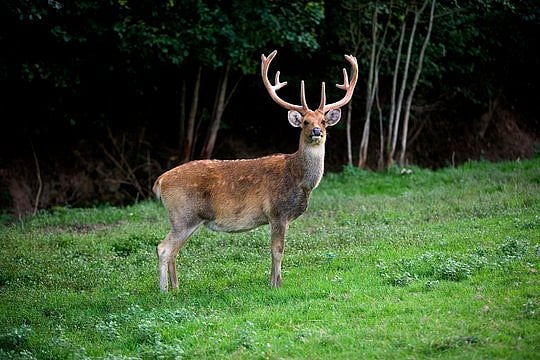
Bhopal (Madhya Pradesh): Satpura Tiger Reserve (STR) is set to develop a dedicated corridor for barahsingha to enable their free movement from one area to another and facilitate breeding.
So far, around half-a-dozen grasslands have been identified, and a dedicated corridor will be created by interlinking them. By creating the barahsingha corridor, the STR management aims to replicate the successful barahsingha conservation model of Kanha Tiger Reserve.
Field Director of Satpura Tiger Reserve, Rakhi Nanda, told Free Press that the plan to develop a barahsingha corridor is currently on the cards. At present, the reserve is home to around 268 barahsingha.
Another officer of the reserve said that the creation of the corridor will provide a safe passage for barahsingha and will also help increase their population.
If barahsingha are confined to a limited area, their population grows at a slower pace. Moreover, every grassland has a limited carrying capacity to feed the herbivour . Connecting multiple grasslands will reduce herbivore pressure and ensure adequate availability of fodder, the official said.

Sources said that in the first phase, half-a-dozen grasslands will be connected, and in the future, more such areas will be identified for expansion of the corridor.
It is learnt that before 2014, Satpura Tiger Reserve did not have any barahsingha and the species was later translocated from Kanha Tiger Reserve in a phased manner. Currently, the reserve has a sizeable barahsingha population.

