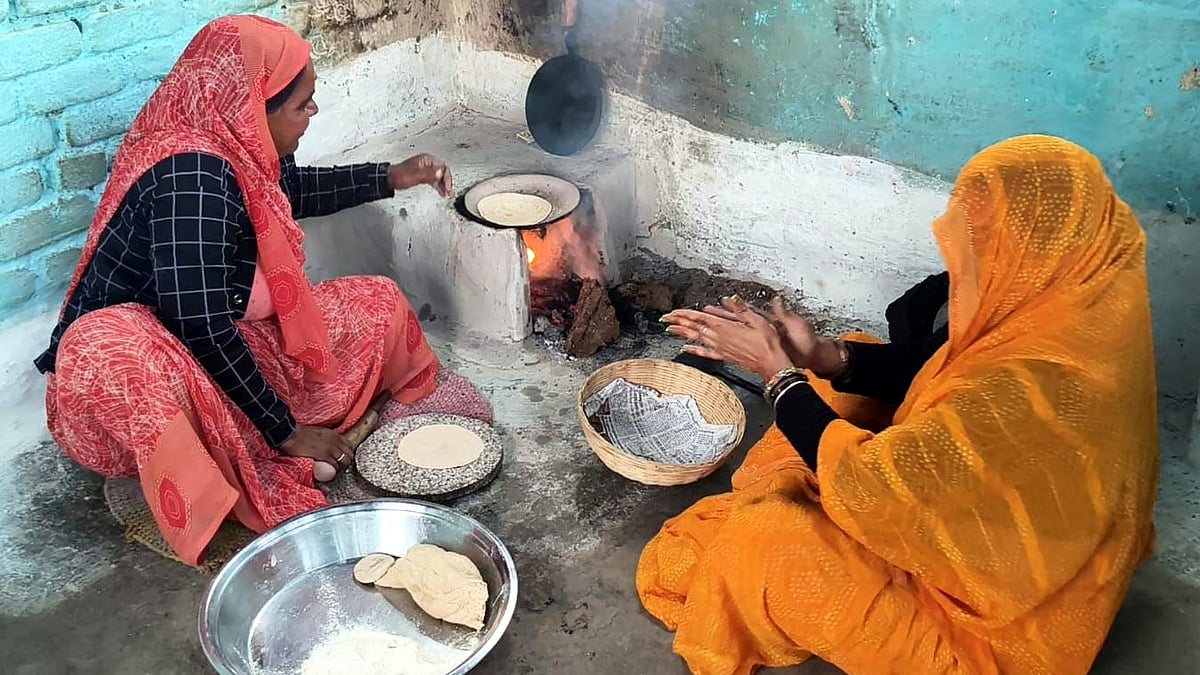
Jabalpur (Madhya Pradesh): Pandit Deendayal Antyodaya Rasoi Yojana (a community kitchen scheme operated by the Municipal Corporation) in Madhya Pradesh's Jabalpur is facing an LPG crunch amid the West Asia war.
Fall back on Traditional Wood-fired stove
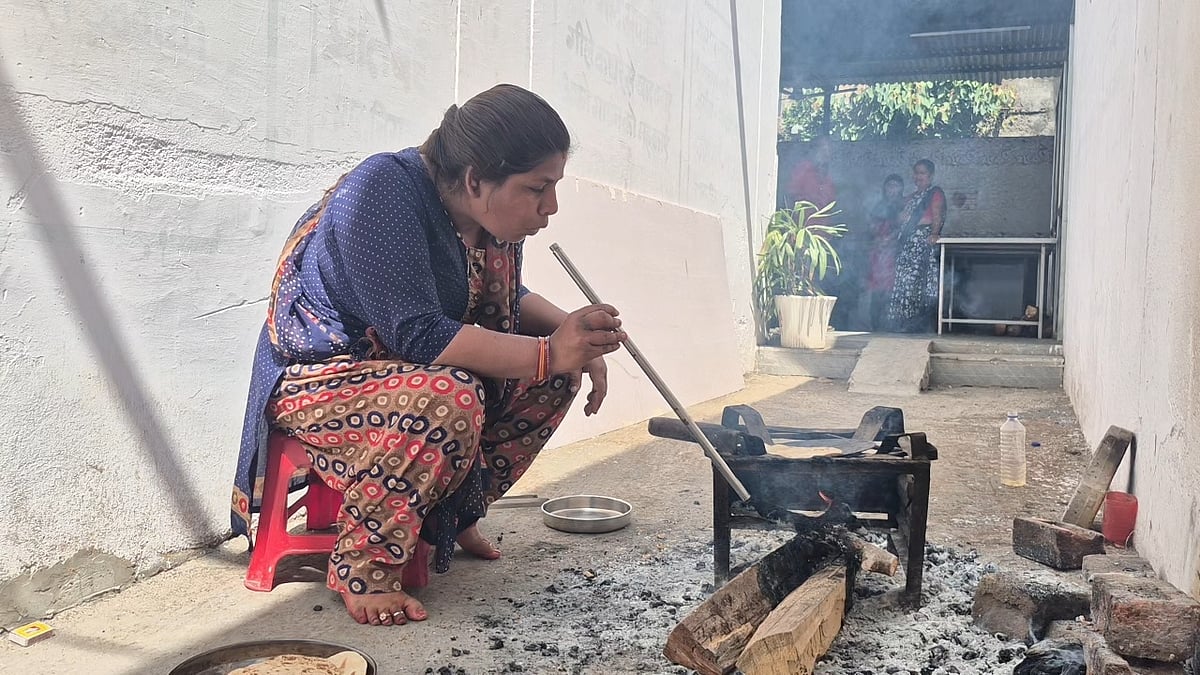
Suman, a worker at the Pandit Deendayal Antyodaya Rasoi Yojana, has spent the last month trying to kindle a fire in a wood-fired stove by blowing air through a pipe, all to prepare meals for 400 to 500 people daily. However, a severe shortage of gas cylinders has thrown this entire operation into disarray.
Workers reported that cooking now takes longer, with tasks that were earlier completed in 30 minutes now extending to over an hour.
Rotis disappear from menu
While meals—once cooked rapidly using gas—were previously ready on time, the kitchen is now a smoke-filled environment where workers struggle to prepare and serve basic fare like dal (lentils), rice, and vegetables.
The situation has deteriorated to such an extent that rotis (flatbreads) have all but vanished from the meal plates, and adhering to the prescribed menu has become nearly impossible.
Govt claims otherwise!
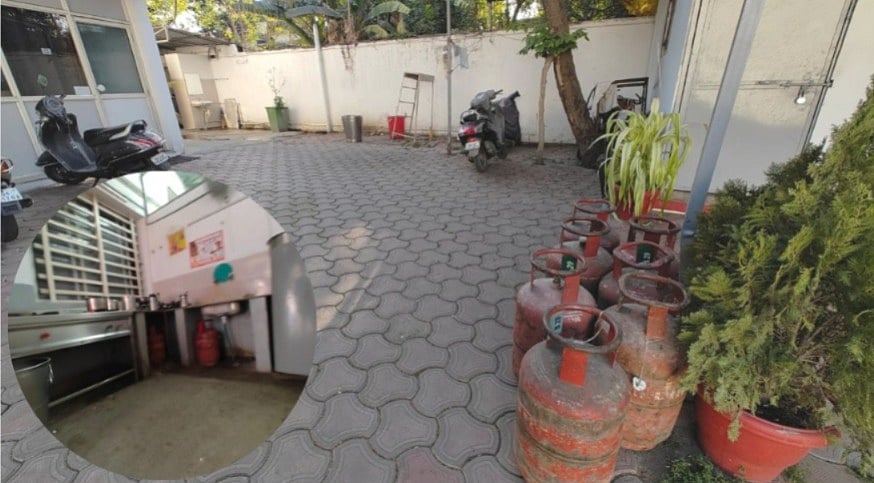
Although the government and the administration continue to claim that there is an adequate supply of gas cylinders, the reality on the ground appears to be in stark contradiction to these assertions.
Aid scheme needs aid now?
The Deendayal Antyodaya Rasoi Yojana—originally launched with the noble objective of providing affordable and wholesome meals to the poor—now appears to be facing a crisis of its own.
The Deendayal Antyodaya Rasoi scheme is currently operational at four locations across this city—known as Sanskaradhani (the Cultural Capital)—yet, most surprisingly, the dire situation remains the same at all four sites.
Consequently, the staff has been compelled to fall back on traditional wood-fired stoves. Manisha Kashyap, a cook who has worked at the facility for the past six years, explains that her work has now become far more arduous than before. While cooking on a gas stove was once a quick and efficient process, she now has to blow through a pipe to ignite the fire, causing her eyes to sting and burn from the billowing smoke.
Allergies among workers
Rahul Shukla, the kitchen manager, also acknowledges that operations have been disrupted due to a shortage of cooking gas. According to him, tasks that previously took just half an hour to complete are now taking up to an hour and a half.
The team is making every possible effort to ensure that people receive their meals, yet the scarcity of resources is glaringly evident. The smoke is also taking a toll on the employees' health, with some beginning to report symptoms of allergies.
Commissioner denies shortage allegations!
On the other hand, the municipal administration views these circumstances from a different perspective. Municipal Commissioner Ramprakash Ahirwar asserts that there is no actual shortage of gas; rather, efforts are being made to raise public awareness regarding its judicious and limited use.
According to him, alternative fuels—such as charcoal, bio-briquettes, and firewood—are being utilised at various locations, and adequate reserves are available to handle any emergencies.