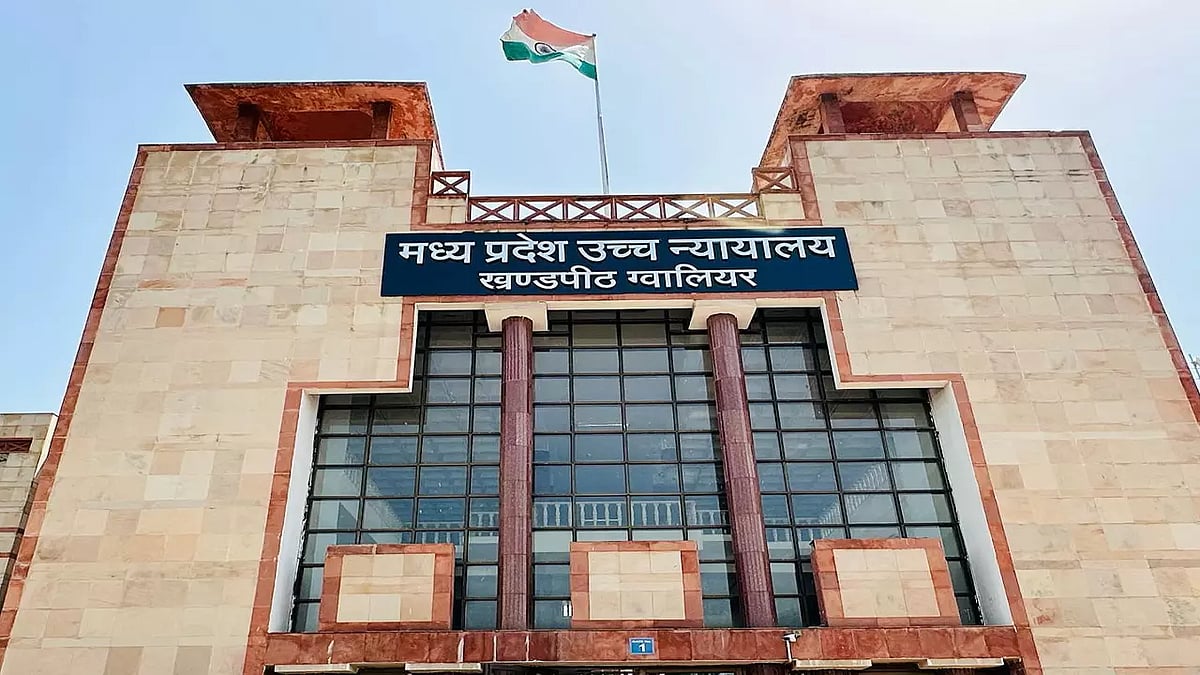
Gwalior (Madhya Pradesh): Gwalior bench of Madhya Pradesh High Court has rejected a petition filed by a journalist requesting the cancellation of an FIR lodged against him for allegedly circulating a seven-page WhatsApp message asserting that beef consumption is essential for being a good Hindu.
Justice Milind Ramesh Phadke noted that the case concerns accusations of sharing material that could injure religious feelings or create communal discord.
According to the prosecution, complainant Ram Mohan Tiwari reported to Daboh police station in Bhind that on 26.09.2025 at around 10:00 pm, he learnt from another individual that in a WhatsApp group titled “B P Bauddh Patrakar News Group”, the journalist had shared a seven-page message allegedly claiming that "consuming beef was essential to being a good Hindu."
The complainant claimed that the post caused serious offence to him and others belonging to the Hindu and Brahmin communities.
On his complaint, police registered the FIR. Challenging this, the journalist approached the High Court to quash the FIR under provisions relating to promoting enmity between groups [Section 196(1)], deliberately outraging religious feelings [Section 299], issuing statements containing false claims to cause mischief [Section 353(1)], and taking part in activities likely to create fear among communities [Section 353(2)] of the BNS.

The petitioner’s counsel argued that the message was shared in the legitimate exercise of free speech and was merely an excerpt from scholarly literature, posted without malicious motive. It was submitted that the content cited a book written by Dr Surendra Kumar Sharma (Agyaat), which is not banned by any government authority, and was shared in a private WhatsApp group whose members willingly joined to engage with alternative journalistic viewpoints. The group’s operation by the journalist was said to involve his professional rights, including press freedom and freedom of expression under Article 19(1)(a).
Citing the Supreme Court judgment in State of Haryana v. Bhajan Lal [AIR 1992 SC 604], the bench reiterated that FIRs can only be quashed in extremely exceptional circumstances where allegations are clearly baseless or impossible. Since the FIR in this case indicated offences that require inquiry, the court held that investigation should continue and therefore dismissed the journalist’s plea to quash the case.
