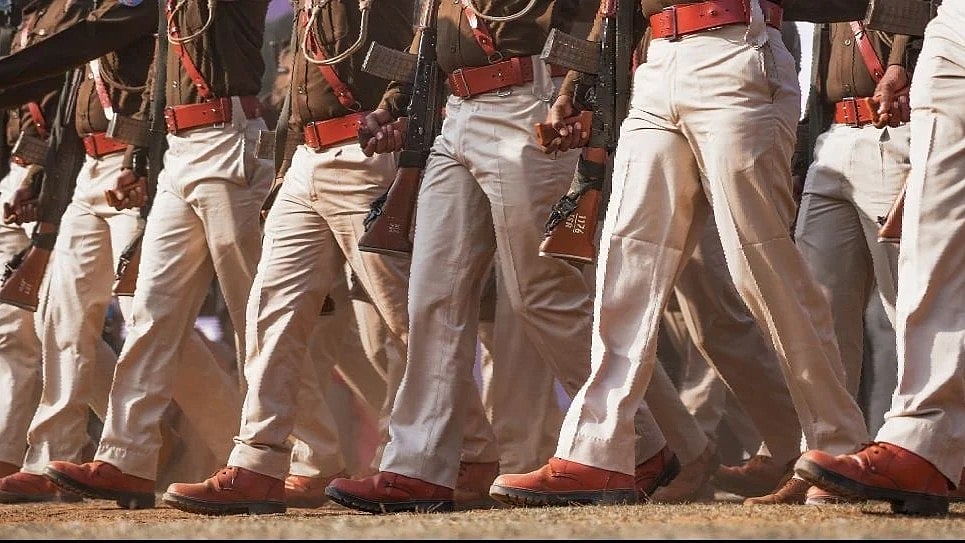
Bhopal (Madhya Pradesh): The training of police constables and cops of other ranks in Madhya Pradesh, so far given on the pre -Independence era model, is now poised for a change.
Soon, the state will have its own training policy. As per ADG, Training, Raja Babu Singh, the draft has been submitted to the DGP for approval. The training policy aims to transform policing into a people-centric, accountable and modern service.
At present, recruits are trained through a very old pattern, as set by the British police manual, with minor changes from time to time. However, the state did not have its own training policy but that borrowed from some other states, paramilitary forces and national agencies. Needless to state, they were not sufficient to meet the requirements of the modern era policing. Hence, it was felt there was a need for the state’s own training policy.
Competency framework
Integrity, professionalism and respect for communities are the three foundational pillars of a modern law enforcement competency framework.
When designing any training programme, attitudes, skills and knowledge should be prioritized as the three critical areas of development to ensure holistic and effective training outcomes.
The crucial role of training
From growing concerns about the misuse of power to the emerging threats of cybercrime and terrorism, police officers require new skills that go beyond traditional law enforcement techniques. Training aims to bridge these gaps by:
Introducing ethical policing. Police officers must be trained to interact with the community with integrity, empathy, and respect. This is essential for building public trust and improving relationships with diverse communities.
Promoting accountability and transparency: By providing officers with opportunities for continuous professional development, training reforms ensure a system of checks and balances that holds officers accountable for their actions.
Enhancing specialized skills: Facing modern challenges such as cybercrime, terrorism and domestic violence, specialized training in areas like digital forensics, counter-terrorism and women and child protection is crucial for effective policing.
Prioritizing officer well-being: Given the high-stress nature of police work, mental health training and wellness programmes are essential to help officers manage stress, prevent burnout and maintain physical and emotional health.
Vision
“To develop a professionally competent, ethically grounded and service-oriented police force that is responsive to citizens, representative of society and committed to upholding justice, dignity and the rule of law. This vision reflects the long-term aspiration of the Madhya Pradesh police training institutions to transform policing into a people-centric, accountable, and modern service”, said ADG, Training, Raja Babu Singh.
He also said that the draft had been submitted to the DGP for approval.
Integration of martial arts in police training
Enhancing physical preparedness, reflex control, self-defence capabilities and mental discipline of police personnel through structured martial arts training.

Key components:
Martial arts techniques such as lathi, Kalaripayattu, Krav Maga, Mallakhamb will be introduced as part of regular physical training, specifically for constables and sub-inspectors.
Focus areas:
Non-lethal self-defence and restraint techniques
Crowd control and close-quarters combat scenarios.
Improving agility, endurance and confidence in threat situations.

