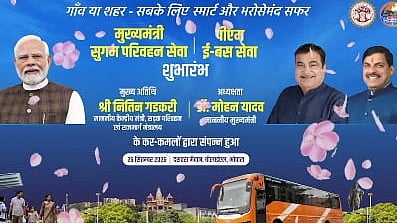
Bhopal E-Bus Service Inauguration (Madhya Pradesh): Chief Minister Mohan Yadav and Union Minister Nitin Gadkari flagged off 351 buses under Sugam Parivahan Seva and PM E-Bus Service during an event at Dussehra Maidan in Bhopal on Friday. These buses will operate across seven cities Indore, Bhopal, Jabalpur, Rewa, Dewas, Katni and Bhind.
The launch aims to boost connectivity and expanding electric bus services in Madhya Pradesh. Route and fleet details were not provided yet.
The CM added that this initiative will feature a modern and unique model, introducing various types of bus services, including e-buses, to every city and district in a phased manner.
To enhance passenger convenience, bus stops, bus terminals and a robust control system equipped with modern electronic infrastructure will be developed as part of the project.
Bus operations will be based on a Public-Private Partnership (PPP) model
The service will strengthen bus connectivity in urban and rural areas, with the target of providing transport services to 75% of gram panchayats across the state.
Yearly plan: 2,500 to 3,000 buses to be added every year
The state has set a target of operating 15,000 buses by 2031.The state also aims to extend transport services to 75% of its gram panchayats, alongside the phased introduction of bus services in cities and districts.
Key features
Real-time monitoring: Bus operations, location and adherence to schedules will be monitored in real time through an Intelligent Transport Management System (ITMS).
Command and control centres: Command and control centres have been established.
CCTV surveillance: Every bus will be equipped with CCTV cameras, with special emphasis on the safety of passengers, particularly women and children.
Panic buttons: Buses will have panic buttons to provide immediate assistance to passengers in emergencies.
Live vehicle tracking: The live location of every bus will be available through Vehicle Location Tracking Devices.
Passenger Information System: Passengers will have access to essential information related to bus operations and their journey through a Passenger Information System.
Technical training for drivers: Bus drivers will receive technical training in line with modern technology and safe traffic management practices.