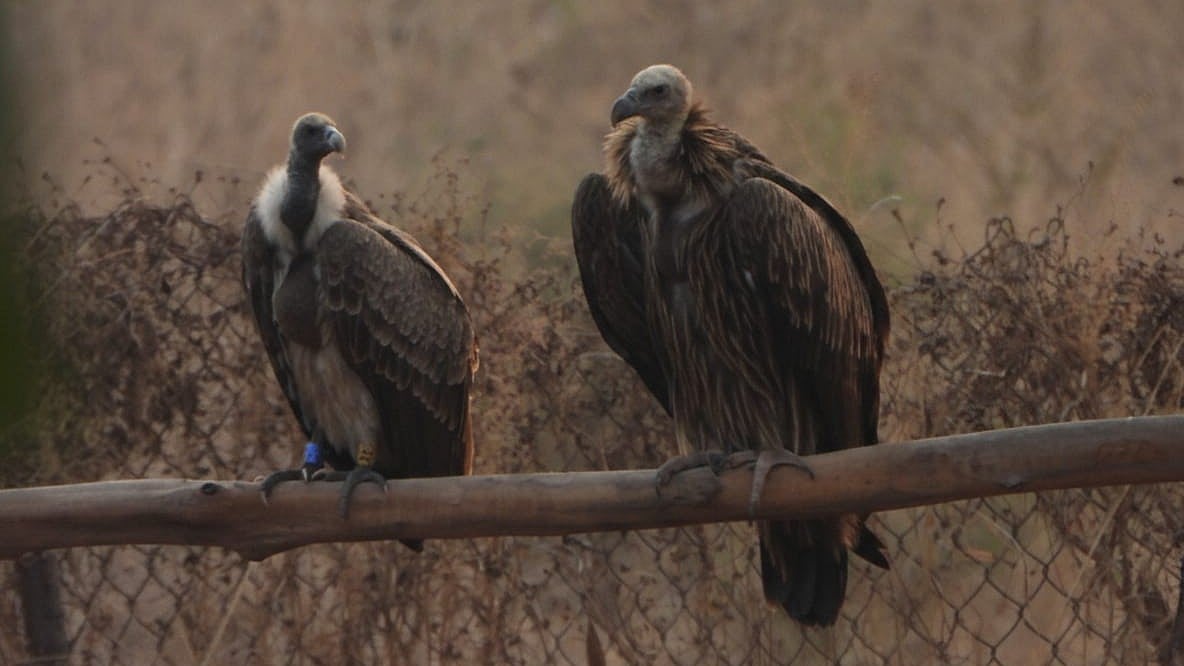
Indore (Madhya Pradesh): The first day of the ongoing biannual vulture census conducted by the Indore Forest Division recorded 97 vultures across 38 designated locations, offering an initial assessment of the region’s population.
Officials clarified that the survey will continue on February 21, and the final consolidated figure may change after completion.
All 97 birds recorded on Day 1 were identified as Egyptian vultures, the most frequently sighted species in the division.
Choral emerges as primary habitat
The range-wise breakup from Day 1 reveals a sharp concentration pattern
Choral: 89
Mhow: 2
Manpur: 2
Indore: 4
Nearly 92% of the vultures were sighted in the Choral range, underlining its ecological importance as the main habitat zone. The minimal sightings in the other three ranges point toward either habitat shrinkage or localized clustering of the species.

Choral: 89 Mhow: 2 Manpur: 2 Indore: 4 | Representative Image
Day 1 in context: a decade of decline
While the current figure remains provisional, comparison with previous census data highlights the broader trend:
2016: 284 vultures
2019: 97 vultures
2021: 117 vultures
2023: 114 vultures
January 2025: 86 vultures
February 20, 2025 (Day 1): 97 vultures (ongoing)
Day 1 count already matches the total recorded in 2019 and surpasses the January 2025 count by 11 birds. However, it remains significantly below the 2021 and 2023 figures and reflects a steep long-term fall of nearly 66% compared to 2016.
Even with possible additions on the second day, officials acknowledge that numbers are unlikely to approach earlier benchmarks.

Species diversity missing
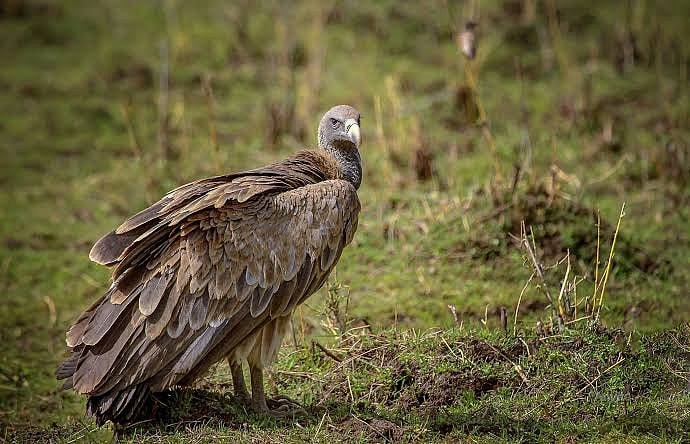
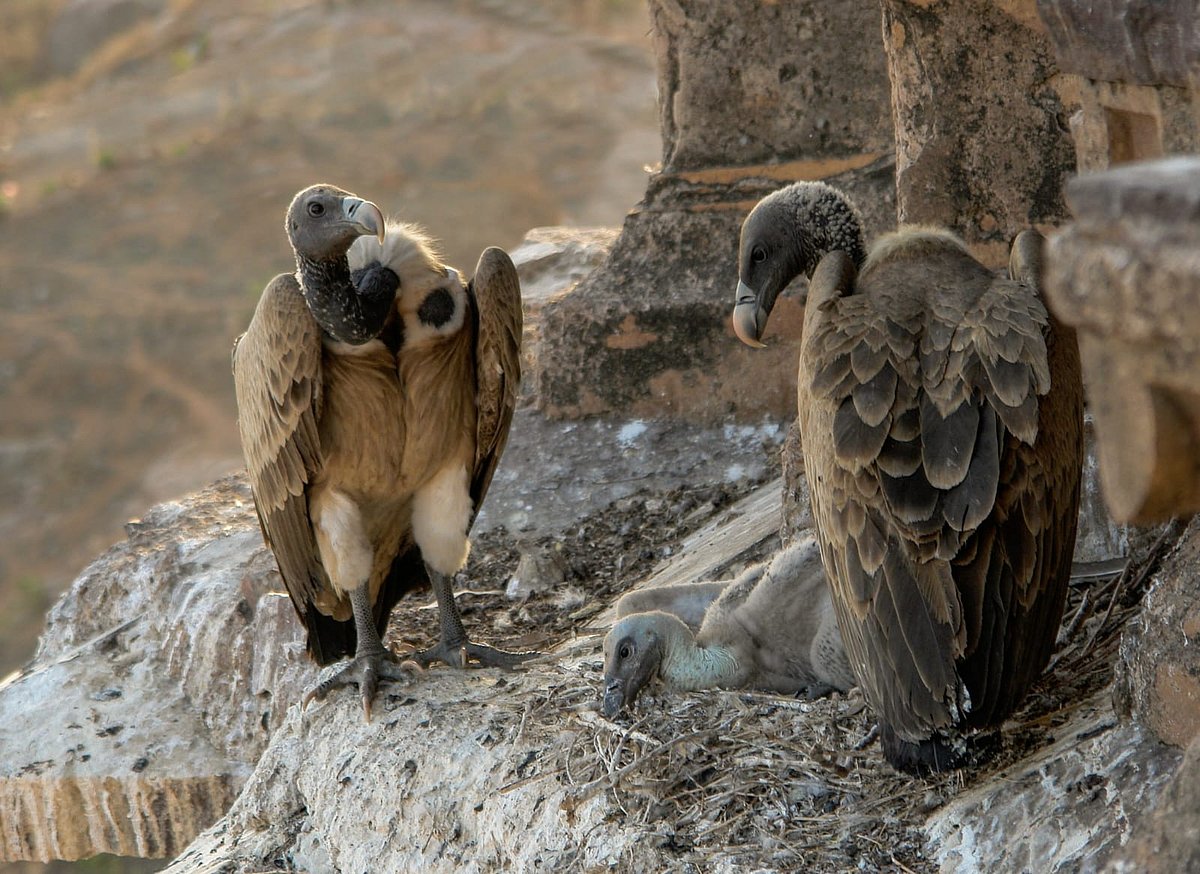
A major concern emerging from Day 1 findings is the absence of other vulture species. Earlier surveys in the division had reported White-rumped, Red-headed, Long-billed, Eurasian Griffon and Slender-billed vultures. So far, only Egyptian vultures have been documented in the ongoing exercise.
Survey to conclude tomorrow
The census is being conducted by 16 trained teams—four each in Indore, Mhow, Choral and Manpur ranges—between 6 am and 8 am, following standardized field protocols and photographic documentation for accuracy.
The final figure will be released after completion of the second day’s survey, which will provide a clearer picture of the division’s current vulture population.
