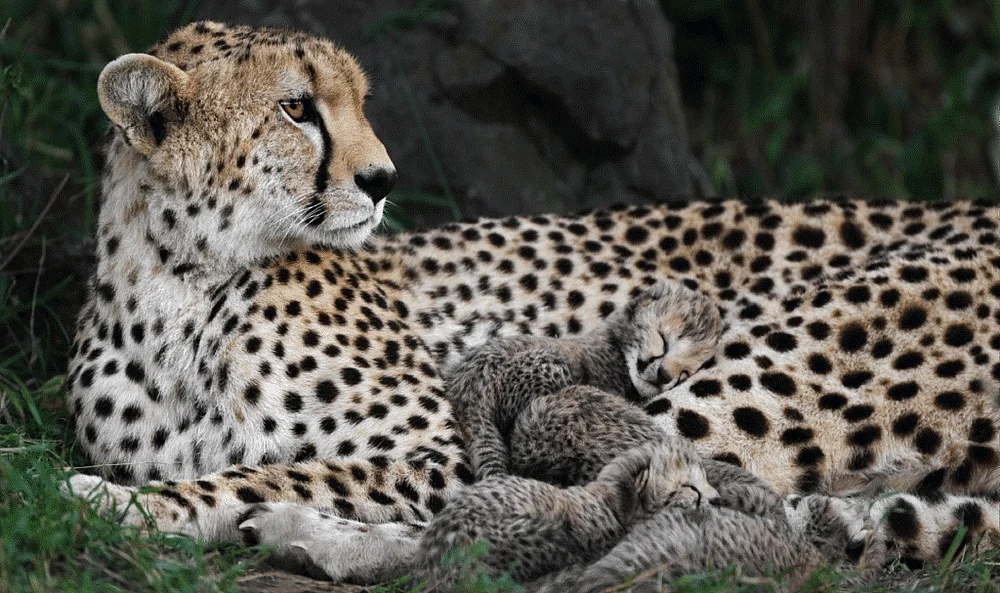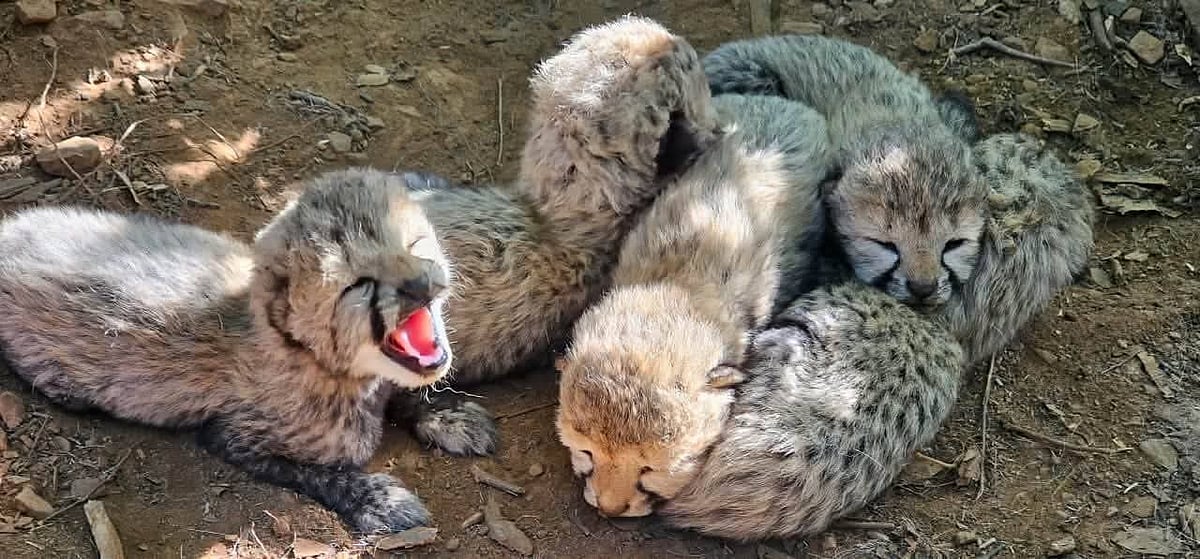
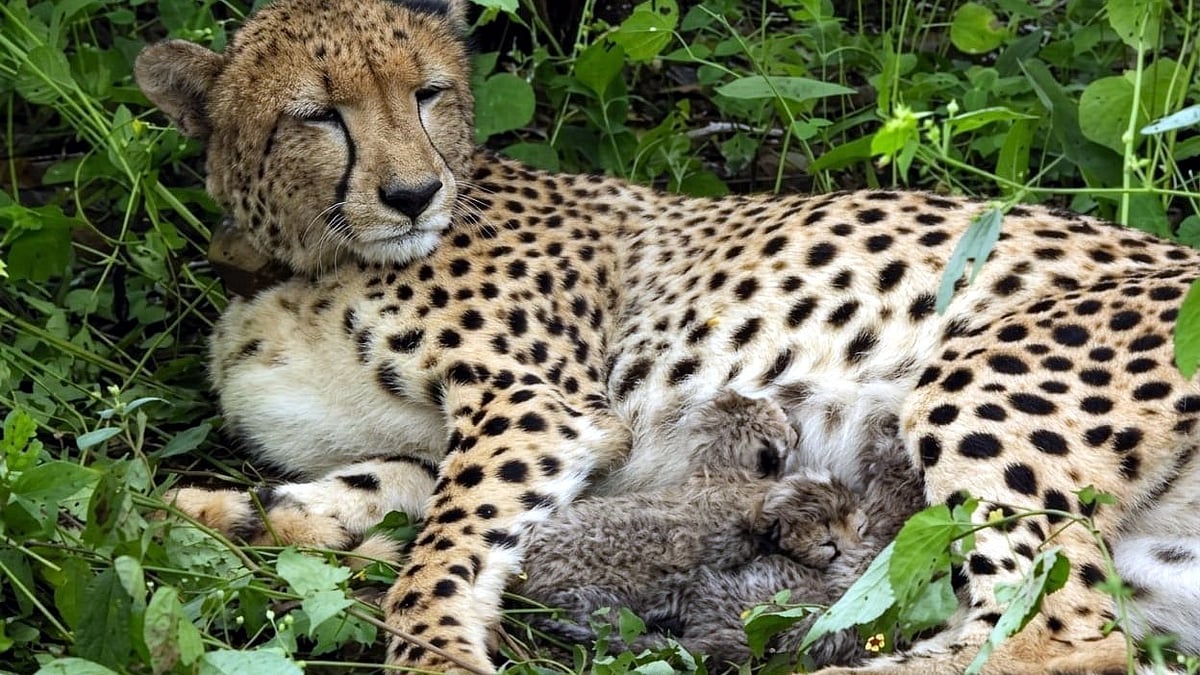
Sheopur (Madhya Pradesh): Kuno National Park in Madhya Pradesh's Sheopur district achieved another milestone under Project Cheetah after an Indian-born female cheetah, KJP21, gave birth to five healthy and adorable cubs. With their arrival, India's total cheetah population has increased to 60, including 41 cheetahs born in the country.
The birth marks another important step in India's efforts to restore the cheetah population.
Third Indian-Born Cheetah To Give Birth
The 32-month-old KJP21 has become the third Indian-born female cheetah to give birth to cubs in India. Earlier, two other female cheetahs, Mukhi and KGP12, had also given birth in the country.
The development is being seen as an encouraging sign for Project Cheetah, as Indian-born cheetahs are now producing the next generation.
Union Environment Minister Bhupender Yadav shared the news on social media and described it as another significant achievement for the project.
Cubs Fathered By Botswana Cheetah
Another important aspect of the birth is that the father of all five cubs is a male cheetah brought to India from Botswana.
This marks the beginning of a new generation of cheetahs with Botswana ancestry in India. Experts believe that breeding between cheetahs from different genetic backgrounds could help improve genetic diversity and support the long-term survival of the species.
CM Mohan Yadav Congratulates Kuno Team
Madhya Pradesh Chief Minister Mohan Yadav congratulated the entire Project Cheetah team following the birth of the five cubs.
Sharing the news on social media, he wrote, "Another Proud Moment for Project Cheetah..."
"Heartiest congratulations to the entire Project Cheetah and Kuno team. Another significant milestone in India's journey towards restoring its cheetah population and strengthening wildlife conservation," the Chief Minister wrote.
He also appreciated the efforts of veterinarians, forest officials, field staff and everyone involved in the project.
The birth of the five cubs has brought fresh hope for India's cheetah conservation programme. Forest officials will now closely monitor the newborn cubs to ensure their safety and healthy development.