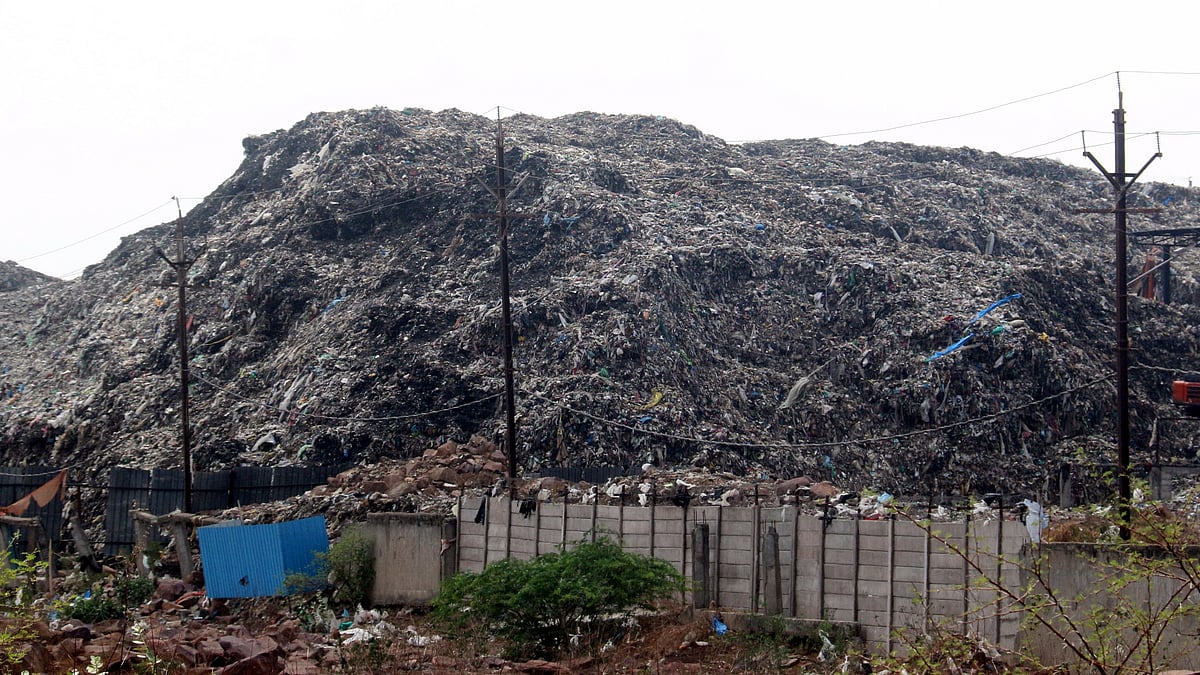
Bhopal (Madhya Pradesh): Expressing dissatisfaction over the lack of substantial improvement in urban sanitation and waste management, the Supreme Court has directed District Collectors to conduct drone surveys of landfill sites across nation and monitor waste management facilities through video calls.
During the hearing of Bhopal Municipal Corporation vs Dr Subhash C Pandey on Nov 17, the apex court sought stricter ground-level monitoring, directing authorities to submit geo-tagged and time-stamped photographs documenting the condition of facilities in urban and rural local bodies as of Nov 21, 2026, and Jan 1, 2027.
A bench comprising Justice SVN Bhatti and Justice NV Anjaria examined a 48-page report, supported by 387 pages of documents, submitted by the Supreme Court Monitoring Committee (SCMC).
The bench observed that although an administrative monitoring framework had been established, its implementation remained inadequate.
The court also made it clear that municipal bodies cannot escape their fundamental responsibilities towards sanitation, public health and hygiene by citing financial constraints.
Referring to the landmark 1980 Ratlam Municipality case, it reiterated that lack of funds cannot justify failure to provide basic civic amenities. The Supreme Court will hear the matter next on Jan 12, 2027.
73 lakh tonnes of waste accumulated across 173 sites in MP
The scale of the challenge in Madhya Pradesh remains significant. State records from June 2026 showed approximately 73 lakh tonnes of waste accumulated across 173 landfill sites spread over nearly 888 acres. While around 688 acres had been reclaimed, nearly 200 acres continued to hold waste.
Clean-up remained incomplete in 35 urban local bodies even after the January 2026 deadline. According to the MP Pollution Control Board's recent update, 61 identified dumpsites contained approximately 23.34 lakh metric tonnes of legacy waste, of which 12.70 lakh metric tonnes had been treated.
Nearly 400 districts nationwide lack spl monitoring cells
According to the report, nearly 400 districts across the country have yet to establish special cells to assist district collectors in implementing the rules. While 755 of 784 district collectors have been onboarded onto the Central Pollution Control Board (CPCB) portal, special cells have been established in only 59% of districts.
The court also noted that only nine of 28 states had complied with targets for urban bylaws. As many as 16 states had not reported the incorporation of rural bylaws, while 18 had failed to provide information on four-way segregation of solid waste in rural areas.
The bench stressed the need for industries to utilise corporate social responsibility (CSR) funds to strengthen local waste management infrastructure, promote biogas and waste-to-energy projects, and maintain comprehensive records of waste disposal activities.
Level up your brain the fun way. Play daily games and quizzes on FPJ Smart!