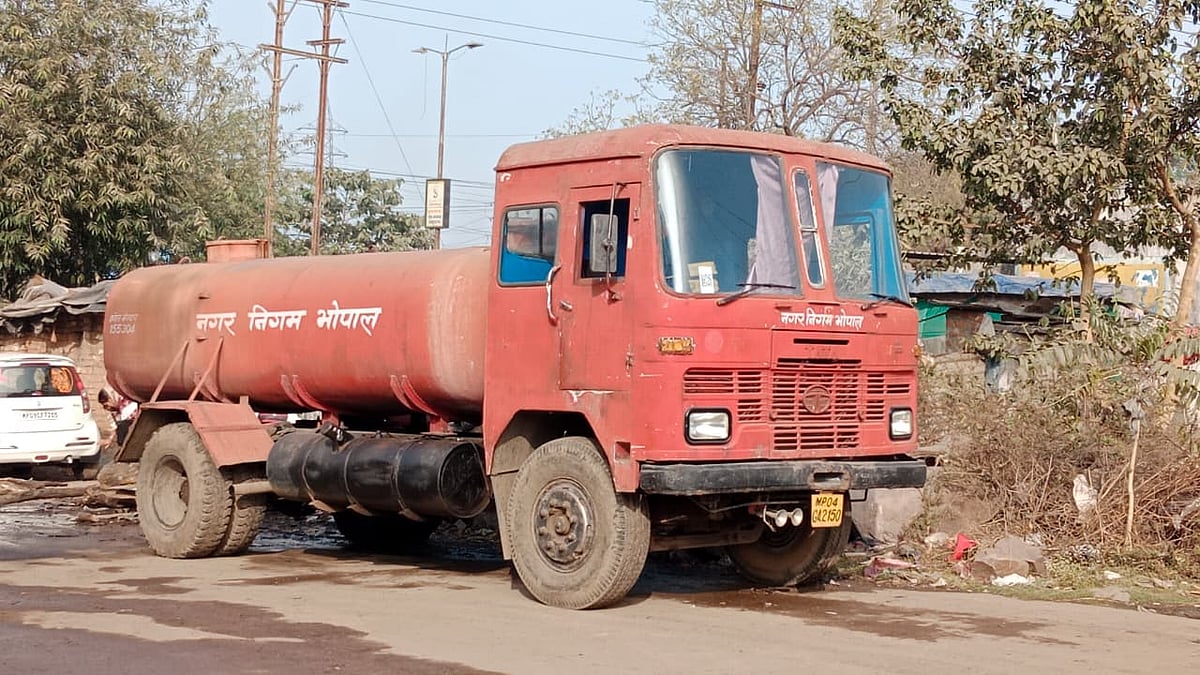
Bhopal (Madhya Pradesh): Nearly 15% of Bhopal’s population is consuming water that is not fit for direct drinking, despite of Indore tragedy exposing lakhs of residents to serious health risks, as the Bhopal Municipal Corporation (BMC) is supplying the water to a large population through 72 unclean water tankers.
A large section of the city depends on borewells and water tankers due to the absence of piped water connections. The Pollution Control Board’s regional officer, Brajesh Sharma, has clearly stated that borewell and tanker water is not directly potable and must be treated before consumption. Despite this, many residents consume this water untreated.
Currently, Bhopal’s water distribution network covers only 85% of the city. Around 30,000 households still do not have tap connections and are forced to rely on tanker supply. Disturbingly, these tankers are not cleaned regularly, increasing the risk of contamination.
BOX: Groundwater turning into slow poison
About 10% of the city’s population depends entirely on borewell water. Experts warn that nearly 70% of Bhopal’s groundwater is no longer safe for drinking. Seepage of sewage and industrial waste into the soil has led to dangerous levels of nitrates and heavy metals in groundwater. Medical experts caution that long-term consumption of such water can cause kidney failure and permanent liver damage.
BOX: No cleaning schedule for tankers
Nearly 8% of the city mainly slums and peripheral areas depends on water tankers. These tankers have no fixed cleaning schedule. Algae and rust inside the tanks further degrade water quality, posing a direct threat to residents who cannot afford private water purification systems
Udit Garg Superintending Engineer, BMC
85% of the city is covered under the water network, while work in the remaining areas is underway under the Amrit 2.0 scheme. Tankers are used during supply disruptions or on demand, and private colonies largely rely on borewell water.
.jfif)

