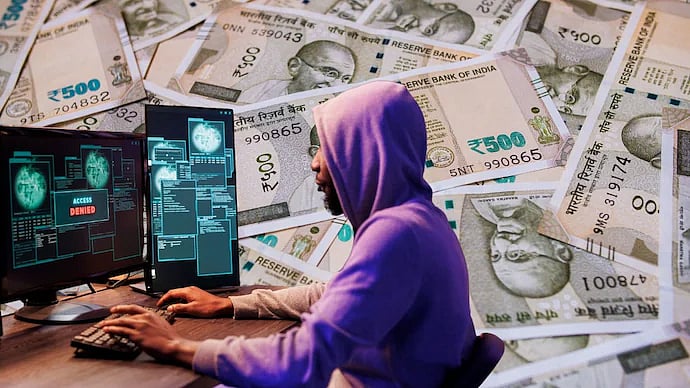
Bhopal (Madhya Pradesh): Cyber criminals have duped residents of the state capital of more than Rs. 28.31 lakh in 14 separate cases registered in different police stations of the city.
The frauds involved unknown links, OTP scams, fake credit card updates, mobile hacking and false promises of doubling money through apps, said police on Thursday.
Police have registered cases in all incidents and launched investigations.
According to police officials, the total amount cheated in these cases stands at Rs 28,31,444.
The fraudsters used varied tactics, including sending malicious WhatsApp links, asking for one time passwords (OTPs) and luring victims with investment schemes promising quick returns.
Electricity meter & OTP frauds
In the Bagsewania police station area, Subhash Chandra, a resident of Rajat Vihar, was cheated of Rs. 4,95,953 on the pretext of installing an electricity meter. In the same area, Rama Shankar of Saket Nagar lost Rs. 1,18,249 after being lured to an app-based scheme promising to double his money. Ajay Krishna Pandey of Kunj Nagar was duped of Rs. 5,56,414 after sharing an OTP on phone.
Social media & link click frauds
In Islamnagar village under Talaiya police station limits, Zahir Khan lost Rs. 3,15,000 in an online fraud. Vijay Chukhnami of Neelbad Colony in Shahjahanabad was duped of Rs. 3,84,683 on the pretext of a mobile recharge. In Ashoka Garden area, Rashmi Patel of Mayur Vihar Colony received a WhatsApp link from an unknown number. After clicking it, her phone was allegedly hacked and Rs. 1,89,647 was withdrawn from her account in three transactions.
Credit card and other frauds
Ibrahim Ansari of Bangrasia in Misrod lost Rs. 1,20,999 after fraudsters contacted him for a so-called credit card update. In the Kolar area, Savita Sharma was cheated of Rs. 1,77,000, Reenu of Rs. 1,93,000, and Ravindra Tusa Ram of Rs. 1,00,000. Vipin Nath of Chhola Mandir lost Rs. 1,86,400, while Kailash of Malakhedi was duped of Rs. 1,95,000.

Officials caution citizens
Police have urged citizens not to click on unknown links, share OTPs, or disclose banking details during phone calls. Investigations are underway in all the above-mentioned cases to trace the accused.

