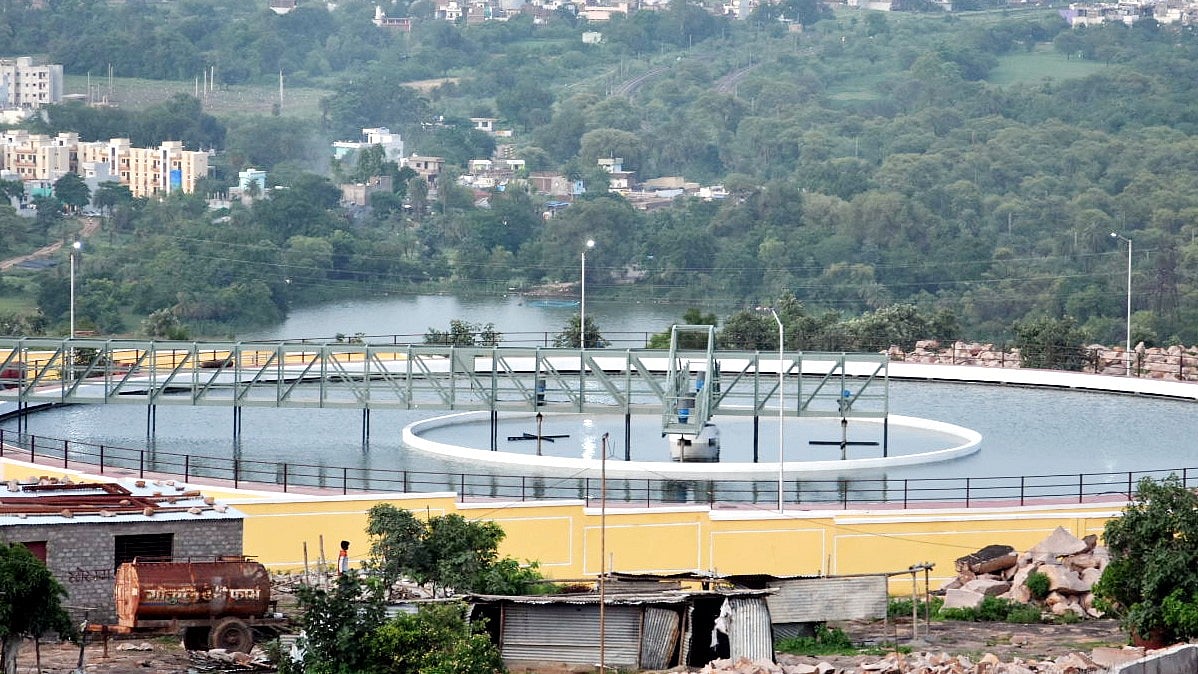
Bhopal (Madhya Pradesh): Bhopal’s drinking water infrastructure could face a severe capacity crunch under the proposed Master Plan 2047, with experts projecting a water deficit of up to 498 million litres per day (MLD) by 2047.
The challenge could intensify as the city’s population is projected to reach around 44.25 lakh, while new land-use provisions are expected to increase commercial and industrial activity, which may exhaust Bhopal’s current water supply capacity by 2035.
The draft Master Plan projects an annual population growth rate of 2.56%. Experts have raised concerns over whether the existing water infrastructure can keep pace with this growth, particularly as mixed land-use provisions along roads wider than 18 metres could facilitate commercial activities such as showrooms, restaurants and hotels.
Demand could reach 675 MLD
Based on a projected population of nearly 45 lakh, experts estimate that residential water demand alone could reach around 675 MLD, using a requirement of 150 litres per capita per day (LPCD).
This estimate does not include additional demand from commercial and industrial establishments. Bhopal currently has a reported water supply capacity of around 466-475 MLD, indicating a substantial gap between future residential demand and available capacity.
Per-capita supply may fall to 80-97 LPCD
Speaking with Free Press, Prof Jagdish Singh of MANIT, Bhopal, said accounting for distribution losses and leakage increases the projected water shortfall from 209 MLD to between 328 and 498 MLD under the Master Plan projections.
He said the present level of water availability could be outgrown as early as 2027-29. Without additional interventions, per-capita availability could fall to just 80-97 LPCD by 2047, against an estimated requirement of around 135 LPCD.
The Water Readiness Index, which stood at 0.53 in 2026, is projected to decline to around 0.31 by 2047, highlighting the growing gap between infrastructure capacity and projected demand.
Leakage control, reuse can bridge gap
Prof Singh said the projected crisis can be addressed through a combination of measures, including reducing pipeline losses, recycling and reusing treated wastewater, increasing groundwater recharge and reviving traditional water sources such as step wells.
According to his assessment, these interventions could potentially bridge around 70% of the estimated 395 MLD water deficit, provided they are implemented alongside expansion of the city’s water infrastructure.