Bhopal (Madhya Pradesh): World Wildlife Fund, India, in collaboration with state forest department, released a scientific report titled, Status of Large Carnivorous and Wild Ungulates in North and South Balaghat Forest Divisions.
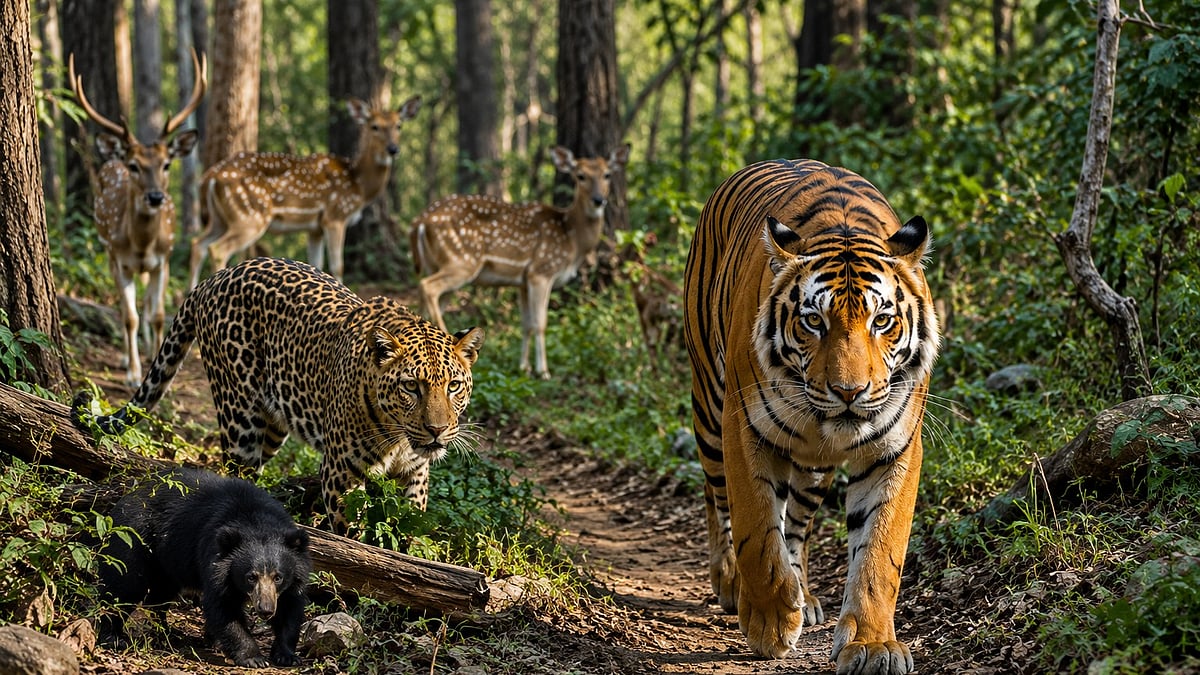
The study, conducted between November 2021 and February 2022, identified 24 mammalian species in Balaghat highlighting the region’s rich biodiversity. As many as 18 tigers and 27 leopards were photographed in just two ranges of south Balaghat. The findings indicate that Balaghat is a key reserve for large carnivores, particularly tigers and leopards.
The report stated that ungulate densities, though relatively low, were comparable to those in protected areas of central India such as Sanjay Dubri Tiger Reserve, Veerangana Tiger Reserve and Guru Ghasidas National Park.
According to the report, the findings highlight not only the thriving mammalian biodiversity of Balaghat but also the need to accord the region the same conservation resources and attention as protected areas through initiatives such as Tiger Outside Tiger Reserves project of National Tiger Conservation Authority (NTCA).
Ravi Singh, secretary general and CEO of WWF India, said Balaghat emerged as a beacon of hope for tiger conservation beyond protected areas. Subhranjan Sen, principal chief conservator of forest and head of forest force, stated that conservation efforts should go beyond forest landscape.
The report also highlighted key conservation challenges including habitat fragmentation due to infrastructure development, expansion of mining operations, habitat degradation and potential human-wildlife conflict. It further stressed the need for effective forest fire management and wetland conservation. PCCF, wildlife, Samita Rajora, was also present during the release of the report.