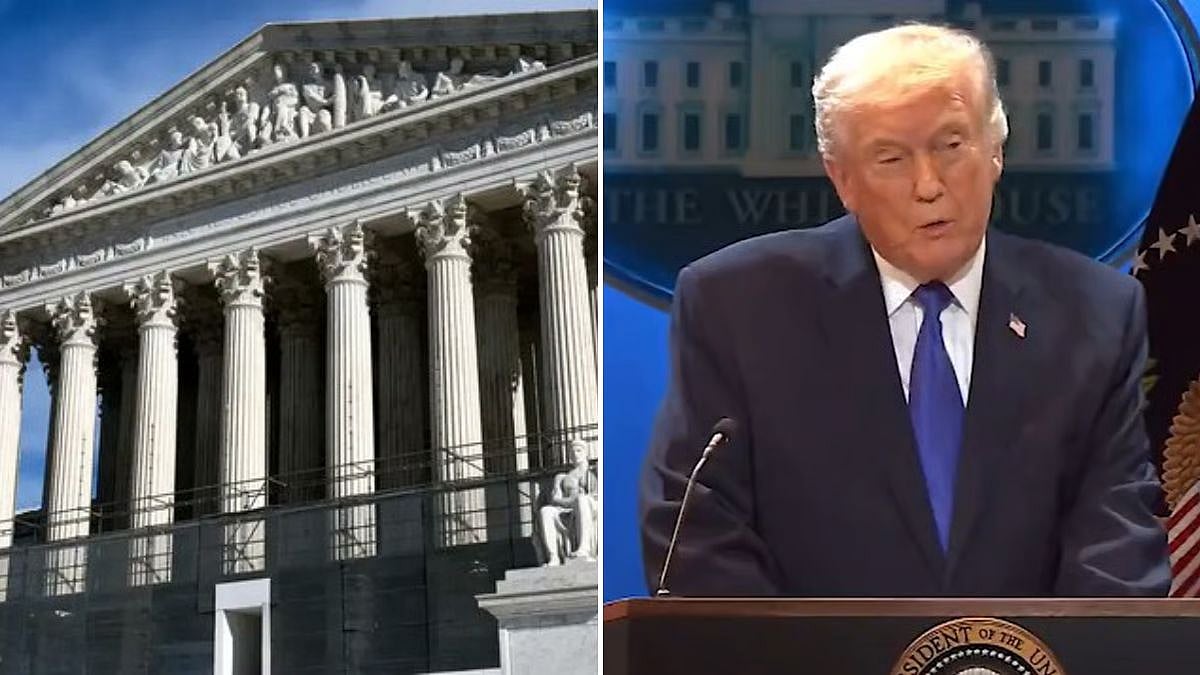
The US Supreme Court ruling nullifying US President Donald Trump’s imposition of tariffs on several countries has given Indian negotiators a breathing space, as they were reportedly set to fly down to finalise the terms of an interim trade deal between the two nations.
India has now deferred any further progress on negotiations, but questions remain on several fronts. Even though the Indian government knew that the US Supreme Court was set to announce its decision on Trump’s tariff announcement, it still went ahead, holding press conferences hailing it as a historic one and taking credit for itself. The Indian government's press release triumphantly declared that India had "unlocked a $30 trillion US market", even as officials indicated the deal came with conditions that New Delhi appeared compelled to accept, or else the 50 per cent tariff would have remained on most Indian exports. A more prudent approach would have been to wait until the US apex court gave its verdict on tariffs. Also, if India's exports to the US actually grew 2.2 per cent in April–December 2025, despite Trump's tariffs—partly as exporters redirected to other markets—then what was the urgency of making such sweeping concessions in the first place?
Perhaps the most intriguing aspect is access for US agricultural exports, which the US Secretary of Agriculture, Brooke Rollins, said the trade deal would significantly boost, bringing money into rural America and benefiting US farmers by giving them access to India’s large market. The government has faced sharp criticism from the Opposition over this part of the deal, even as Commerce and Industry Minister Piyush Goyal has maintained that the agreement will not harm Indian farmers' interests.

The India-US trade framework, as it stands, does not yet appear to be a deal between equals. India's commitments look concrete, measurable, and enforceable; America's, at this stage, appear more aspirational and hedged. The government's spin—that India has "unlocked" a $30 trillion market—risks being seen by critics as a masterclass in obfuscation. India's reported commitment to purchase $500 billion in US goods over five years—energy products, aircraft, precious metals, technology, and coking coal—is the most audacious element of the deal. At $100 billion per year, this would more than double India's current annual imports from the US.




If India cannot fulfil this promise—and it may struggle to do so at this scale—it could hand the US a durable lever for future pressure. What remains to be seen is how India will make up for lost ground and take advantage of a politically constrained US president who, for the first time in his second tenure, faces institutional pushback that could slow the unilateral decisions he often makes.
