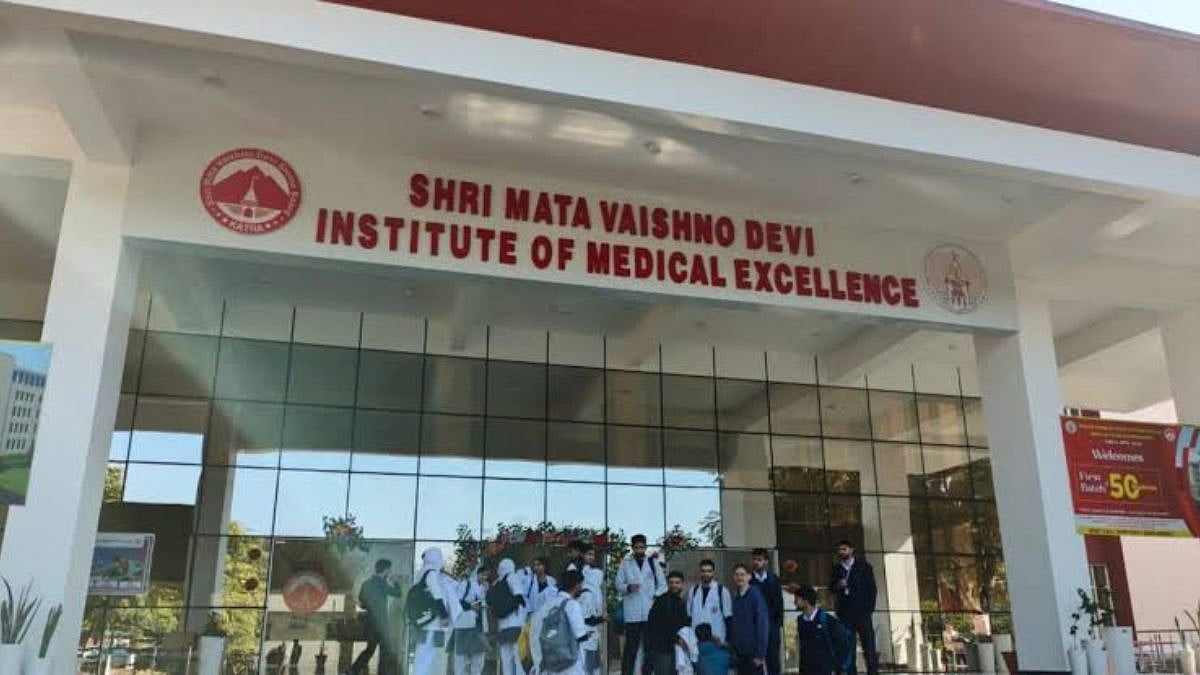
The withdrawal of permission to Shri Mata Vaishno Devi Institute of Medical Excellence in Katra for its MBBS programme as a device to prevent 42 Muslim students from pursuing the course is an indefensible decision. The National Medical Council has bowed to an obvious political diktat that followed protests by a Jammu-based Sangharsh Samiti against admitting Muslim candidates in a Hindu institution. The NMC’s status as a professional and neutral regulatory body is in jeopardy. Candidates displaced because of the decision not to allow the 50 seats will now have to join other institutes, some closer to their homes, under J&K Chief Minister Omar Abdullah’s initiative. The CM rightly demanded fixing of responsibility and a probe to prove the NMC claim that the institute lacked infrastructure, such as faculty strength and clinical material, leading to the withdrawal of course permission. The entire episode has also brought the National Eligibility cum Entrance Test (NEET), touted by the Union government as an examination of unimpeachable integrity, under a cloud, because it offers no guarantees to successful candidates now. NEET already faces strong opposition from some states which see it as an unfair test that confers an advantage on privileged urban aspirants and CBSE stream students at the cost of underprivileged rural students from state boards. The murky sequence of events surrounding the withdrawal of MBBS seats in the Jammu institution has added a new political dimension to admissions, given that the letter of permission was withdrawn on unconvincing grounds soon after it was granted, and that too in the shadow of sectarian protests.
The success of the agitation in depriving 42 Muslim candidates of seats could be, as Omar Abdullah has pointed out, an own goal. It deprived the territory of a new medical college. If the course had got established at the Vaishno Devi Institute, it would have led to more seats in coming years, potentially offering a few hundred seats to Hindu candidates. Only a few months ago, the NMC allowed 190 MBBS seats in five J&K-based government institutes, expanding the scope for many local candidates. Setting up private medical colleges often involves significant governmental support, including sanction of land and grants in aid. The permission process involves inspection by the NMC and strict oversight. The sudden act of withdrawing the permission stems from external factors. In fact, those agitating against Muslim students’ enrolment gave the game away by thanking senior BJP leaders for the NMC decision. It is quite simply unfair to deny admission to students on the basis of their religion. Nor should entrance tests be used as a barrier to prevent eligible candidates without privilege from accessing education. Japan’s Meiji Restoration, with an emphasis on health and education, holds an important lesson here, since the island nation succeeded by ensuring that no one would be left behind in its developmental journey.

