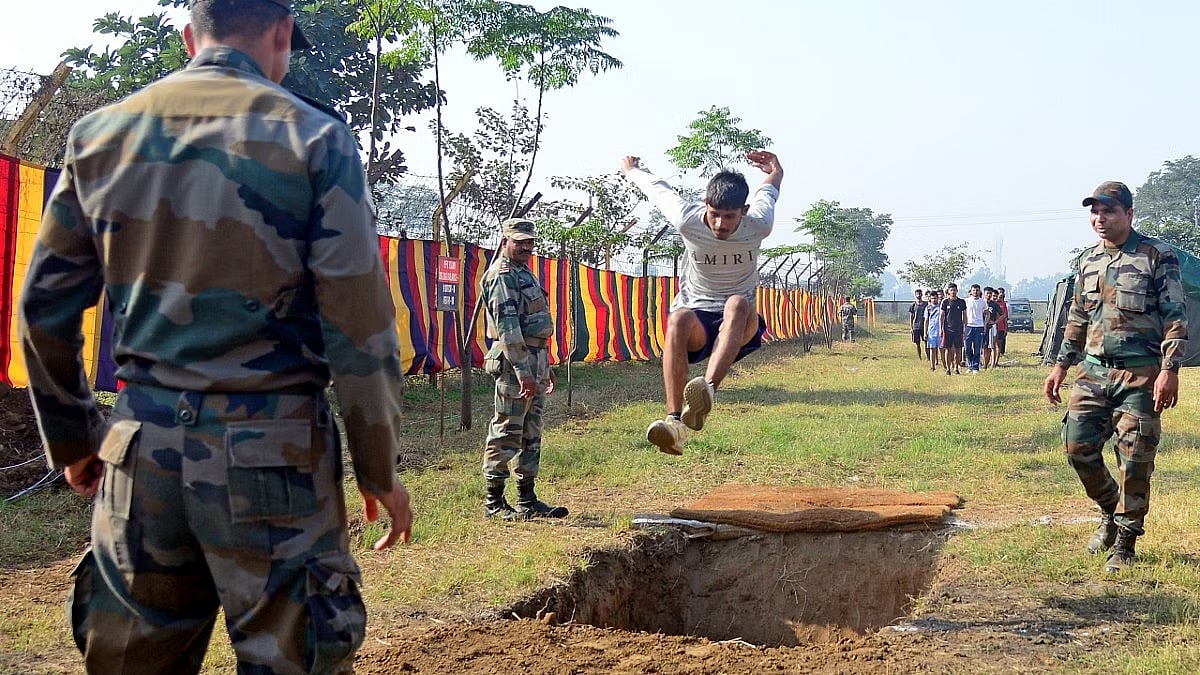
When the Agniveer scheme was introduced in 2022, it immediately raised questions both within the armed forces and among the public. India had always taken pride in maintaining a professional military recruited on an all-India basis, with soldiers assured of stable careers, pensions, and social security. The new scheme marked a sharp departure from that tradition. Under the earlier system, those recruited into the Army, Navy or Air Force served till retirement age and were entitled to pension benefits under the one-rank-one-pension framework. Their families, too, enjoyed a measure of security through family pension provisions. The Agniveer model altered this understanding fundamentally. The terms were made clear from the beginning. Agniveers would serve only four years, after which merely one-fourth would be absorbed into regular service with pension and other benefits. The remaining three-fourths would leave with a tax-free severance package of around Rs 12 lakh, half of which comes from their own salary contributions. In the event of accidental death, insurance benefits would apply, but there would be no pension for surviving family members.
The Centre has merely reiterated these conditions in response to the plea filed before the Bombay High Court by the mother of an Agniveer who died in service. Legally and technically, its position is unambiguous. Morally and strategically, however, the issue deserves deeper examination. Four years have now passed since the scheme was launched. Soon, thousands of young recruits will leave the forces. The severance package may appear substantial, but Rs 12 lakh can disappear quickly, especially when one has to support a family, pursue further education or search for employment. Most Agniveers join at the age of 17 or 18. At that age, many may not fully comprehend the uncertainty awaiting them after four years. The government says they will receive vocational training and preference in recruitment for paramilitary organisations. It also points to interest shown by the private sector in hiring them for security-related jobs. Yet, these assurances remain largely aspirational. Military training alone may not equip them adequately for the private sector.
If substantial numbers fail to secure stable employment, frustration and disappointment could grow. The social consequences of such disillusionment among trained young men cannot be ignored. Short-service recruitment has historically been used to meet temporary wartime or emergency needs. Modern warfare today increasingly depends on advanced technology, specialised skills, and long-term expertise. In such a context, the relevance of a large short-term military workforce is open to debate. The nation owes its soldiers not merely gratitude, but clarity, security, and dignity. Before demands for pension and other benefits grow louder, the government must initiate an honest national discussion on whether the Agniveer experiment truly serves India’s long-term military and social interests.
