The results of the local body elections across Maharashtra are broadly in line with expectations, with the Bharatiya Janata Party (BJP) emerging as the dominant force in municipal councils and nagar panchayats across the state. However, the outcome does not capture the full complexity of Maharashtra’s evolving political landscape.
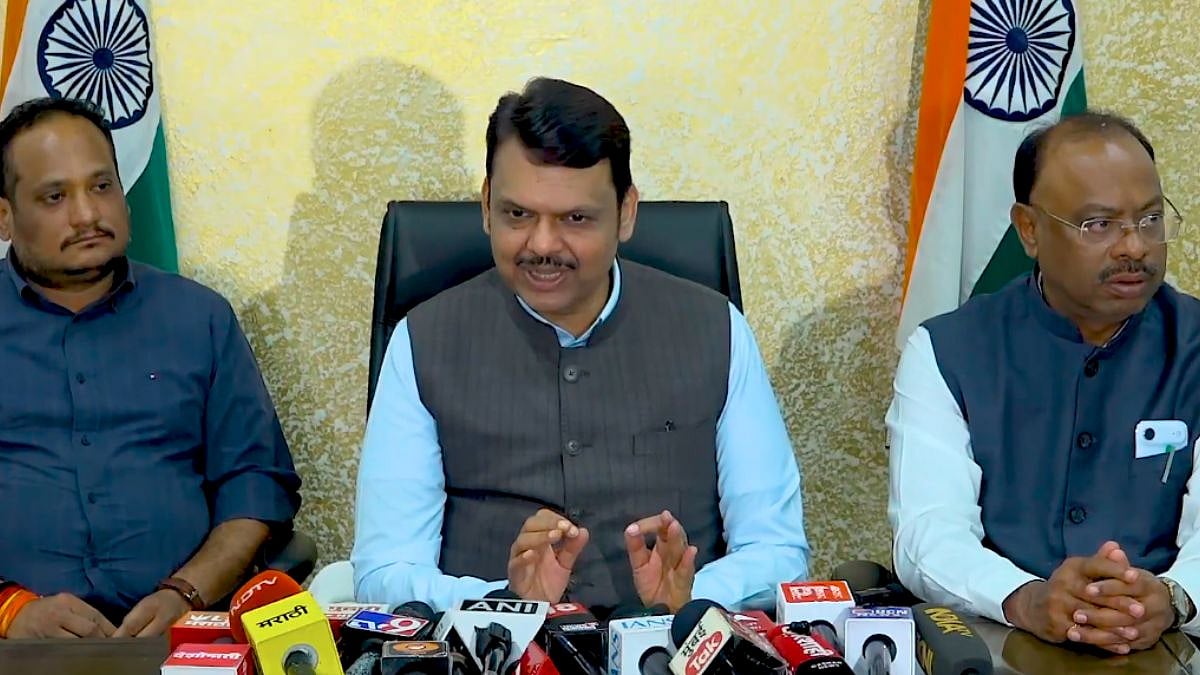
The BJP-led Mahayuti—comprising the BJP, the Eknath Shinde-led Shiv Sena, and the Ajit Pawar faction of the Nationalist Congress Party—secured 207 of the 288 municipal council president posts. In contrast, the opposition Maha Vikas Aghadi (MVA), comprising the Congress, the Uddhav Thackeray-led Shiv Sena and Sharad Pawar’s NCP, managed to win 44 such positions.
Within the ruling alliance, the BJP clearly outperformed its partners, winning close to 120 presidents’ posts and nearly 3,300 seats. Unsurprisingly, this strong showing in the urban local body polls has been welcomed by Chief Minister Devendra Fadnavis, who described the outcome as “record-breaking”. While the numbers do reflect a significant organisational and electoral advantage, they also merit closer scrutiny beyond the headline figures.
To begin with, the elections were accompanied by allegations of irregularities at several places, raised by opposition parties and supported, in some instances, by documentary or visual evidence. These allegations range from claims of pressure tactics and inducements to concerns about the use of official machinery during the campaign. While such charges are not uncommon in fiercely contested local elections, they underscore the need for the State Election Commission to address perceptions of partisanship and reinforce confidence in the electoral process.



Secondly, the results were influenced by a wave of defections ahead of the polls, with over 100 candidates—largely from the Congress—crossing over to the Mahayuti. Many cited familiar arguments of political stability and development as reasons for the move. While defections are a recognised feature of contemporary politics, their scale inevitably blurs the line between electoral endorsement and political realignment, and presents challenges for alliance management at the grassroots level.
A closer look at the candidate profiles reveals another notable trend. Nearly 65% of Mahayuti candidates reportedly came from established local political families, with the BJP accounting for over 42 per cent of such candidates. By comparison, the MVA fielded fewer than 20 per cent candidates from political dynasties.
This suggests that despite frequent assertions about widening political participation, the influence of entrenched local networks and family connections continues to shape electoral outcomes across parties. Rather than diminishing, dynastic politics appears to have adapted to the prevailing power structure.
For a state once known for cadre-driven movements and issue-based politics, these trends warrant reflection. With the Mahayuti now firmly in control of local bodies across Maharashtra, the responsibility lies with it to translate electoral success into transparent governance, inclusive leadership, and tangible improvements in civic administration.