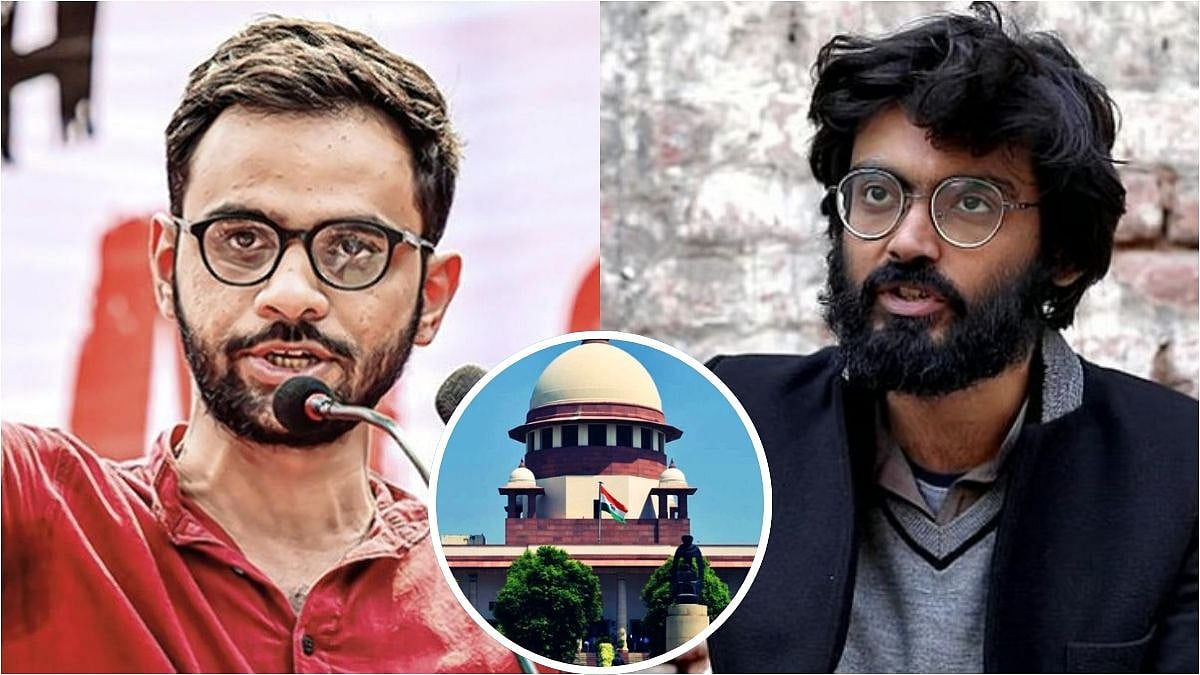
The Supreme Court’s decision to deny bail to Umar Khalid and Sharjeel Imam, while granting relief to five other co-accused in the 2020 Northeast Delhi riots “larger conspiracy” case, has once again brought into focus the uneasy balance between national security laws and personal liberty.
The court has, no doubt, articulated its reasons at length, emphasising that each accused must be assessed independently and that delay in trial cannot automatically justify bail under the stringent provisions of the Unlawful Activities (Prevention) Act.
It is equally true that the court has not shut the door entirely. Khalid and Imam have been given the liberty to apply for bail again after one year or after the examination of protected witnesses.
In imposing strict conditions even on those granted bail, the court has signalled its concern that liberty, in such cases, must be carefully calibrated. These are not routine bail orders, and the apex court has clearly chosen caution over immediacy.
Prolonged incarceration raises unease
Yet, the discomfort surrounding this case cannot be wished away. Umar Khalid has been in custody since September 2020—nearly five years—without the trial reaching a decisive stage. There is no certainty that it will do so in the near future.
The court has expressed hope that witnesses would be examined within the next year, but hope, however sincere, cannot substitute for timelines in matters involving prolonged incarceration. What adds to the sense of unease is the perception that facts appear to be weighed less generously than suspicions.
Khalid was recently granted interim bail to attend a family function, a liberty he did not misuse. That conduct could reasonably have been seen as evidence of compliance rather than risk.
Questions of motive and consistency
Motive, too, matters in criminal jurisprudence. The riots disproportionately affected members of Khalid’s own community. To argue that he orchestrated violence that primarily harmed those he is said to represent strains credulity for many observers, even if the prosecution’s theory must ultimately be tested at trial.
The broader concern, however, lies in the contrast that stares the public in the face. Individuals who have openly incited violence, even brandishing weapons on public platforms, continue to occupy positions of power. Others, including religious figures convicted of grave crimes, have secured repeated bail.
Rule of law and public confidence
Against this backdrop, the prolonged denial of bail to undertrials who have not been convicted inevitably feeds a perception of inconsistency. Perceptions are not verdicts, but they matter in a democracy governed by the rule of law.
The judiciary’s greatest strength lies not only in its judgements but also in the confidence they inspire. In cases such as this, that confidence is tested — not by the letter of the law alone, but by its lived consequences.

