The trends in Maharashtra politics have been ever-changing and very unpredictable over the past few years, and this is what attracts the nation’s attention to the state’s politics. Being the highest contributor to the national collection of Goods and Services Tax (GST), Maharashtra is clearly the most industrialised and urbanised among all the large states in India.
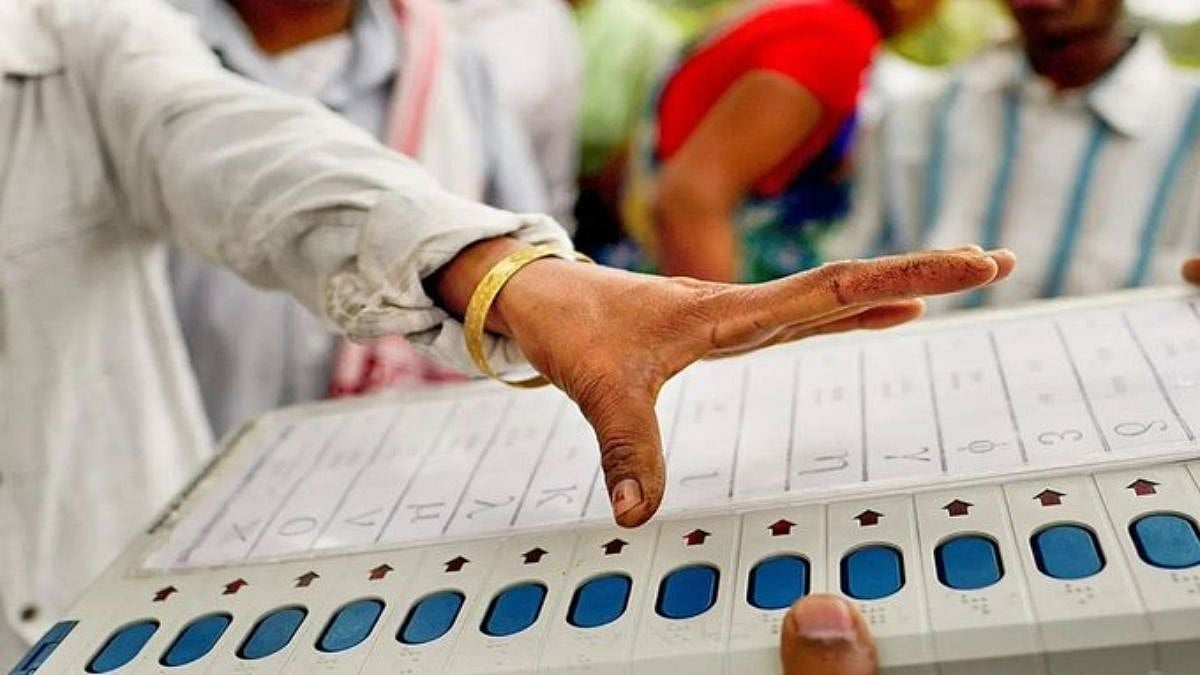
After the recently concluded municipal polls in 29 cities of the state, the most attention-worthy question now is: who will control cities like Mumbai, Pune, Thane and Nagpur? The results indicate that the political trend may again change in Maharashtra, and questions are being asked about whether the state is slowly moving from the politics of alliances to bipolar politics, with only two political forces, as opposed to six or seven earlier, being in the fray.
BJP’s calculated municipal strategy
The Bharatiya Janata Party adopted a very clever strategy in the recent municipal polls by entering seat-sharing deals with alliance partners where winning a majority was crucial, while fighting separately where the polls appeared a cakewalk for the BJP.
For instance, in Mumbai, the BJP was not too confident about how things would unfold in view of the Thackeray cousins uniting and entering into a seat-sharing agreement. Hence, it decided to have a seat-sharing arrangement with Eknath Shinde’s Shiv Sena. However, in cities like Pune, Kolhapur and Nagpur, the party appeared confident of a solo performance and clearly told its alliance partners, Shiv Sena and the NCP, that it would fight alone. This approach was quite unprecedented.
While the BJP fought as one unit in alliance with Eknath Shinde in Mumbai, just 160 km away from the state capital, in cities like Pune and Pimpri-Chinchwad, it was aggressive against its alliance partners Ajit Pawar and Eknath Shinde. The results have given the BJP a clear idea of which way the political winds are blowing and how it should prepare for the upcoming Zilla Parishad polls, as well as the 2029 Lok Sabha and Assembly elections in Maharashtra.
Shinde under pressure in Thane
The Shiv Sena, led by Eknath Shinde, did well in his bastion, the Thane Municipal Corporation. However, the BJP managed to dominate other municipal bodies in Thane district, such as Kalyan-Dombivli, Ulhasnagar and Ambarnath. This has sent a clear signal to Shinde that the BJP could gradually capture political space as a solo player in his stronghold and marginalise him ahead of the 2029 polls.
What has put Shinde on alert is the fact that the BJP’s state president, Ravindra Chavan, who has his home base in Dombivli, became very aggressive ahead of the polls and poached many of Shinde’s trusted activists and grassroots workers just weeks before polling day. This has reportedly upset Shinde deeply, and he remained absent from the state cabinet meeting on Tuesday despite being in Thane to attend the birth anniversary celebrations of his political mentor, Anand Dighe.
Shinde is also concerned about poaching attempts in the Brihanmumbai Municipal Corporation (BMC), where he contested 90 seats in alliance with the BJP but managed to win only 29. He has reportedly kept his corporators at a five-star hotel to prevent them from coming in contact with the BJP.
Ajit Pawar’s unease with BJP
The other partner in the Mahayuti government, NCP leader Ajit Pawar, was seen sharply targeting the BJP during his campaign in the Pune Municipal Corporation (PMC) and Pimpri-Chinchwad Municipal Corporation (PCMC) elections. Since the BJP decided to fight alone in Pune and PCMC, Ajit Pawar received a clear signal about the saffron party’s long-term plan to marginalise him in his political bastion.
The manner in which the BJP sidelined Ajit Pawar on his home turf of PMC and PCMC has reportedly annoyed him immensely. However, at present, he has no option other than continuing in the Mahayuti government.
Towards polarisation of political forces
All this points to a significant trust deficit between the BJP and its two major alliance partners. Many political observers feel this may now lead to a form of polarisation among the six or seven political outfits in Maharashtra.
The Thackeray cousins decided to join forces in the BMC polls, effectively making the Shiv Sena (UBT) and the Maharashtra Navnirman Sena a single political force. A similar situation exists between Ajit Pawar’s NCP and Sharad Pawar’s NCP. They fought the municipal polls together and are likely to contest the Zilla Parishad elections as a united front. The two factions of the Thackerays and the two factions of the Pawars have come together with the common objective of keeping the BJP at bay.
Bipolar future ahead?
If the BJP succeeds in retaining Eknath Shinde within its fold, Maharashtra could witness a contest between the BJP-Shiv Sena on one side and the Thackeray-Pawar combine on the other. The Congress party’s overall footprint has shrunk in recent polls, indicating that upcoming Zilla Parishad elections, as well as the 2029 Lok Sabha and Assembly polls, could become bipolar rather than a multi-party contest.
If the BJP fails to retain Shinde, he may explore the option of aligning with the opposition. This would require designing a new alliance or seat-sharing formula, which would again result in a bipolar political battle — the BJP on one side and a multi-party opposition alliance on the other.
Rohit Chandavarkar is a senior journalist who has worked for 31 years with various leading newspaper brands and television channels in Mumbai and Pune.

