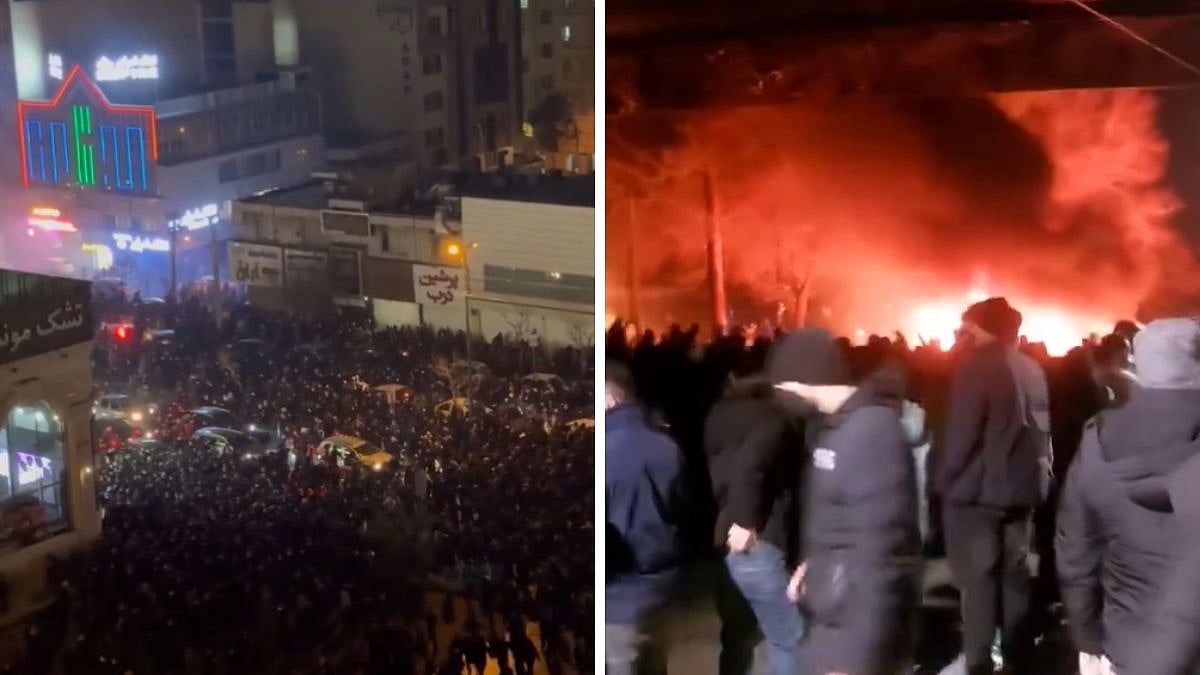
The extraordinary brutality with which the Iranian regime is crushing its own citizens has shaken the world’s conscience. Donald Trump, as is his wont, made himself the centre of attention first by declaring that he would attack Iran if executions of protesters did not stop and then retreating by finding an off-ramp, claiming that the Iranian regime stopped executions because of his threat. The pain and suffering the freedom-loving Iranian people are enduring are real and far more important, and the shenanigans of Trump should not deflect global attention from the tragedy enveloping a proud nation with a long history and civilisation.
From ancient empire to migration
By the 6th century BC, the Persian Empire was a mighty global force. The Achaemenid Empire, founded by Cyrus the Great in 550 BC, finally ended with Alexander’s triumph against Darius. It was this conquest of Persia that made Alexander invincible in his quest to create the largest empire known to man until that time.
With the fall of the Sassanian Empire in 651 CE, Islamisation and severe persecution forced Zoroastrians to migrate to India. Over centuries, Parsis migrated to India, and Indian society embraced them with great warmth. The Parsis, in turn, are fully integrated into Indian society and are among the most successful and respected ethnic groups in India.
Colonial interference and the Pahlavi era
By the 18th and 19th centuries, the Persian Empire had weakened due to internal strife and had become a pawn in the hands of Britain and Russia during the colonial era. In 1921, Reza Shah ended the Qajar dynasty in a coup and was elected monarch by the Iranian Parliament (Majlis), establishing the Pahlavi dynasty. He began modernising Iran.
In 1941, the Allied forces of Britain and the Soviet Union invaded and occupied neutral Iran and forced Reza Shah to abdicate in favour of his son, Mohammad Reza Shah Pahlavi.
Mohammad Reza Shah continued his father’s modernisation drive and initiated land reforms and women’s suffrage. Had this process continued unabated, Iran might have emerged as a modern constitutional liberal democracy. However, this trajectory was interrupted by the rise and fall of Mossadegh, who was elected Prime Minister in 1951 by the Majlis.
Oil, foreign intervention and lost opportunity
The Mossadegh government nationalised the Iranian oil industry, largely controlled by the Anglo-Persian Oil Company. Following the so-called “Abadan crisis”, Britain, which lost control of Iranian oil, persuaded a reluctant United States to overthrow the Mossadegh government through Operation Ajax. Domestic dissent was fuelled by foreign interference, and the Shah was persuaded to dismiss Mossadegh. A pliable Fazlollah Zahedi was installed as Prime Minister, and the new government split oil ownership between Iran and Western companies.
Subsequently, Mohammad Reza Shah centralised power. Infrastructure improved, taxation was modernised, industry was promoted, land reforms pursued and literacy increased. Iran witnessed impressive growth.
Roots of the 1979 revolution
However, in the absence of democratic outlets to manage dissent, unrest grew. Reforms create winners and losers. Reconciliation of conflicting interests and credible liberal opposition are essential for stability. Over-centralisation, unease with rapid change and perceptions of Western domination created unrest that was exploited by fundamentalist religious forces in the absence of a secular alternative.
This culminated in the 1979 Iranian Revolution, the end of monarchy, and the establishment of a theocracy under Ayatollah Ruhollah Khomeini and later Ayatollah Ali Khamenei.
Theocratic repression and proxy wars
The regime has since become increasingly paranoid, insular and draconian. In pursuit of legitimacy and leadership of the Islamic world, Iran sponsored militant and terrorist groups, including Hezbollah in Lebanon, Hamas in Gaza, the Houthis in Yemen and factions of the Muslim Brotherhood in Iraq and elsewhere. Sanctions and ideological obsession impoverished a once-proud society.
Protests and present crisis
Iran is a relatively modern society. In September 2022, 22-year-old Mahsa Amini was arrested and killed in custody for not wearing a hijab, triggering mass protests. In the current phase, protests have intensified as economic conditions worsened. Millions have expressed anger nationwide.
The regime has responded with brutal repression. Up to 25,000 protesters have reportedly been killed or executed summarily. Internet and social media have been shut down, and the state appears determined to crush dissent rather than reform.
Lessons for the world
What are the lessons for others? First, liberal democracies require decades of secular nation-building. India is fortunate that its founders undertook this process long before independence. In its absence, societies destabilise easily, as seen during the Arab Spring, where reformist hopes gave way to fundamentalism or military rule.
Second, undemocratic regimes often survive through oppression. Either religious fanaticism or lust for power leads rulers to slaughter citizens with impunity. Paradoxically, regimes that hesitate to kill their own people often fall. This is the paradox of the modern nation-state system.
Change, intervention and hope
Occasionally, external intervention leads to regime change, but often with disastrous consequences. Vietnam’s invasion ended the Pol Pot regime, but Afghanistan’s experience shows how tyranny can return in new forms.
Eventually, brutal regimes do collapse. The fall of the Berlin Wall and the collapse of the Soviet Union remind us that change is inevitable. Whether such change leads to freedom or new oppression remains uncertain.
Let us hope the Iranian people emerge from this nightmare to find freedom and dignity soon.
The author is the founder of the Lok Satta movement and the Foundation for Democratic Reforms.
Email: drjploksatta@gmail.com / Twitter: @jp_loksatta

