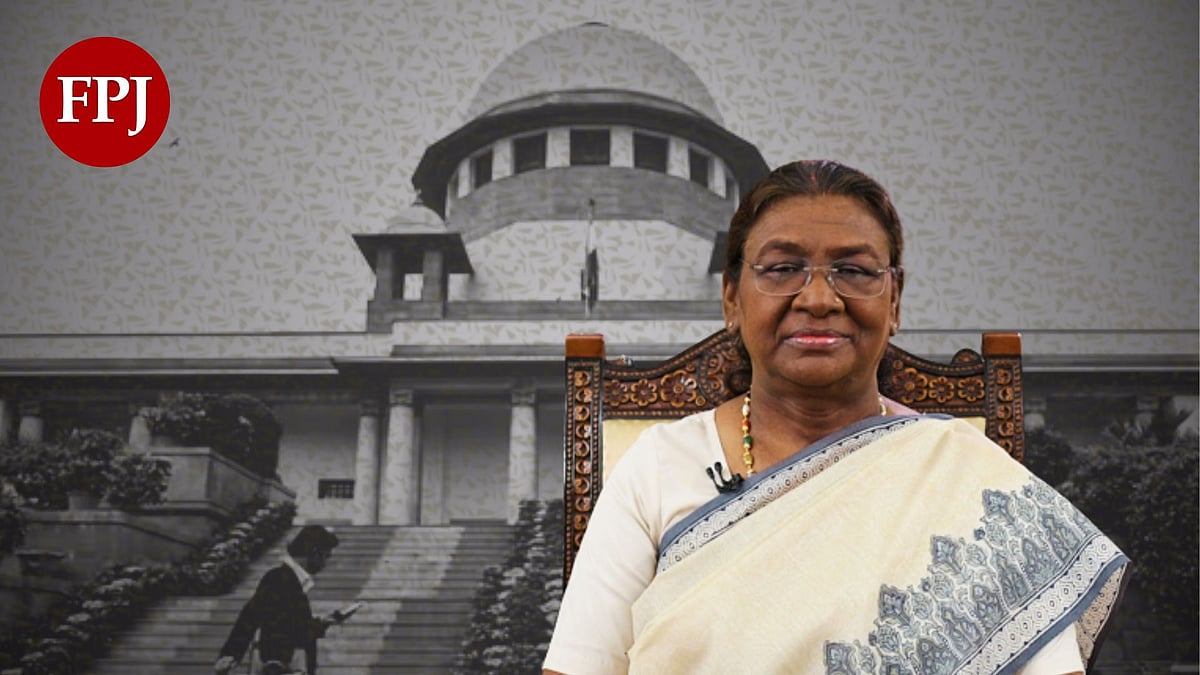
The Supreme Court’s Constitution Bench has now given the President and governors a significant reprieve by ruling that no court can compel them to grant assent to a bill within a fixed time. In effect, the court has said that the Constitution’s silence on timelines cannot be filled by judicial innovation. The ruling overturns the earlier two-judge decision in the Tamil Nadu case, which had held that prolonged inaction by a governor amounted to “deemed assent”. This clarification was sought by President Droupadi Murmu herself, after the smaller bench’s decision triggered an intense national debate. Her queries were straightforward: the Constitution does not prescribe a timeline under Articles 200 and 201, raising the issue of whether the courts have the authority to impose one, and the scope of judicial scrutiny over the constitutional discretion exercised by the President or governor needed to be clarified.
The five-judge bench headed by Chief Justice BR Gavai has now responded with unmistakable clarity: timelines cannot be imposed; deemed assent has no constitutional basis; and the President and governors cannot be answerable to courts for how they exercise their office, thanks to Article 361. To judicially prescribe a deadline, the bench said, would be “strictly contrary” to the constitutional design and would amount to the judiciary encroaching upon the executive terrain. Yet, the ruling comes with a caveat. While courts cannot question the merits of a governor’s actions, prolonged, unexplained and indefinite inaction will invite limited judicial scrutiny. This is the court’s way of reminding constitutional authorities that the elasticity built into Articles 200 and 201 cannot become a cover for sabotage. The very need for presidential reference arose because some governors, especially in Opposition-ruled states, have used this elasticity as a political weapon. The Tamil Nadu governor, for instance, kept 11 bills pending—some for years—without offering reasons. Governors in Kerala, Punjab and Telangana have also held back bills on thin pretexts.

In a parliamentary democracy, the legislature represents the sovereign will of the people. To allow a nominee of the Union government to bottle up that will indefinitely is to distort the federal balance. The irony is that such problems never arise in states ruled by the party at the Centre. Nor does the President—who handles Parliament’s bills—ever sit on them. This asymmetry reveals the political, not constitutional, nature of the delay. By ruling out timelines, the Supreme Court has respected the text of the Constitution. But the net effect is troubling: Governors may continue to obstruct Opposition-led legislatures with impunity, shrinking the operational space of federalism. The court has left the onus on “constitutional morality”, but recent experience shows that morality is a weak defence against partisanship. If anything, the verdict reinforces the urgent need for a political consensus on codifying gubernatorial conduct.
