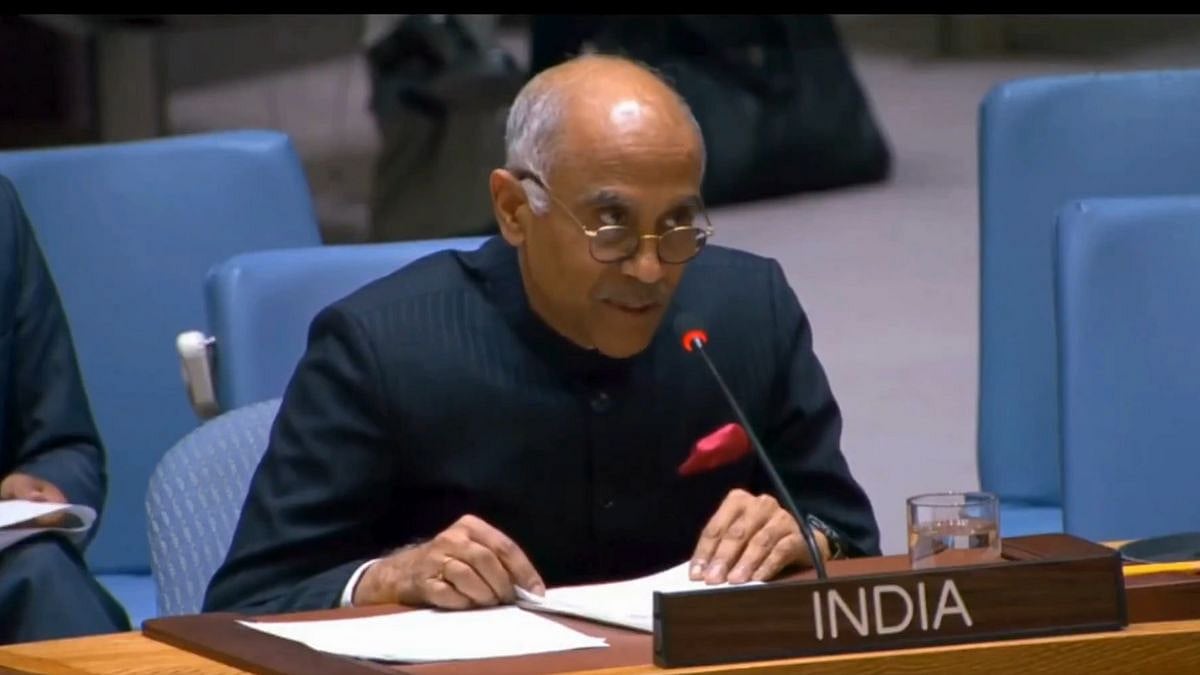
India’s permanent representative to the UN, ambassador Parvathaneni Harish’s statement calling for a “practical engagement with the Taliban” in a UN Security Council meeting on Afghanistan has confirmed India’s recalibration in policy towards the war-torn country.
Though India has not formally recognised the Taliban government, the visits—by the acting Afghan foreign minister, who visited India in October this year, followed by the minister of industry and commerce—suggest New Delhi has ended its long-held policy of not working with the Taliban publicly, a stance it had maintained through the 1990s right up to the 2021 takeover.
India’s recalibration is due to the changing geopolitical environment. President Trump’s direct talks with the Taliban, coupled with the US withdrawal from Afghanistan, have posed security concerns that New Delhi must address. The most urgent is stopping the operations of Pakistan-backed terror groups within Afghanistan.
Apart from security concerns, there are also economic ones. Afghanistan is crucial to India’s plans towards bypassing Pakistan and creating a trade route to Iran’s Chabahar port via Kabul. By weaning Afghanistan away economically from Pakistan, India hopes to better manage its security concerns.
Such realpolitik should not blind New Delhi to the dangers of adopting such a policy. The Taliban have not been tested on their ability to crack down on terror groups, and there is evidence that some of the other terror groups have disgruntled Taliban members within them.
Security concerns aside, India must prepare for international pressure, given the Taliban’s record on gender and human rights. Such a task will be made more complicated given New Delhi’s own statements that it remains a friend to the people of Afghanistan.
New Delhi must also pay close attention to the ongoing clashes between Pakistan and Afghanistan and how they will be resolved. Iran has called a meeting next week where it will facilitate "an exchange of views" between Pakistan and the Taliban. China and Russia are sending their observers, and it is not yet known if New Delhi will be attending.
Should India not attend this and other subsequent meetings, it may find that its concerns are not adequately reflected in any outcome that may be agreed upon. This is something that New Delhi will have to consider as it watches the situation unfold.
India will also have to prepare for the fact that Pakistan will not tolerate Afghanistan slipping into New Delhi’s embrace. A recent statement made by Pakistan’s foreign office, stating that the “Afghan people would be emancipated and they would be governed by a true representative government”, is interesting as it suggests Islamabad is pushing for a broader political solution for Afghanistan’s future.
Should this be encouraged in the talks next week in Tehran, India may have to revise its strategic calculations in Afghanistan. Doing so will not be easy.

