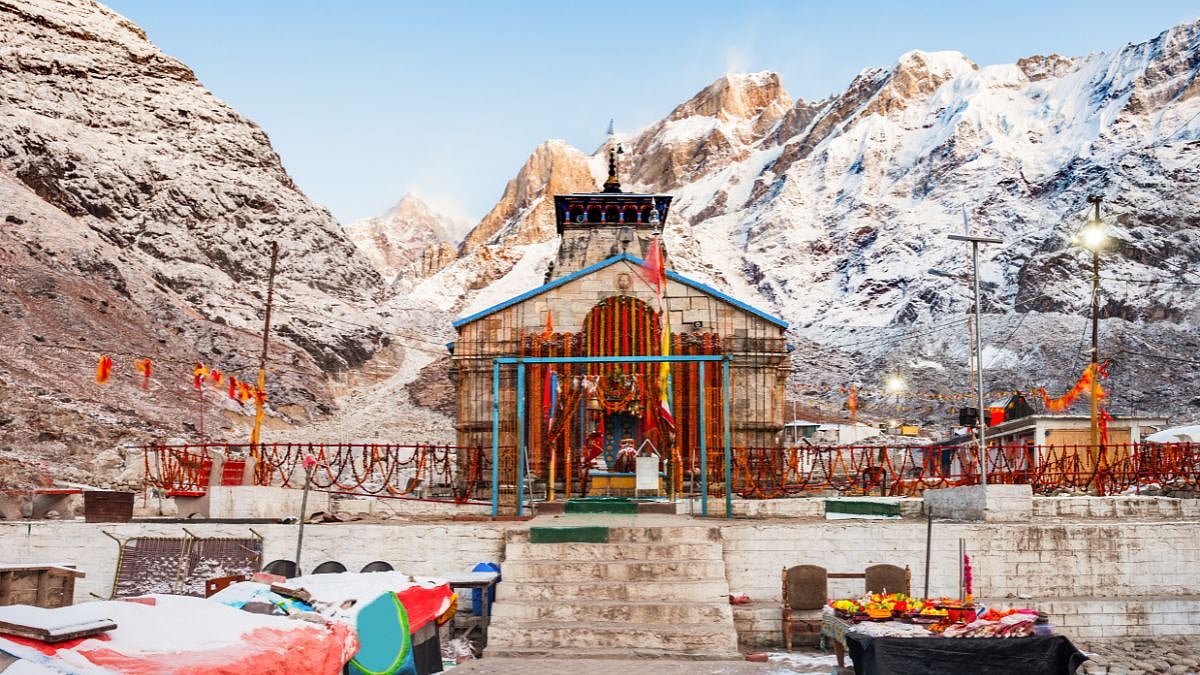
By the time you finish reading this, chances are someone planning the Char Dham Yatra is refreshing a webpage, scanning a WhatsApp forward, or tracking a Donald Trump tweet for cues on whether their yatra this summer will even go smoothly.
That is both the story and the statement about the Uttarakhand government.
People elect governments to reduce uncertainties in life. They believe they have outsourced chaos management to a responsible government that will take care of it. Poor, foolish citizens expect frameworks, clarity, predictability, and, above all, to be kept updated with information that aligns with ground reality. Not silence. Not ambiguity. And certainly not a “check the website daily” approach to something as sacred and logistically complex as the Char Dham Yatra for the common man.
Today, Uttarakhand is marked by confusion and guesswork in governance.
Three weeks before the Yatra begins, there is no clear, consistent communication. Will it proceed seamlessly? What are the contingency plans? How will infrastructure hold up under pressure? How does the war affect me? Are there clean, Western-style restrooms along the arduous 18 km trek to Kedarnath, which begins around 3 am? Silence.
Hotels and travel operators are hedging. Pilgrims are hesitant. Helicopter bookings, when they open on the 10th (as communicated), are expected to be as chaotic as railway reservations in 1985: blink, and you miss it. And the state’s advice? Keep checking.
This is not governance.
Then there is digital jugaad masquerading as tourist management—the first touchpoint and digital interface. Frankly, it is pathetically designed and feels more like a compliance formality than a confidence-building tool.
This is where trust should begin. Instead, it confuses, frustrates, and alienates. In an age where apps can track your cab to the second, why can’t a state guide a pilgrim through a high-risk yatra with clarity?
Why are we not even exploring wearable devices for such a yatra? A basic tracker that can monitor location, health vitals, or distress signals? It would build confidence. Instead, pilgrims are asked to submit two emergency contact names, as if paperwork is a form of preparedness.
As Osho once provocatively observed, “The greatest fear is of the unknown.” Governments exist precisely to reduce that unknown, not expand it.
So why is a pilgrim today dependent on critical, life-impacting information from WhatsApp forwards and YouTube videos—often driven by unmanaged influencers? Why is the government not proactively sending a simple, structured PDF update to every registered pilgrim?
A checklist of do’s and don’ts. Updated weather probabilities. Mandatory medical advisories. Essentials to carry. Clear escalation protocols.
And yes, why are yatris not required to submit a self-declaration stating that they understand the risks—natural and man-made—and are willing to undertake the journey? That is not bureaucracy; that is responsible governance.
Instead, we have silence punctuated by sporadic updates and local-level whispers.
Rumours thrive in silence. Governance dies in it.
Consider the chatter: Is there a 500-car restriction in Landour? How many devotees are allowed per day for darshan? Travel agents are charging a surcharge to issue confirmed heli-yatra tickets. What happens if a pilgrim misses their darshan slot? Can they get a next-day token or must they start from scratch? These are not trivial queries. They are core experience determinants. Yet answers are either confusing or entirely absent.
Then comes the deeper discomfort—the creeping attempt to optimise and maximise religion itself. Advisories suggest temples may skip or compress rituals or suspend daytime pujas to accommodate crowds. One wonders: since when has administrative efficiency dictated spiritual sanctity? The puja mahurat is not a traffic signal to be adjusted according to crowd surges.
Equally troubling is the approach to on-ground economics. Pittoo and palki services remain unregulated, left to the bargaining skills of visitors. Why not introduce pre-paid counters? Why must devotion come bundled with negotiation anxiety?
And let’s not ignore the elephant in the Himalayas: environmental fragility. The state has witnessed enough “natural” disasters that were anything but natural. Yet where is the visible framework to curb reckless construction, regulate tourist load, or enforce ecological discipline?
This is precisely the period when the government should be at its communicative best—advertising, informing, reassuring, and leading from the front. The tourism department and PR machinery should be in overdrive.
Because if done well, this is not just about managing a yatra. It is about building Brand Uttarakhand, which has taken a beating for multiple reasons.
Right now, that brand lies buried under an avalanche of missed opportunities and camouflaged confidence.
Here’s the uncomfortable truth: uncertainty is no longer accidental. It is being manufactured.
Uttarakhand does not need more announcements. It needs a playbook with clear timelines, transparent processes, standardised pricing, environmental safeguards, and, above all, consistent communication—one that maximises revenue and tourist comfort while minimising damage to nature and climate.
When it comes to something as deeply religious as the Char Dham Yatra, people should focus on their faith, not be forced to battle confusion.
The government can leverage a well-managed Char Dham Yatra to convert tourists into ambassadors and repeat visitors. However, what seems apparent is that Uttarakhand risks turning a sacred journey into a logistical gamble.
And that is a risk no government, including Uttarakhand’s, should ever outsource to its citizens.
Sanjeev Kotnala is a brand and marketing consultant, writer, coach, and mentor.

