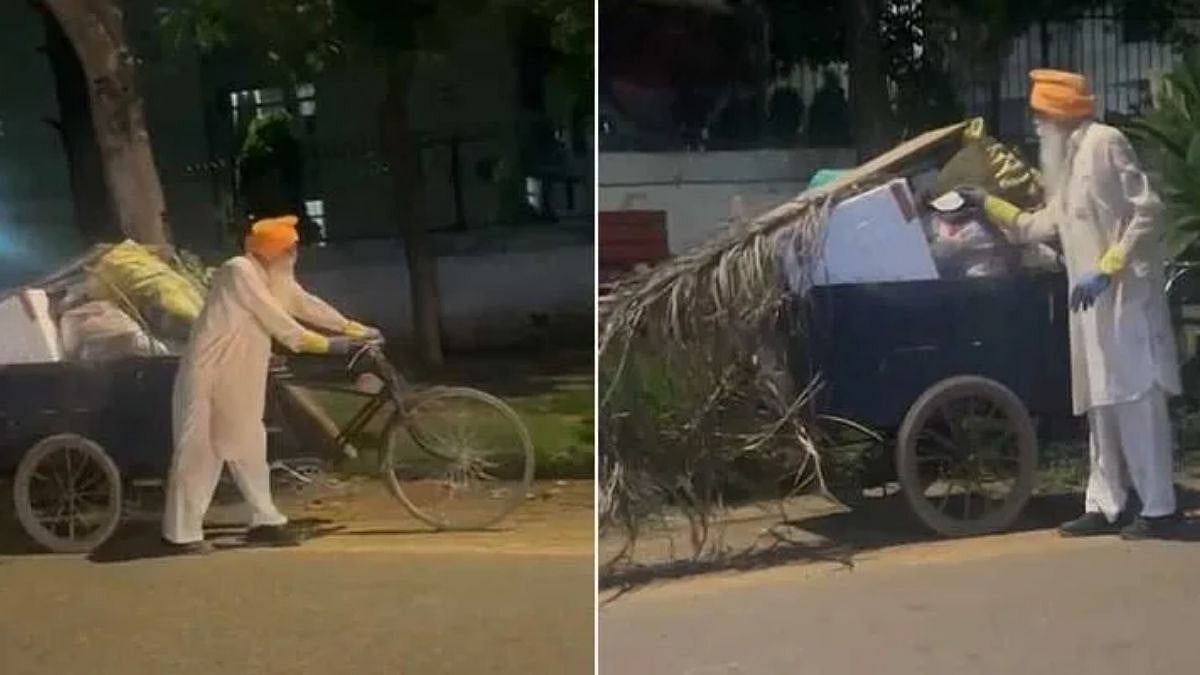
In a country that often equates public service with authority, protocol and post-retirement privilege, the life of Inderjit Singh Sidhu offers a striking counter-narrative. At 88, the retired Indian Police Service officer from Punjab has been awarded the Padma Shri 2026 — not for an operation conducted or a post held, but for an act so simple that it shames our collective indifference: sweeping the streets of his neighbourhood in Chandigarh every morning.
Sidhu retired as a Deputy Inspector General of Police in 1996 after a distinguished career in the Punjab Police. Like many senior officials, he could have chosen a life of quiet comfort, public respect guaranteed by past rank. Instead, he chose visibility of a different kind. For over a decade now, before most of the city wakes up, Sidhu steps out with a broom, cleaning public spaces in Chandigarh with monk-like discipline and unwavering purpose.
A message beyond campaigns
There are no slogans, no speeches, no television crews waiting for sound bites. Yet, his message is louder than many official campaigns: cleanliness is not the government’s job alone. It is a shared civic duty.
This is precisely where India’s ambitious Swachh Bharat Mission often falters. Launched with vision and political will, the mission has built toilets, improved waste infrastructure and brought sanitation into the national conversation. But cleanliness cannot be sustained through schemes alone. Roads swept by municipal workers by day are littered again by evening. Dustbins are installed, but waste is thrown beside them. Responsibility is outsourced; accountability is forgotten.
Personal responsibility as public service
Sidhu’s example exposes this contradiction. He does not ask why the municipality failed; he asks what he can do. In doing so, he restores dignity to manual work and reminds citizens that cleanliness begins with personal conduct, not official circulars. His broom is not a protest against the state; it is an appeal to society.
The Padma Shri conferred on Sidhu honours more than an individual; it honours an idea India urgently needs to relearn: that public service does not retire with age, uniform or office. It also challenges a culture that looks down on those who clean while simultaneously complaining about filth.
From campaign to way of life
If Swachh Bharat is to succeed — not as a campaign, but as a way of life — it must move from government files to household habits. From photo opportunities to daily practice. From expecting “someone else” to clean up to taking responsibility for our own mess.
Inderjit Singh Sidhu has shown the way, not with authority but with humility. Not with power, but with example. The question is whether the rest of us are willing to follow — broom in hand, excuses aside. Let everyone be a Sidhu, and India will be the cleanest of all countries.
