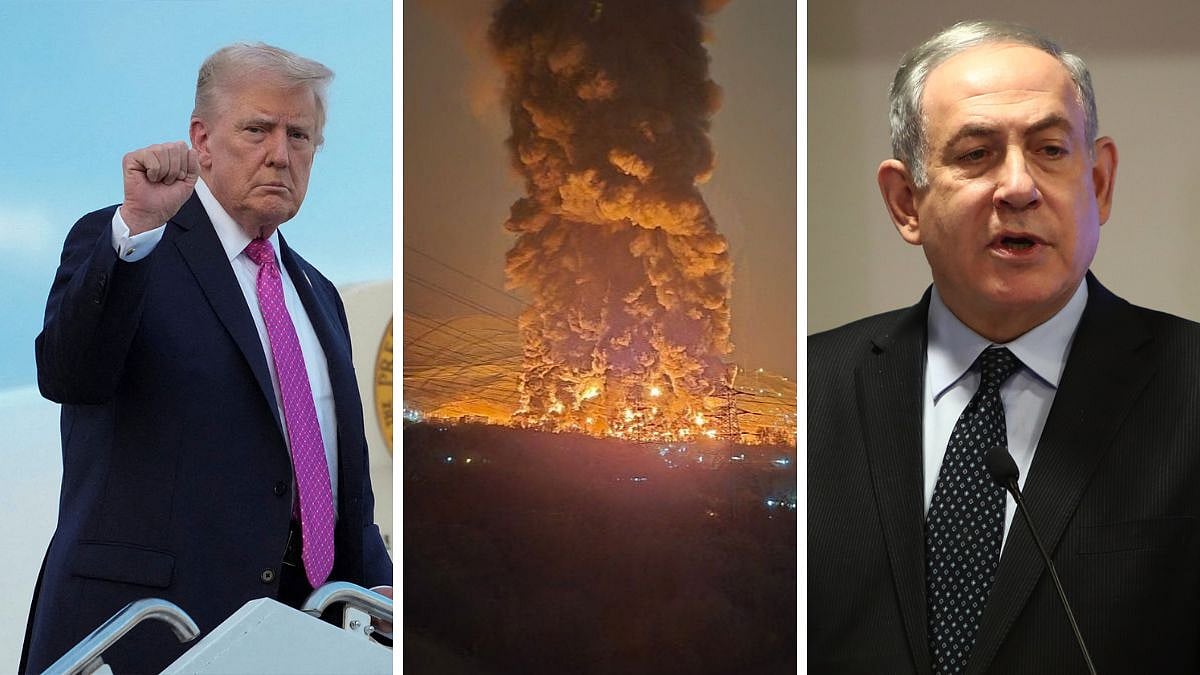
Washington, DC: A rare disagreement has reportedly emerged between the United States and Israel over Israel’s large-scale airstrikes targeting Iranian fuel infrastructure, with American officials expressing surprise and concern about the scope of the operation, according to a report by Axios.
The strikes, which hit several oil depots in Tehran, triggered massive fires across parts of the Iranian capital. Thick plumes of smoke and flames were reportedly visible from miles away following the attacks. The escalation comes amid the ongoing conflict involving Iran, which began on February 28 and has already heightened tensions across the Middle East.
In a statement, the Israel Defense Forces (IDF) said the targeted fuel depots were being used by the Iranian regime to supply fuel to various sectors, including military units. Israeli officials indicated that the strikes were also intended as a warning to Tehran to stop targeting Israeli civilian infrastructure.
However, the scale of the operation reportedly caught officials in Washington off guard. While the Israeli military informed the US in advance that strikes were planned, American officials said they did not anticipate the extent of the attacks.
'Not A Good Idea,' Says US Over Strikes On Oil Depots
A senior US official reportedly said the strikes were 'not a good idea,' while another Israeli official revealed that Washington’s reaction to the operation was conveyed in blunt terms, describing the US response as a shocked 'WTF' after learning how extensive the strikes were.
Sources also told Axios that Donald Trump was not supportive of targeting fuel depots. An adviser to the US President reportedly said Trump “didn’t like the idea” of striking oil-related facilities, noting that the move could worsen global energy concerns.
US officials are worried that attacks on fuel infrastructure, even if not directly targeting oil production, could have unintended consequences. Images of burning fuel storage sites could trigger panic in global energy markets and potentially drive oil prices higher.
Meanwhile, Iran warned that continued strikes on its energy infrastructure could provoke retaliation across the region. A spokesperson for the Khatam al-Anbiya Headquarters, which oversees Iranian military operations, said Tehran had so far refrained from targeting energy infrastructure in the broader region but may reconsider if such attacks continue. He cautioned that if Iran begins striking regional fuel and energy facilities, global oil prices could surge dramatically, possibly reaching USD 200 per barrel.
Oil prices have already climbed past USD 100 per barrel for the first time in more than three and a half years as the conflict threatens energy production and shipping routes across the Middle East. Despite the spike, Trump dismissed the rise as a 'very small price to pay' for global security and stability.

