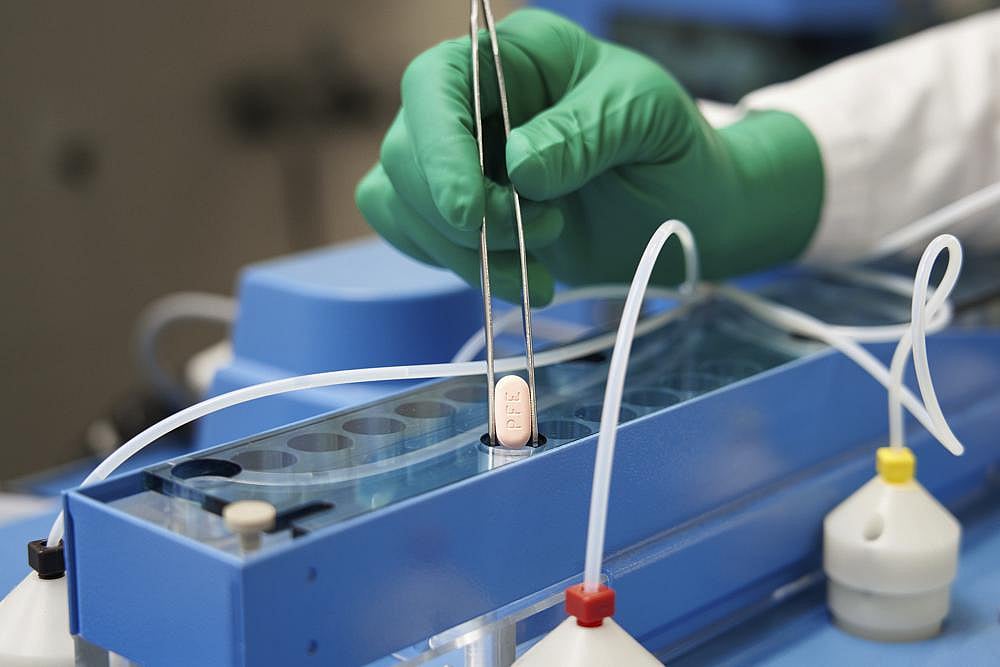
The World Health Organization has announced that it “strongly recommends” Pfizer’s Covid-19 antiviral pill Paxlovid for patients with milder forms of the disease who were still at a high risk of hospitalisation.
WHO's recommendation is based on new data from two randomized controlled trials involving 3078 patients. The data show that the risk of hospitalization is reduced by 85% following this treatment. In a high-risk group (over 10% risk of hospitalization), that means 84 fewer hospitalizations per 1000 patients.
On December 22 last year, US health regulators authorized the first pill against COVID-19, a Pfizer drug that Americans will be able to take at home to head off the worst effects of the virus.
Pfizer's combination of nirmatrelvir and ritonavir was the "superior choice" of treatment for unvaccinated, elderly or immunocompromised people with Covid, the WHO's experts said in the BMJ medical journal.
For the same patients, the WHO also made a "conditional (weak) recommendation" of the antiviral drug remdesivir made by US biotech firm Gilead -- which it had previously recommended against.
The WHO recommended Paxlovid over remdesivir, as well as over Merck's molnupiravir pill and monoclonal antibodies.
Pfizer's oral treatment prevents hospitalisation more than the "available alternatives, has fewer concerns with respects to harms than molnupiravir, and is easier to administer than intravenous remdesivir and antibodies," the WHO's experts said.
Paxlovid is a combination of nirmatrelvir and ritonavir tablets and is administered orally.
The UN agency has recommended against its use in Covid patients at lower risk of hospitalisation, saying the benefits were found to be negligible.
While the brand name drug, sold by Pfizer, will be included in the WHO prequalification list, the health agency said that generic products are not yet available from quality-assured sources. Generic products are the copy of brand name drugs and are available at a much lower price, making accessibility easier in low- and middle-income countries.
According to the WHO, a licensing agreement between Pfizer and Medicines Patent Pool limits the number of countries that can benefit from the generic production of the medicine.
Supplies of the pills initially were extremely constrained, with limited doses doled out to states each week. As the omicron variant of the coronavirus spread, doctors and patients scrambled to find the pills.
Now, four months later, the supply of the potentially lifesaving medication has rapidly improved in the U.S., but in a twist, physicians don't seem to be prescribing much of it.
There is plenty of Paxlovid to go around, but “it is being underutilized,” Dr. Anthony Fauci, the White House’s chief medical adviser, said Wednesday on MSNBC's “Andrea Mitchell Reports.”
Paxlovid works by preventing the virus from replicating inside human cells before people get severely ill. It needs to be taken early to be effective — within five days of the onset of symptoms.
People, especially immunocompromised people who may not mount strong immune responses from the Covid vaccines, have few other treatment options; the omicron subvariant has rendered all but one U.S.-authorized monoclonal antibody drug ineffective.


