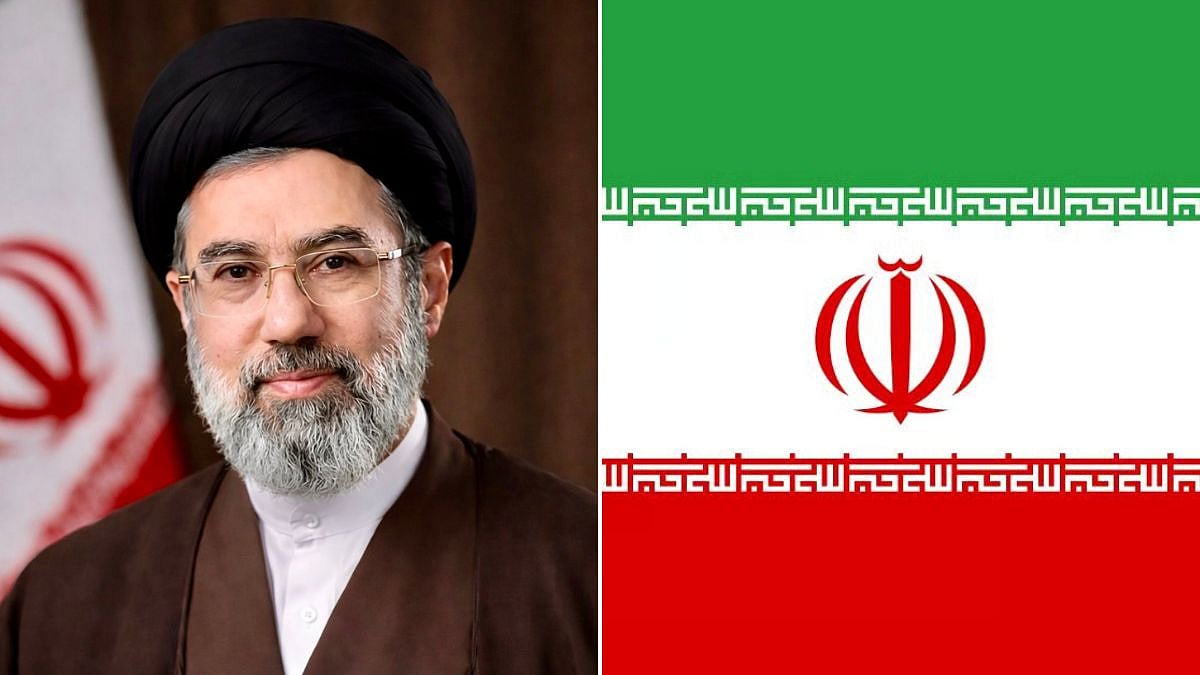
The current strategy employed by the United States and Israel, which centres on high-profile "decapitation strikes" against Iranian leadership, rests on the hope that removing key figures will act as a catalyst for a spontaneous, popular uprising.
This approach, however, often underestimates the institutional depth of the Islamic Republic. Unlike a traditional autocracy that relies on the charisma or iron fist of a single individual, Iran’s governance is a sophisticated, multi-layered "solid structure."
As Foreign Minister Abbas Araghchi explained to Al Jazeera, the system is built on deeply rooted political, economic and social institutions that are specifically designed to endure the loss of any single official, even those at the very top.
Why the 'automatic' uprising is a strategic miscalculation
The belief that the Iranian public will "automatically" rise up to fill a power vacuum ignores the historical and social realities of the country.
While Israeli Prime Minister Benjamin Netanyahu framed the killings of Ali Larijani and Gholamreza Soleimani as a blow against "tyrants" and a "liberation" for the people, the context of these strikes matters immensely.
Over the past several weeks, Israeli air strikes have resulted in numerous civilian casualties. In such environments, the instinct of a population often shifts from internal dissent to national survival. Instead of viewing the foreign power as a liberator, the public may see the strikes as an existential threat to the nation, allowing the regime to use the deaths of its leaders as a "glorious line of sacrifice" to rally nationalistic fervour.
Institutional resilience of the Islamic Republic
The Iranian state operates through a dual-power system that balances clerical authority with a massive security and bureaucratic apparatus. According to analyst Trita Parsi of the Quincy Institute who was quoted by Al Jazeera, the leadership has spent the last year specifically preparing for this scenario by putting replacements in place for every key post. Figures like Ali Larijani served a vital function not just as decision-makers, but as the "consensus maker-in-chief."
Larijani’s role was to bridge the gap between the various factions of the Supreme National Security Council, the IRGC and the clerical elite. By removing these mediators, the US and Israel are not necessarily triggering a street revolution, rather exposing themselves to uncoordinated responses.
Complexity of governance structure
To understand why only a rebellion within the ranks could truly disturb the current setup, one must look at the "complicated governance set up" that defines Iran.
The power is shared between the Office of the Supreme Leader (now under Mojtaba Khamenei), the Islamic Revolutionary Guard Corps (IRGC), and a sprawling state bureaucracy.
This creates a "fortress state" where the primary stakeholders in the government are also the ones who control the means of internal repression. A popular uprising without the support of at least a faction of the security forces is unlikely to succeed against such a heavily armed and economically invested establishment.
Why internal rebellion is the real threat
A genuine disruption of the Iranian politico-military-religious setup is most likely to emerge from a fracture within these elite ranks. If the military or the bureaucratic elite concludes that the current leadership’s path is leading to the total destruction of their own institutional power or economic interests, they may seek a "palace coup" or a fundamental restructuring of the state.
But they will be pro-Israel and pro-US, it is too premature to predict. Without consensus makers like Larijani, how this would turn out is too risky to be bet upon unless both Israel and the US have their own men placed at strattegically important ranks.
Disappearing opportunity for diplomacy
A major unintended consequence of targeting the Iranian 'consensus makers' is that if President Trump or the Israeli leadership eventually decide to negotiate a "deal" or a ceasefire, they may find there is no one left on the other side with the necessary "clout" to deliver a unified Iranian response.
By assassinating the very people capable of bringing the rest of the system along with them into a negotiation, the current strategy may inadvertently trap all parties in a perpetual state of war, as the Iranian system becomes too fragmented to agree on the terms of its own surrender or a diplomatic exit.
